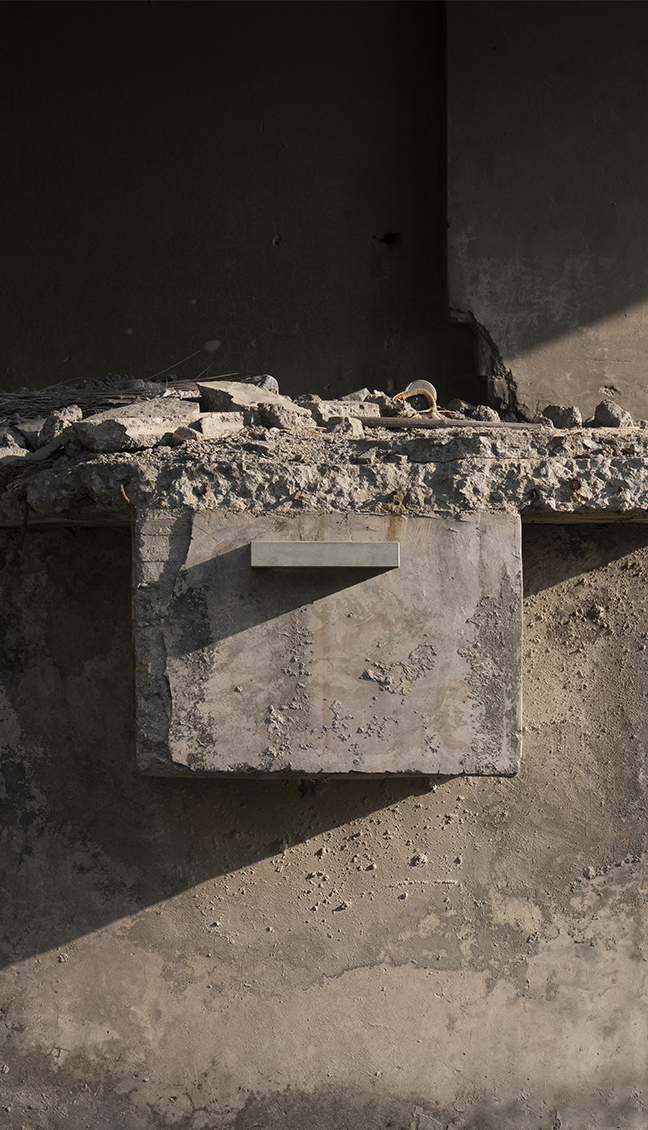
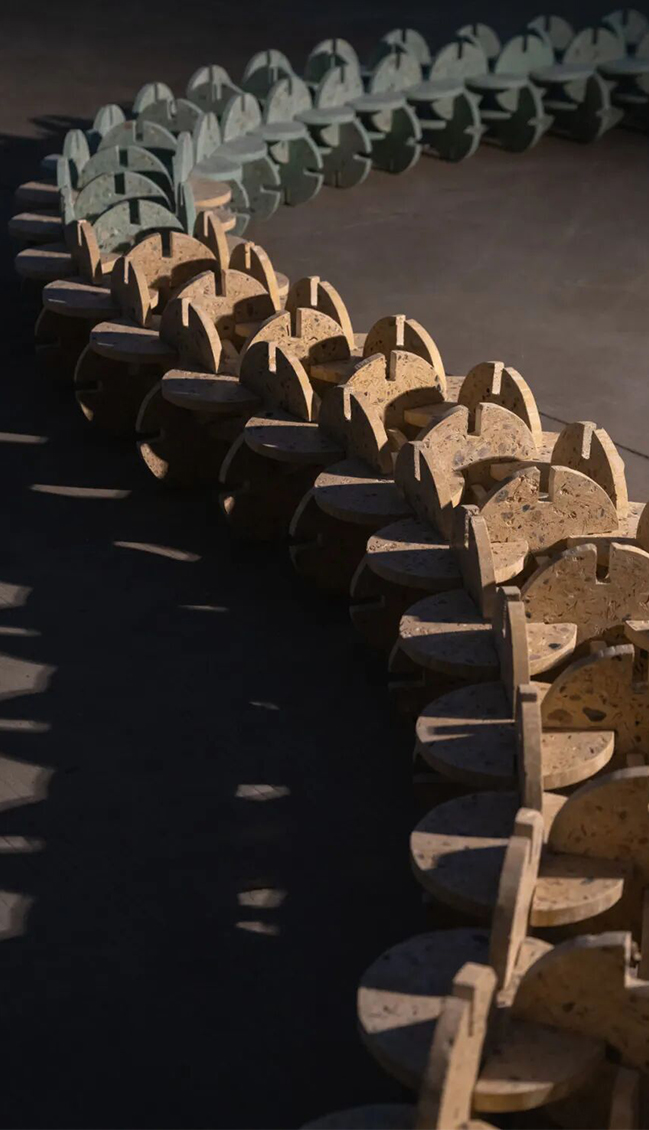
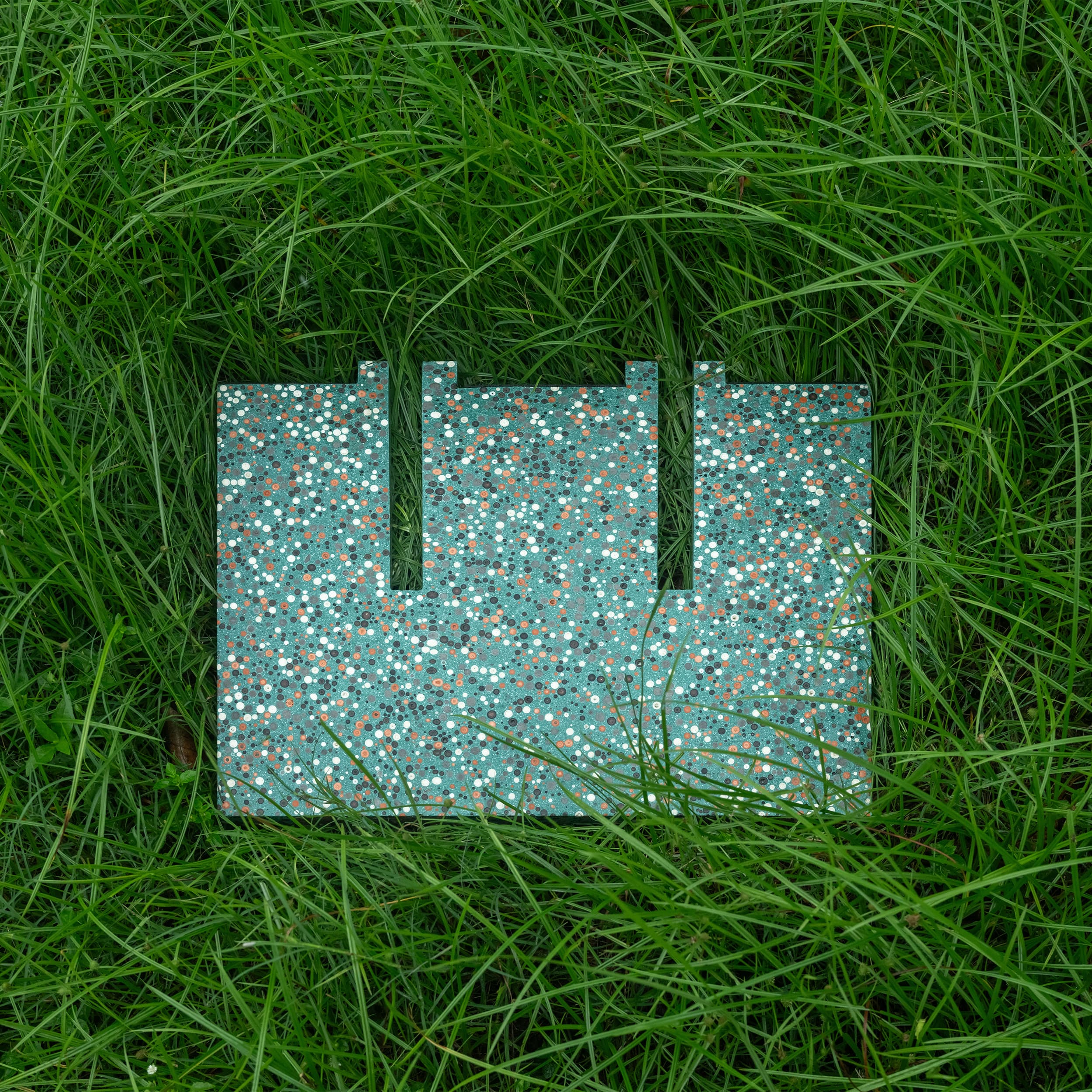
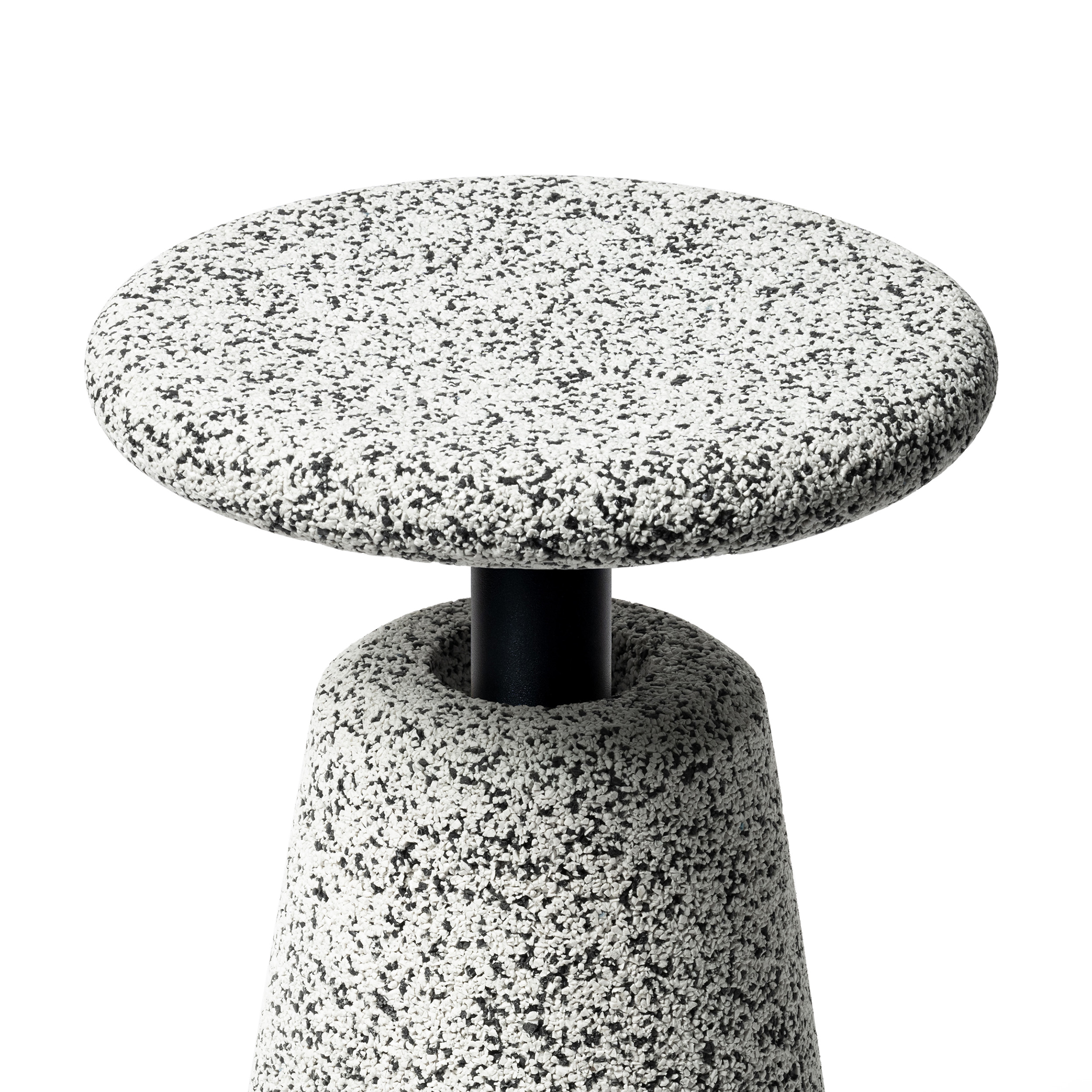
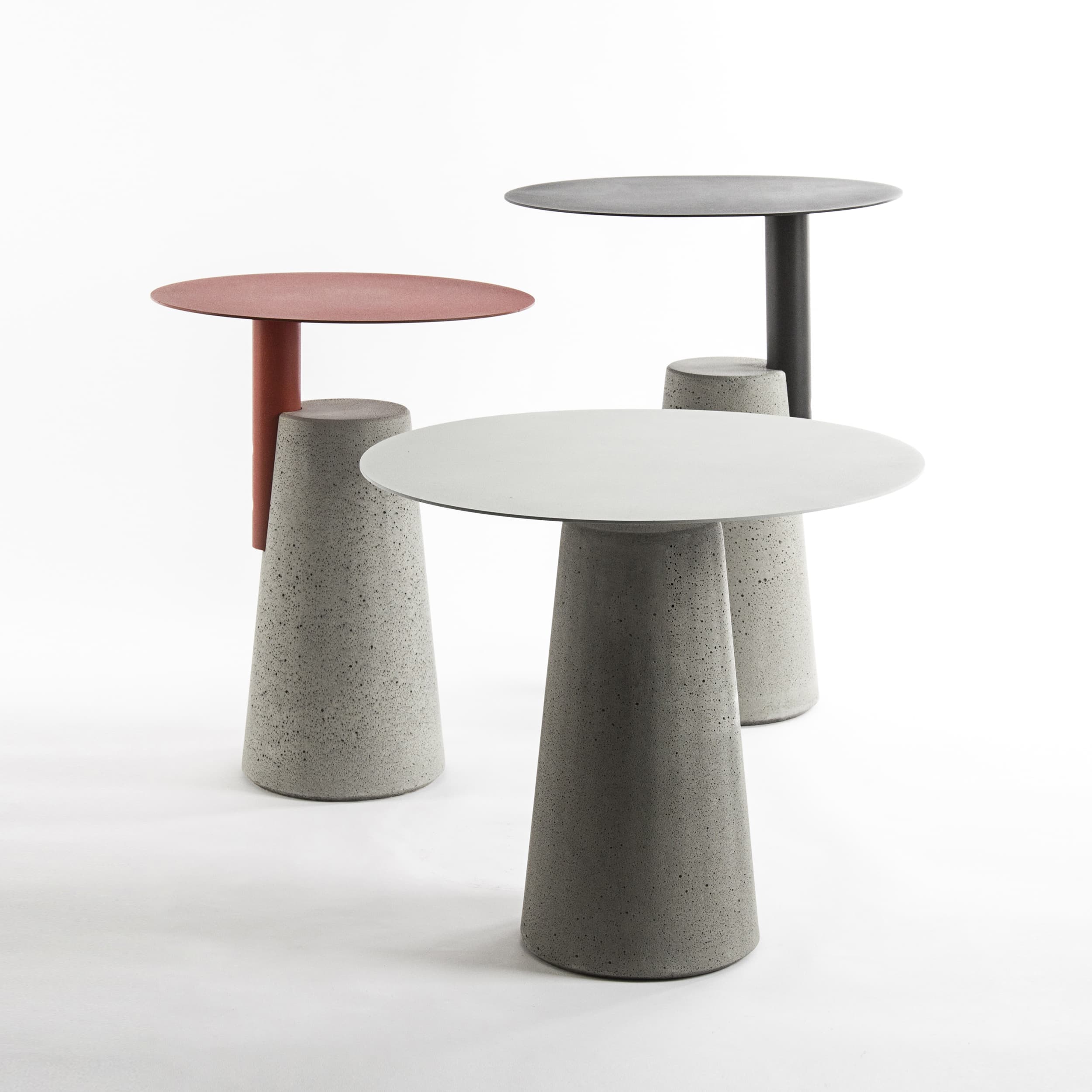
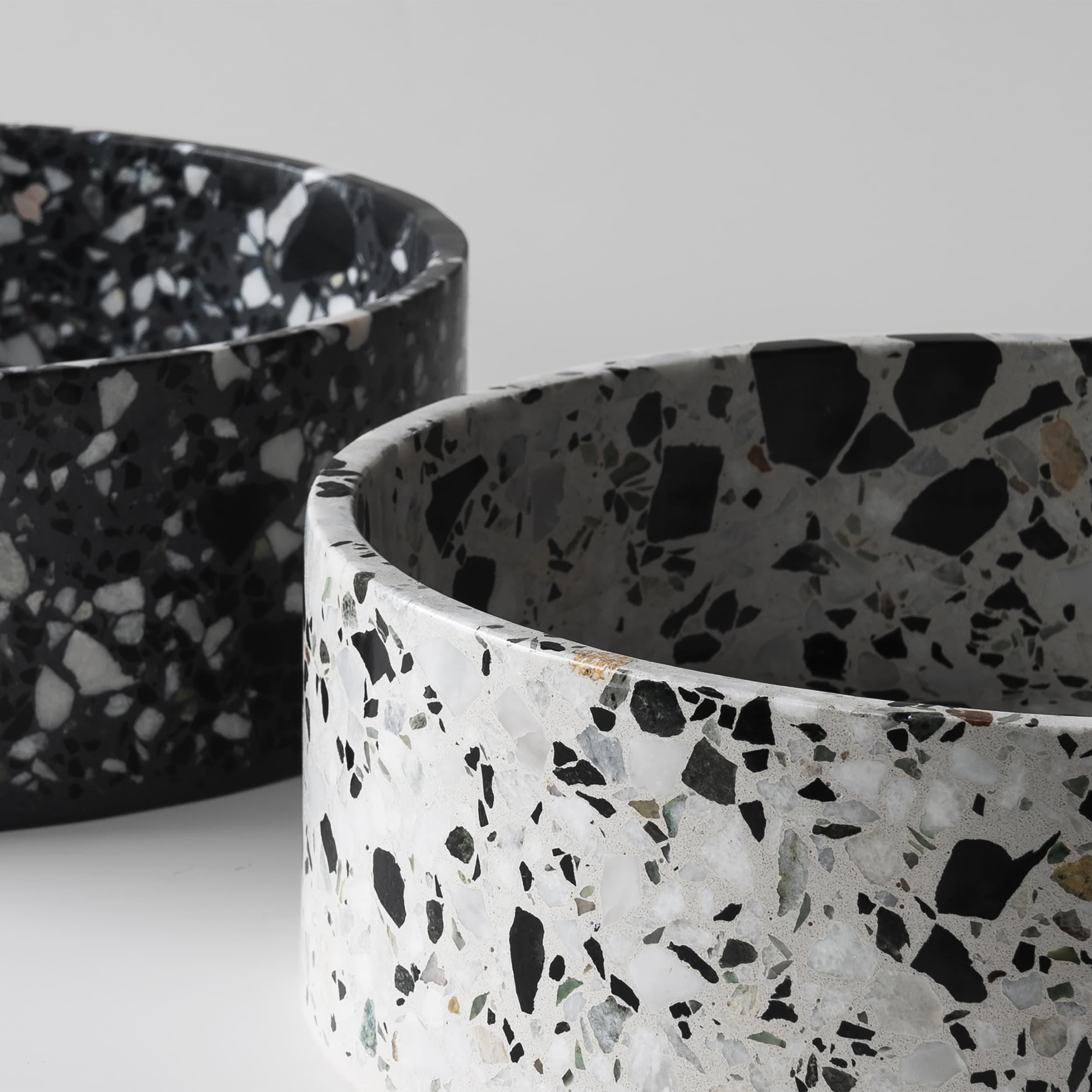
Inorganic Archive: Material Order & Regeneration
Time: 2018 – Present
Location: Shunde, Guangdong, China
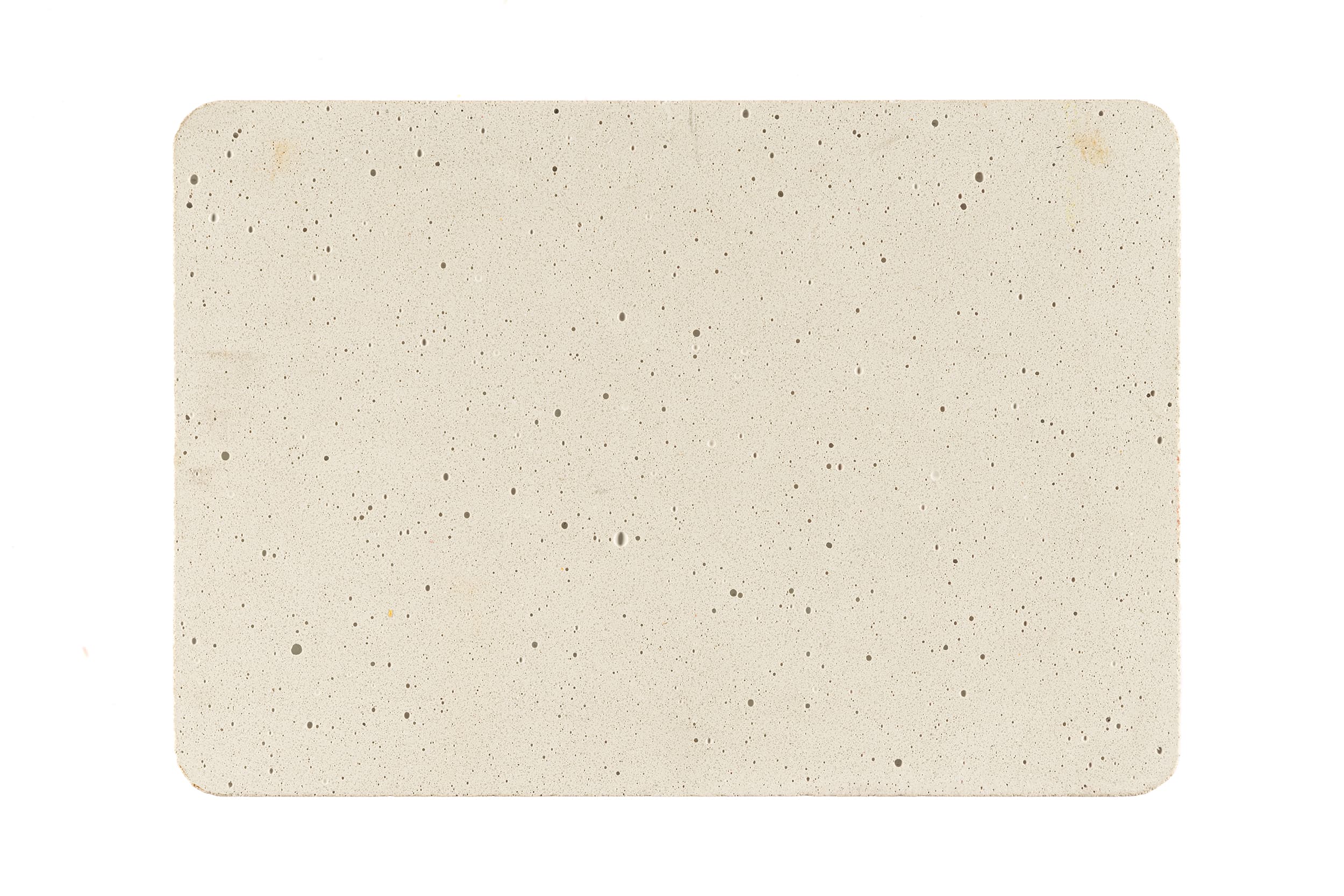
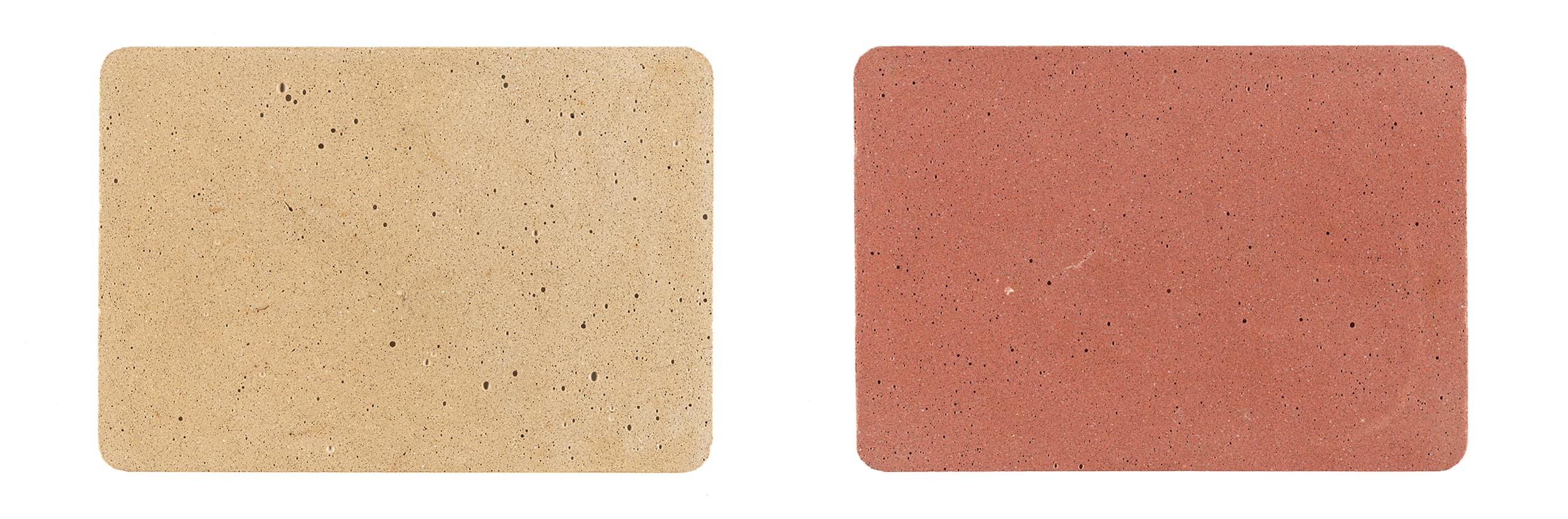
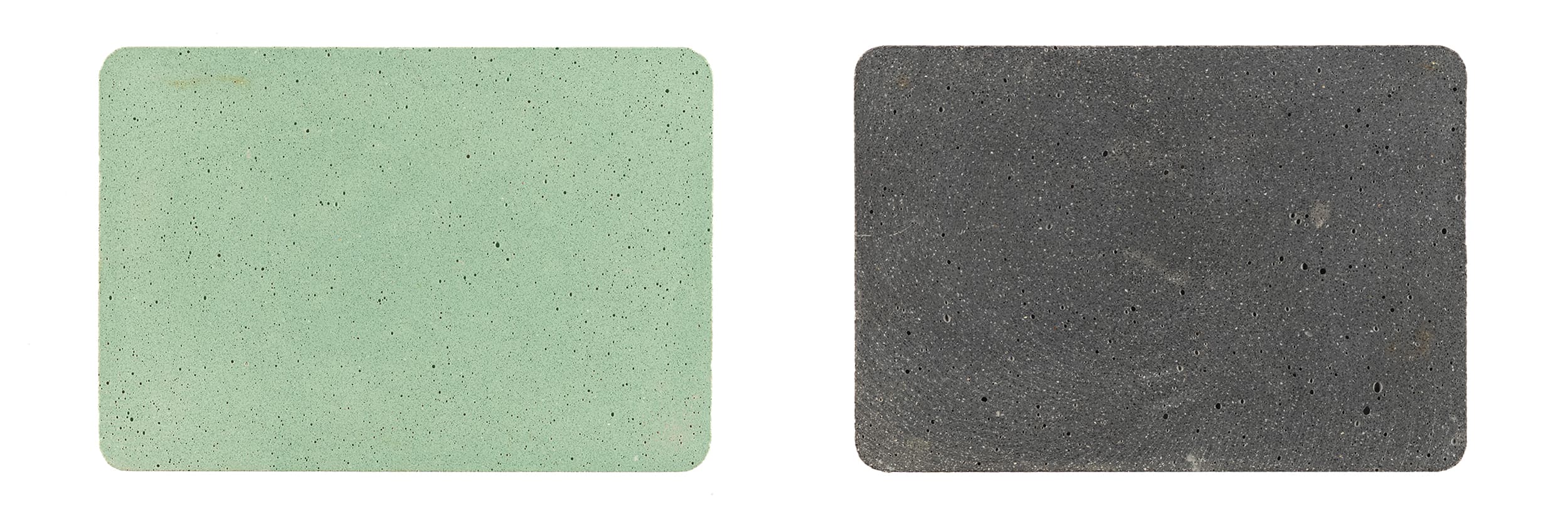
Metals, ceramics, glass, semiconductors and portland cement together form the complete inorganic material framework underpinning modern civilisation. Boasting stable crystalline structures, inherent resistance to corrosion and ageing, as well as tunable optical, acoustic, electrical, magnetic and mechanical properties, inorganic materials stand as irreplaceable material media for cutting-edge sectors including aerospace, new energy, information technology and biomedical engineering.
Among all inorganic non-metallic materials, portland cement serves as the most fundamental bulk construction material. Second only to fresh water in global consumption, it ranks the world’s second most utilised substance. Through its exclusive hydraulic cementation reaction, cement solidifies sand and stone aggregates into high-strength artificial stone. Its compressive strength continues to build even under prolonged water immersion or underground burial, retaining structural integrity for centuries amid harsh weather conditions. Skyscrapers, cross-sea bridges, deep-water tunnels, high-speed railways — all terrestrial, marine and aerial infrastructure of humanity rest upon cement concrete foundations.
Yet the cement industry, which fuels rapid urban expansion, bears a heavy climate burden. Across its full production chain, the high-temperature decomposition of limestone accounts for roughly sixty percent of carbon emissions, with the remaining forty percent stemming from fossil fuels required to heat clinker at 1,450°C. Responsible for 8% of global anthropogenic carbon emissions, cement manufacturing is a core heavy industry in urgent need of transformation to meet dual carbon goals. Meanwhile, massive volumes of solid waste — metallurgical slag, coal fly ash from power plants, carbide slag from chemical production, construction debris, waste ceramic blanks, marine seashells and discarded plastic — keep accumulating. These wastes occupy vast land resources, and their leachate contaminates soil and water, emerging as material liabilities inherited from the linear economic model.
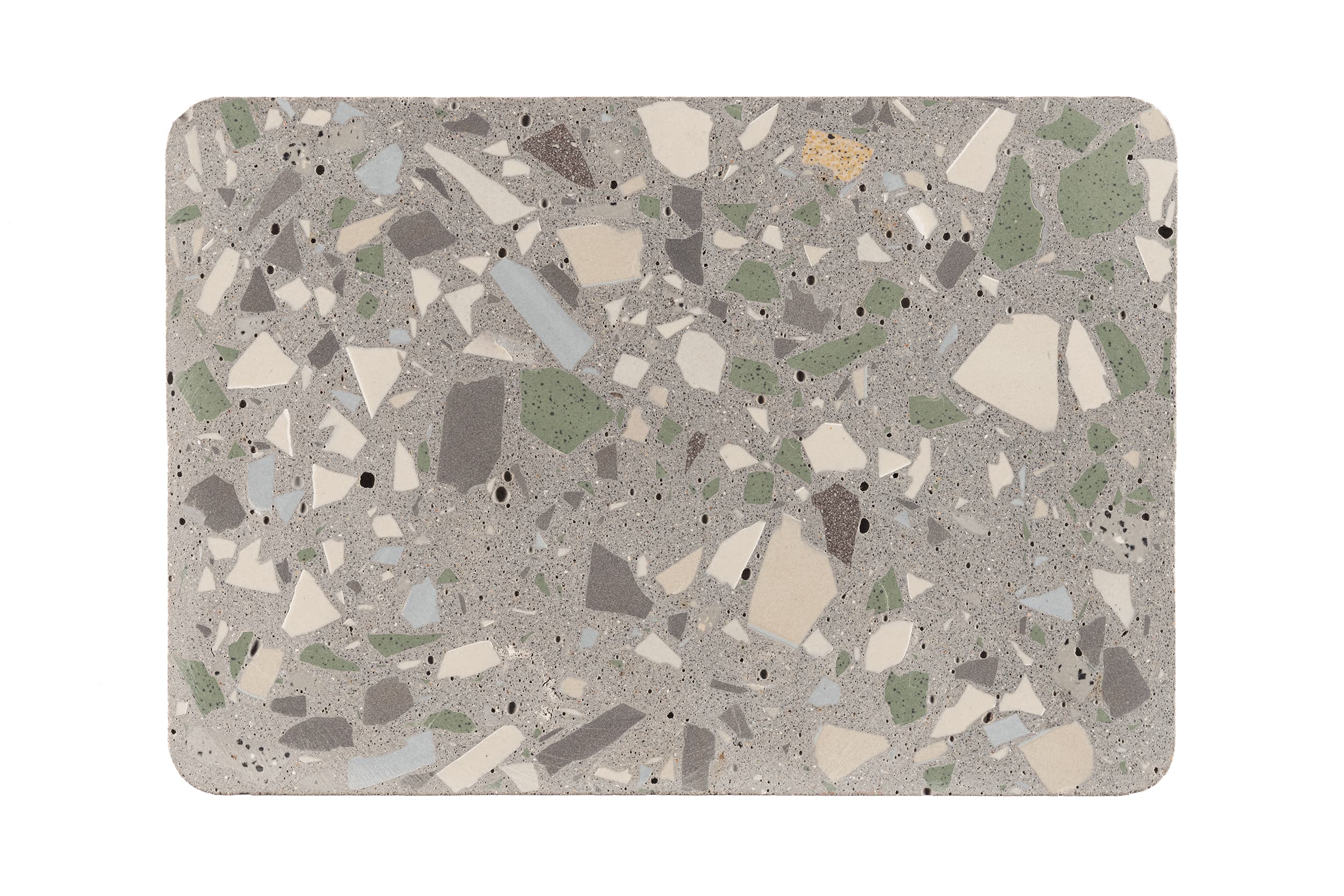
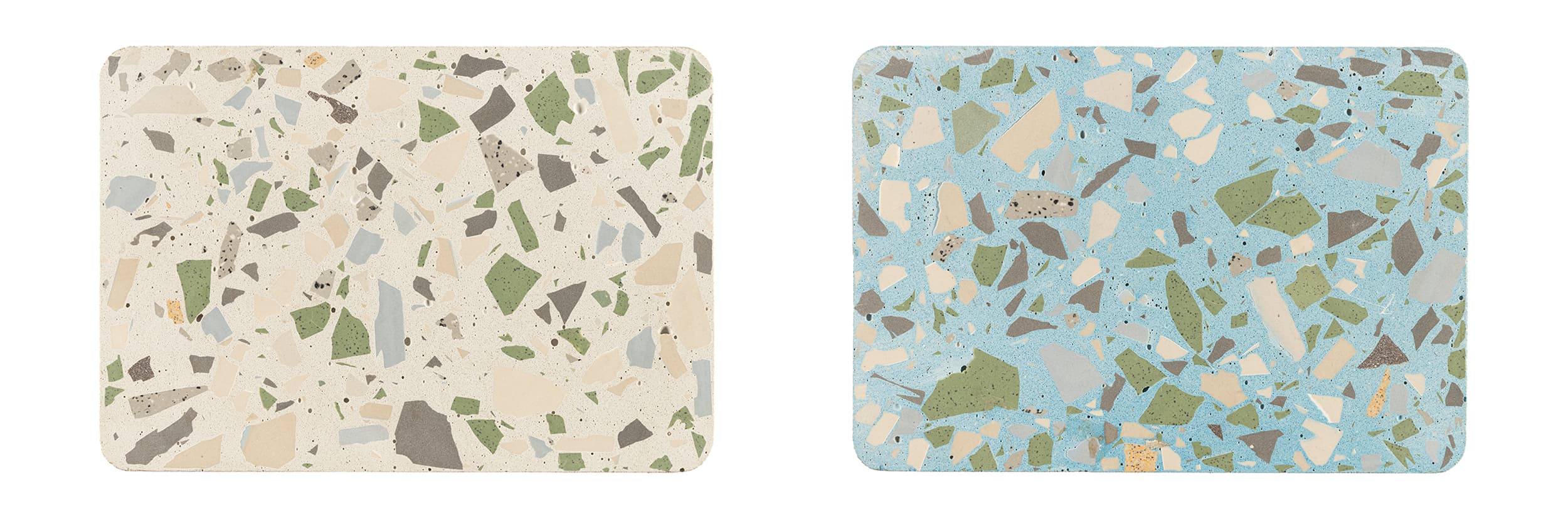
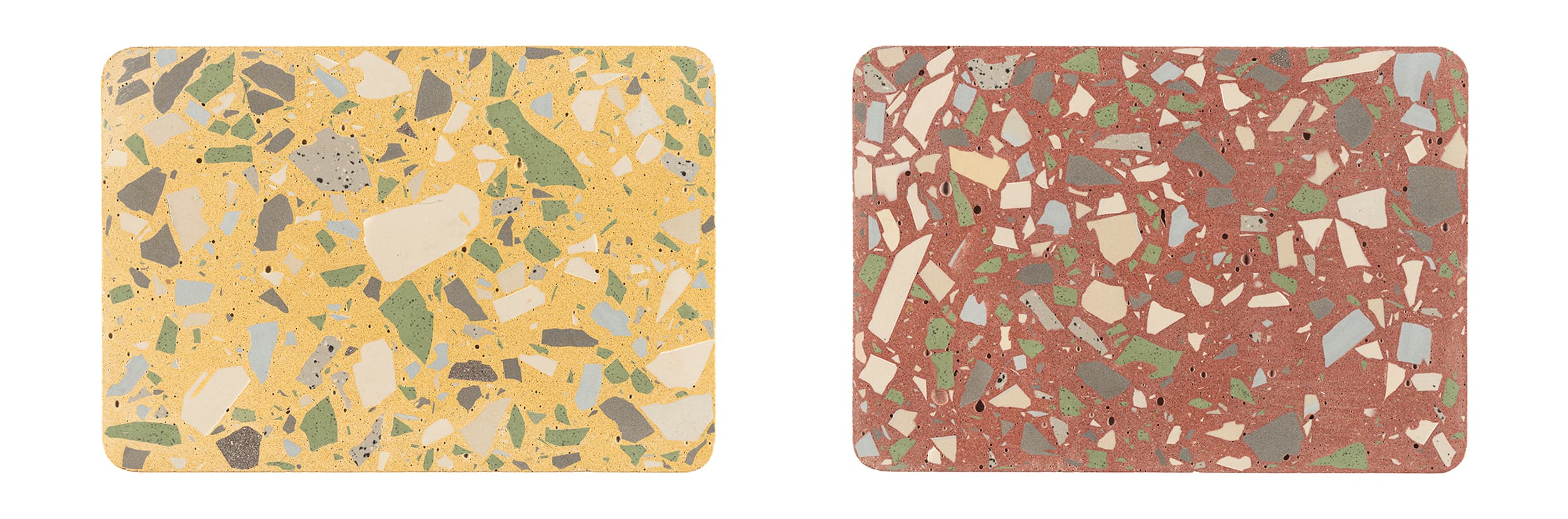
Deploying the enormous material throughput of cement concrete to consume diverse industrial and urban solid wastes, replacing carbon-intensive clinker with waste-derived raw materials, and cutting carbon emissions at the source constitutes an industrial pathway viable for large-scale rollout. Four major categories dominate mainstream decarbonisation technologies within the sector: raw material substitution, fuel replacement, innovative clinker development, and end-of-life mineral carbon sequestration. Among these, the technology of blending solid wastes to substitute clinker features the highest technical maturity, lowest implementation barriers and tangible carbon reduction returns. For every tonne of industrial solid waste used to replace an equivalent tonne of cement clinker, chemical carbon dioxide released from limestone decomposition is avoided, alongside fossil energy consumed for clinker calcination. Under standard production conditions, the material’s carbon footprint can drop by 30% to 60%, with even more pronounced carbon abatement achievable through optimised ingredient ratios. The core value of this technology lies not in chasing extreme carbon reduction figures, but in delivering stable, replicable, auditable waste substitution rates alongside fully controllable material quality.
Considering the hundreds of millions of tonnes of industrial solid waste generated annually, only the cement concrete system can absorb massive volumes of diversified, low-value waste, permanently encapsulating these residues within urban infrastructure and solidifying them into structural artificial rock. Waste-regenerated cement-based materials represent both a core solution to resolve the cement industry’s high-carbon predicament and a vital outlet to digest stockpiled urban solid waste. Rooted in current industrial realities and the imperatives of the low-carbon era, BENTU’s Inorganic Archive project leverages hundreds of physical material samples to fully document technical experiments, textural aesthetics and low-carbon value of multi-source waste-regenerated materials. It establishes a deployable, quantifiable and traceable application system for regenerated inorganic substances for architects and designers.
I. Restoring Material Dignity to Discarded Waste
The conventional logic of linear industry carries ingrained value bias: once a material completes a single usage cycle, it is labelled as waste and permanently excluded from resource circulation. Blast furnace steel slag, demolished brick and ceramic fragments, discarded coastal seashells, sorted urban waste plastic — all are deemed ecological burdens. Disposal methods including landfilling, stockpiling and incineration entirely disregard the mineral and chemical value locked within these substances.
Inorganic Archive seeks to overturn this entrenched evaluation framework. Materials themselves possess no inherent hierarchy of worth; the dividing line between waste and resource never resides in the substance itself, but in humanity’s mastery of processes that restructure crystalline frameworks and activate latent mineral reactivity. Centred on the core proposition of material equality, the project redefines all discarded industrial and urban residues as urban minerals — untapped novel mineral raw materials buried within cities and factories.
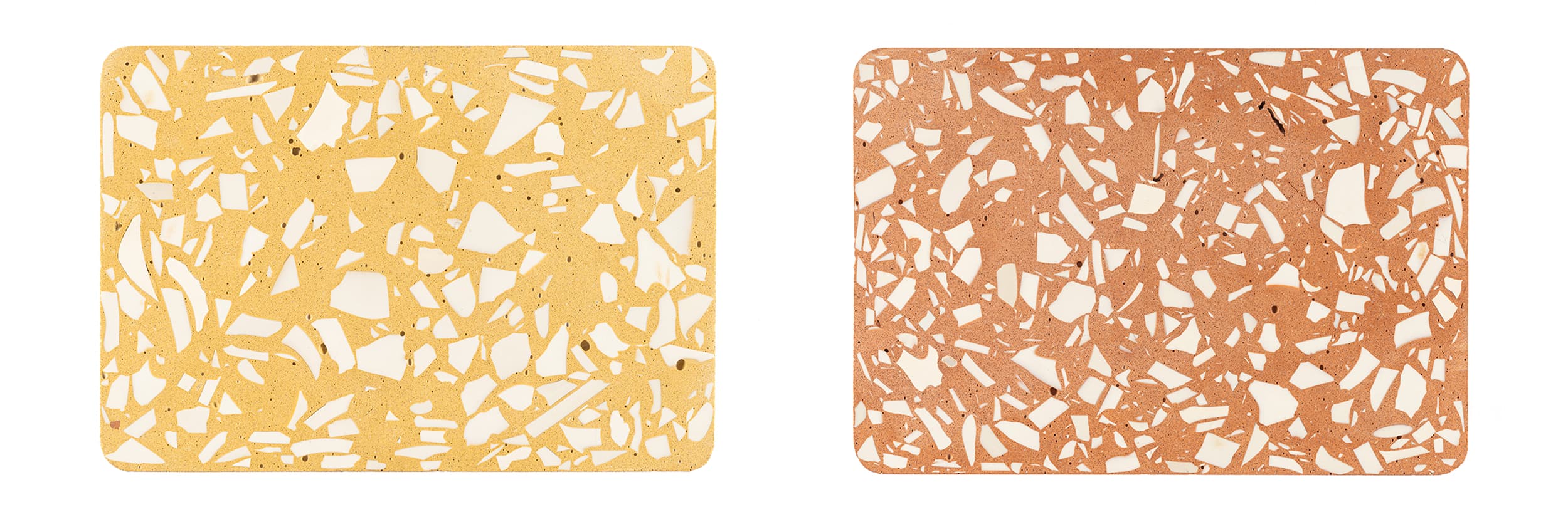
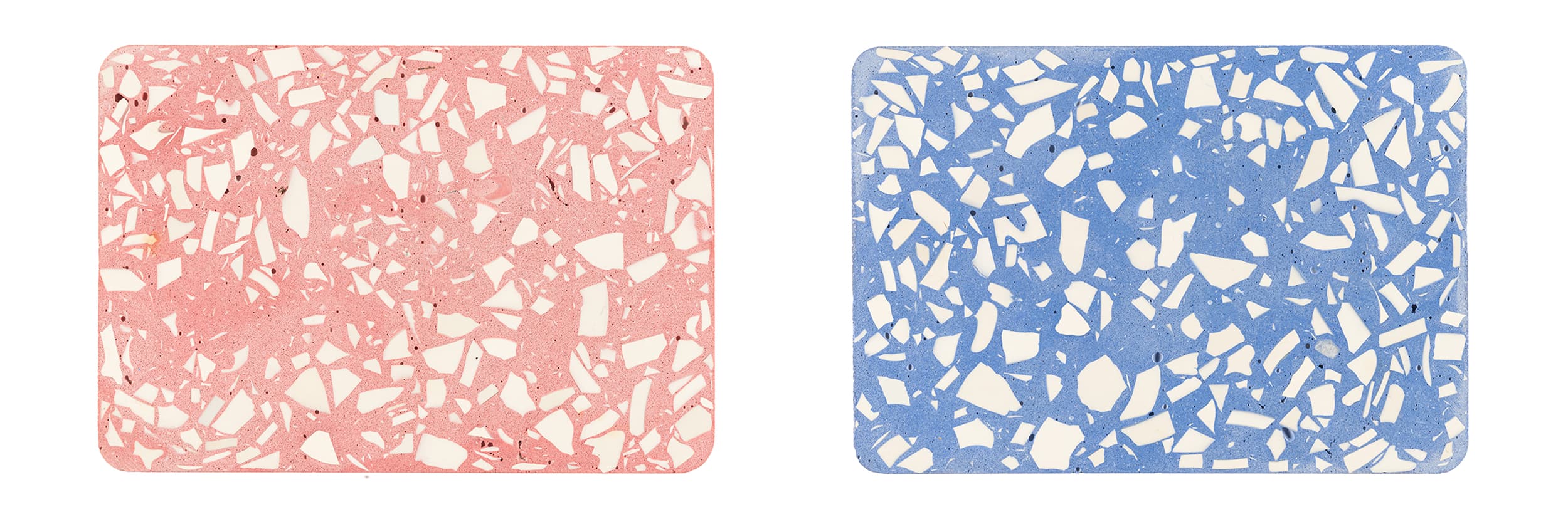
Each category of solid waste boasts exclusive material characteristics tailored to meet the diverse performance demands of regenerated cement-based materials:
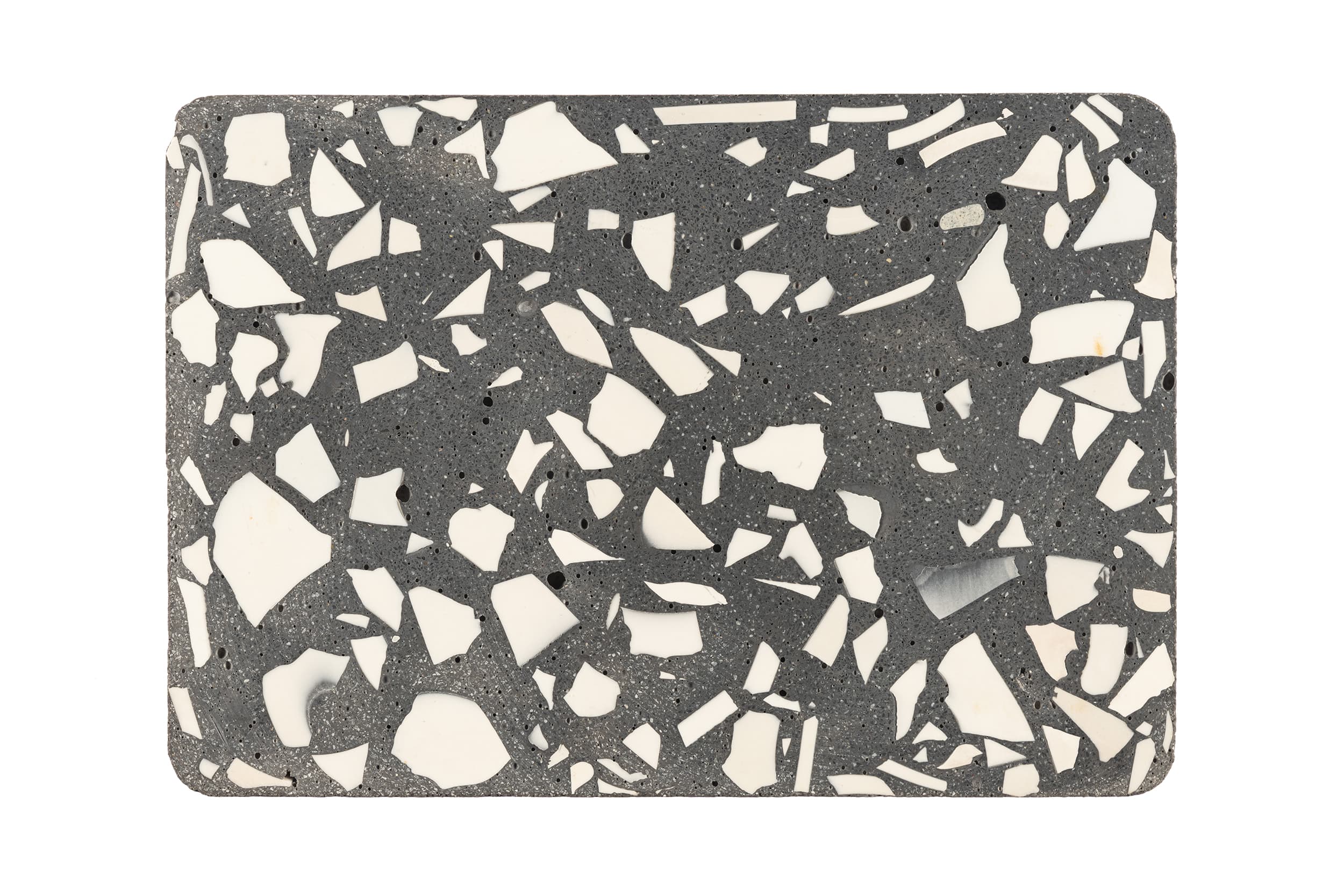
• Construction debris and ceramic slag feature high hardness and dense structures, serving as stable recycled aggregates and reactive reinforcing skeletons.
• Coal fly ash contains spherical micro-beads that optimise slurry fluidity, yielding finished surfaces with delicate, smooth textures.
• Steel slag is rich in tricalcium silicate mineral phases, featuring an extended hydration cycle that delivers long-term strength enhancement; outdoor components made with steel slag resist weathering and cracking for decades.
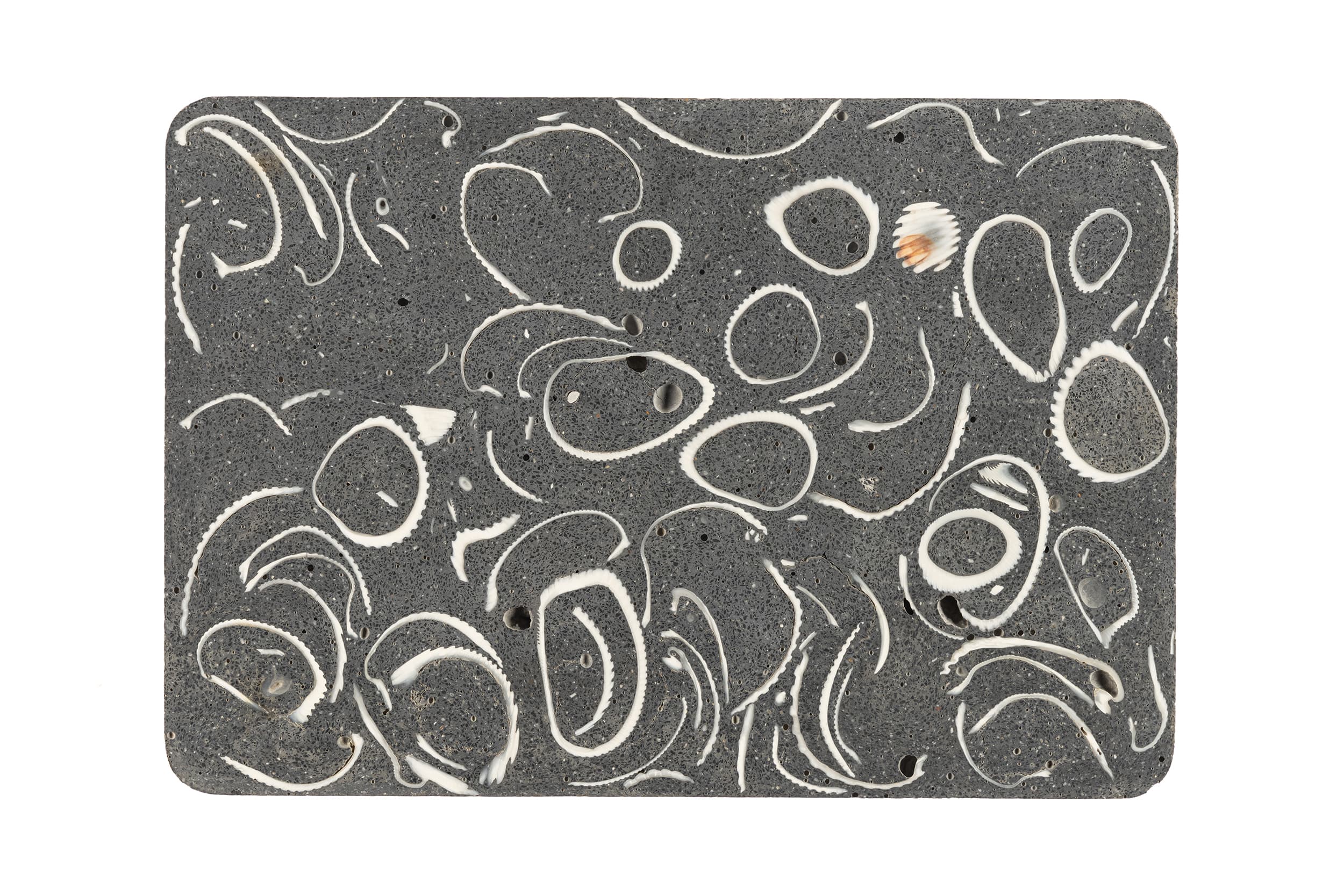
• Seashells consist primarily of calcium carbonate. Once ultra-finely ground into mineral fillers, they fill microscopic pores to boost material density and waterproof performance.
• Waste plastic lacks structural load-bearing capacity. After crushing and modification, plastic microfilaments and granules blended into the matrix suppress microcrack propagation, reduce material self-weight, and deliver supplementary sound absorption and noise reduction effects.
Complementary performance profiles across various solid wastes offset the functional shortcomings of single raw materials when compounded together. Waste regeneration is by no means the downgraded recycling perceived by the general public. Composite cements blended with slag and fly ash develop dense, stable hydration products, and outperform ordinary portland cement in sulphate erosion resistance. Mixtures with high steel slag content exhibit exceptional wear resistance, making them ideal for paving in all types of urban public spaces.
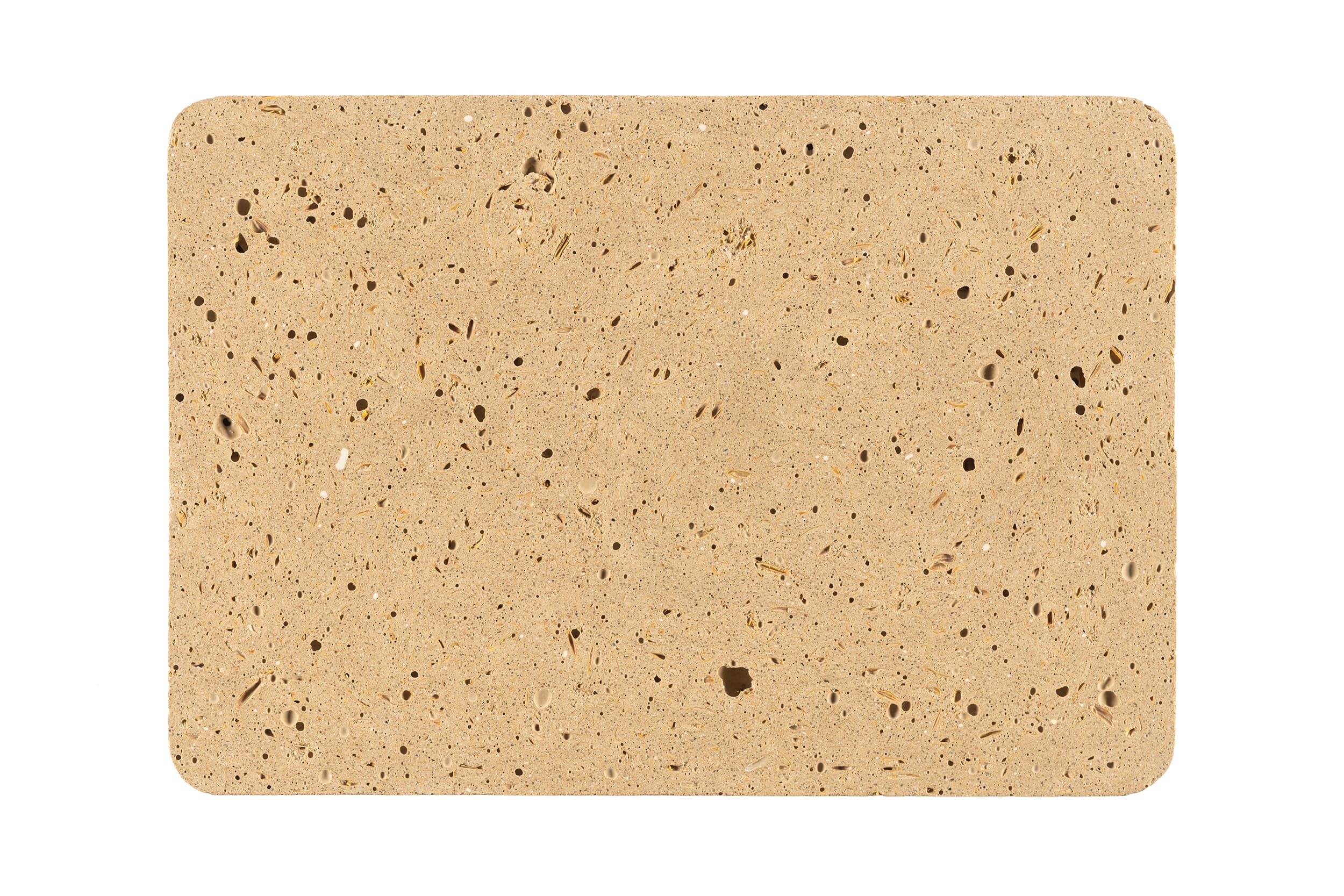
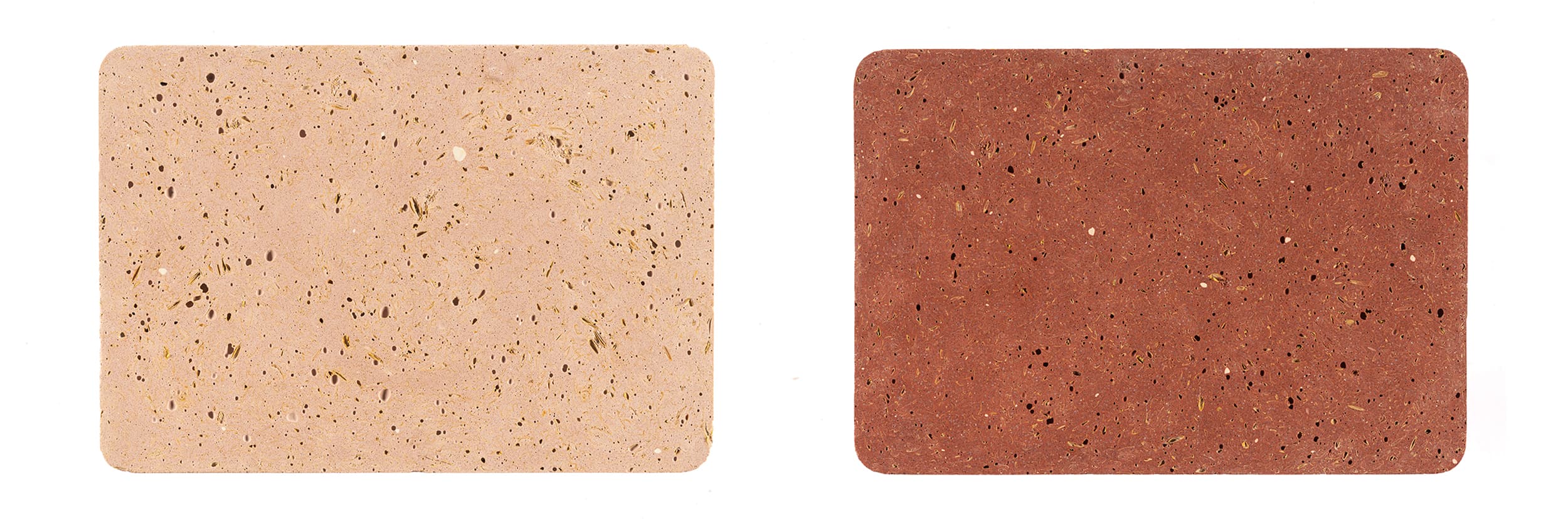
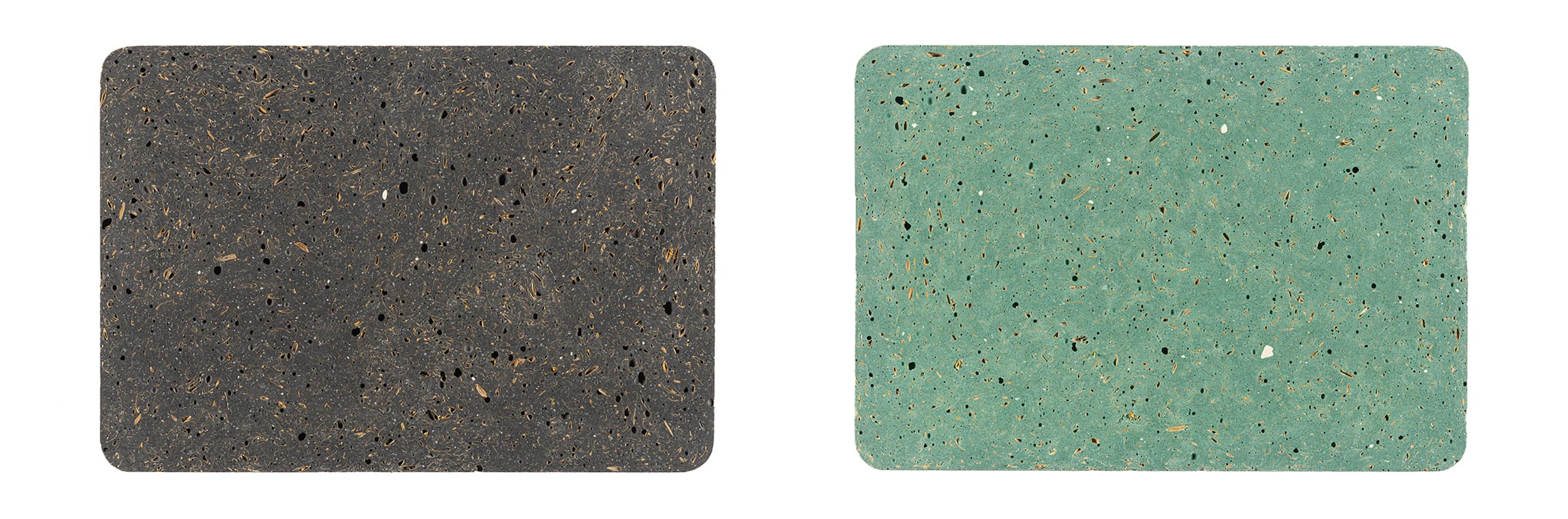
Industrial waste regeneration technologies have also evolved from superficial waste blending to in-depth mineral modification. Early manufacturing processes simply ground solid wastes and mixed them directly with clinker, limiting the volume of waste that could be consumed. Today, the industry has overcome challenges in utilising low-reactivity solid wastes: ultra-fine grinding fractures stable crystalline structures to unlock mineral cementitious activity; specialised alkaline and sulphate admixtures selectively activate inert minerals; the LC3 calcined clay limestone cement technology cuts clinker content down to 50% by combining lightly calcined low-grade clay and limestone powder, delivering substantial carbon reductions while guaranteeing satisfactory early-stage material strength.
From basic waste filling to the intentional regulation of mineral reactivity, we re-excavate the intrinsic value of discarded substances and restore the material dignity every discarded mineral medium inherently deserves.
II. Resolving Inherent Conflicts Between Heterogeneous Materials
Fusing steel slag, plastic, seashells and construction debris — substances vastly divergent in chemical composition, mineral phases and physical-chemical properties — into homogeneous, high-performance regenerated artificial stone demands far more than creative aesthetic integration. It constitutes rigorous technical research tasked with overcoming a cascade of hurdles, including microscopic compatibility, interfacial bonding and volumetric stability. During the R&D phase of hundreds of material samples, the team identified three core industrialisation bottlenecks and developed standardised implementation solutions for each.
1. Volume Instability Triggered by Free Oxides in Steel Slag
Raw steel slag contains free calcium oxide and free magnesium oxide, which undergo sustained hydration and expansion upon contact with water. If blended without pre-treatment, finished components develop bulges, surface peeling and cracking within months, with complete rupture occurring in severe cases.
• Solution: Enforce standardised pre-processing protocols for steel slag. Upon entering storage facilities, raw slag undergoes 6 to 12 months of natural ageing, or accelerated hydration pre-treatment via high-pressure steam to fully consume free reactive oxides. Only after passing index inspections may the slag enter compound blending, eliminating all risks of post-production expansion in finished products.
• Application Scope Limitations: Dedicated raw material storage yards and resting periods are required. Suited for large-scale, long-term waste consumption projects; incompatible with small-batch custom orders requiring immediate delivery.
2. Interfacial Delamination Between Waste Plastic and Inorganic Matrix
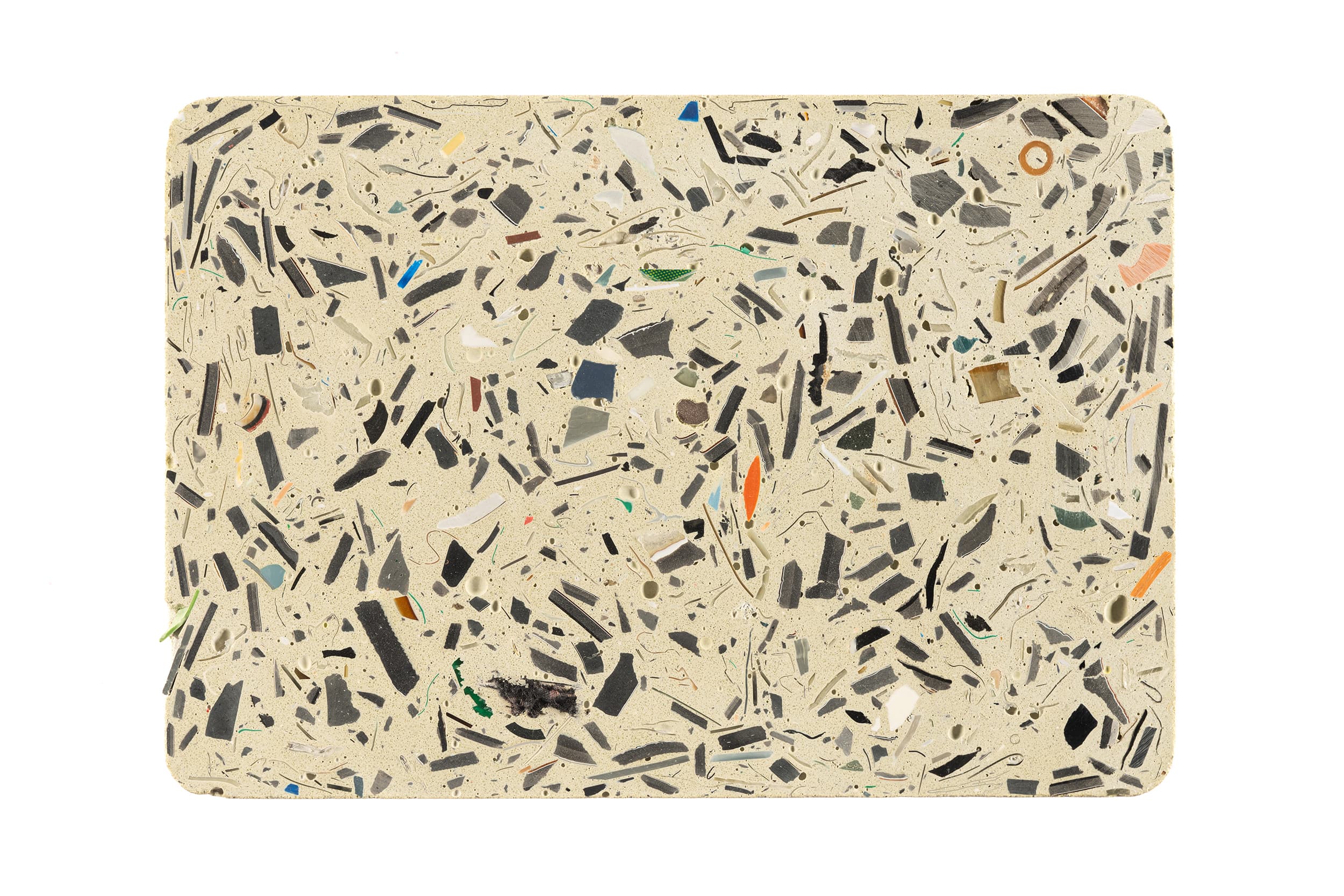
Plastic surfaces are hydrophobic and smooth, preventing tight adhesion with silicate gels generated by cement hydration. Microcracks readily form along the boundaries between plastic granules and the matrix once the material bears load, resulting in a sharp drop in overall impact resistance.
• Solution: Conduct surface modification on plastic raw materials in advance, with three viable processes available: silane coupling agent infiltration, plasma surface activation, and mechanical texturing. These methods restructure molecular layers on plastic surfaces, strengthening mechanical interlocking bonds between inorganic gel and organic plastic to eliminate interfacial separation.
• Application Scope Limitations: Additional pre-treatment workflows and supporting equipment incur extra costs, offset by dramatic improvements in material toughness and supplementary functional properties.
3. High Water Absorption Defects from Seashells and Recycled Construction Debris
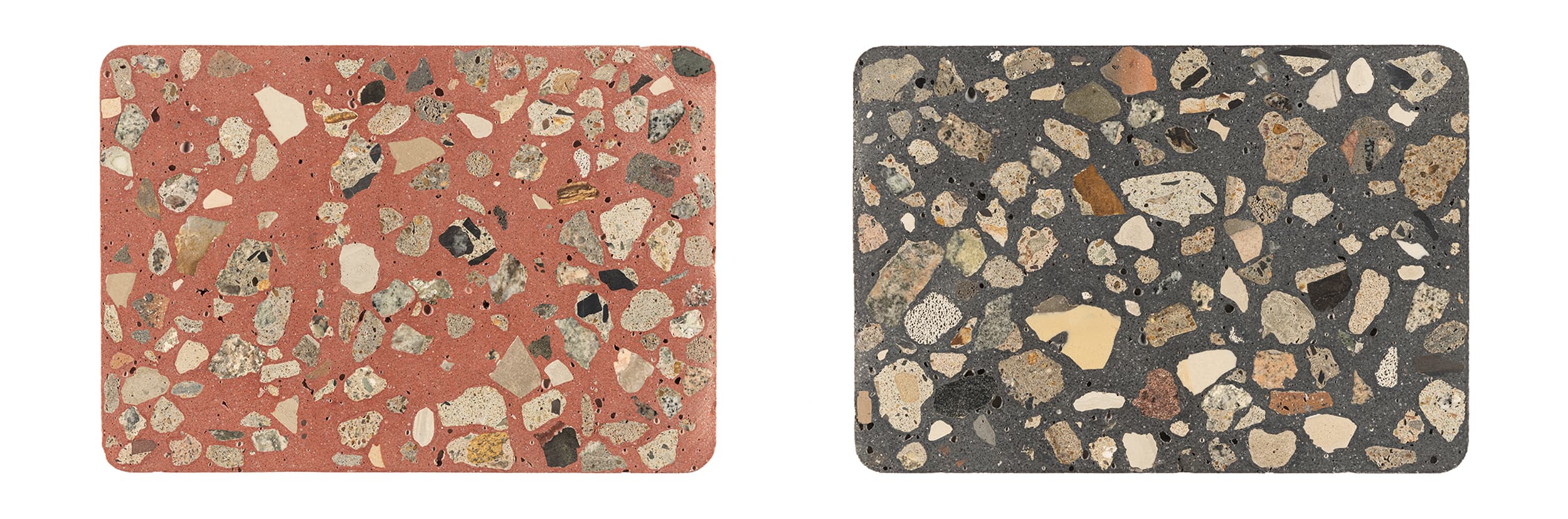
Seashells feature inherent porous structures, while recycled brick aggregates are riddled with capillary pores. Both absorb large volumes of mixing water during batching, drastically reducing slurry workability. After curing, the material displays heightened drying shrinkage, and finished products are prone to hairline cracks.
• Solution: Incorporate high-performance polycarboxylate superplasticisers into the compound formula to cut required mixing water volumes. Pre-saturate construction debris and seashell aggregates prior to production. Pair with specialised pore-sealing admixtures to fill internal capillary pores within aggregates, implementing dual control over material water absorption and drying shrinkage.
• Application Scope Limitations: Heavily reliant on specialised admixture systems and precise curing regimes. Ideal for decorative and landscape components with stringent surface texture requirements, necessitating tight control over fluctuations in raw material moisture content.
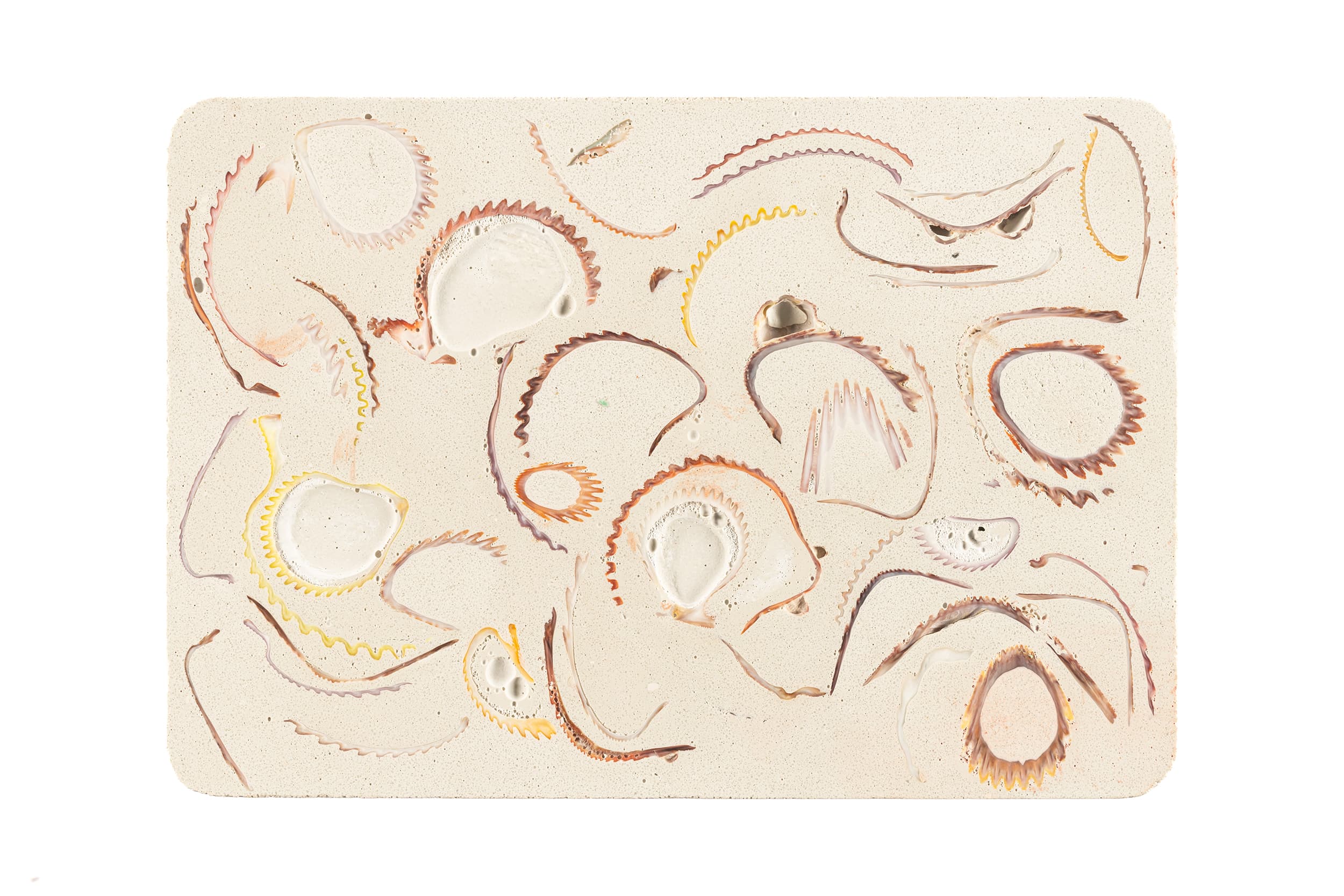
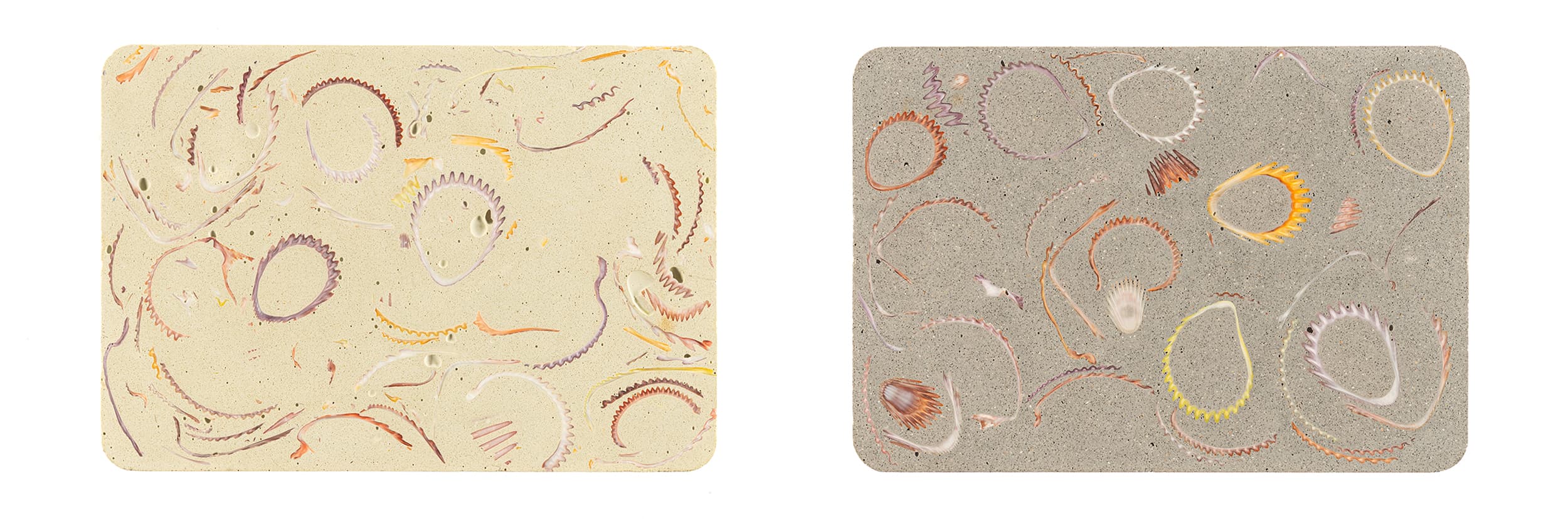
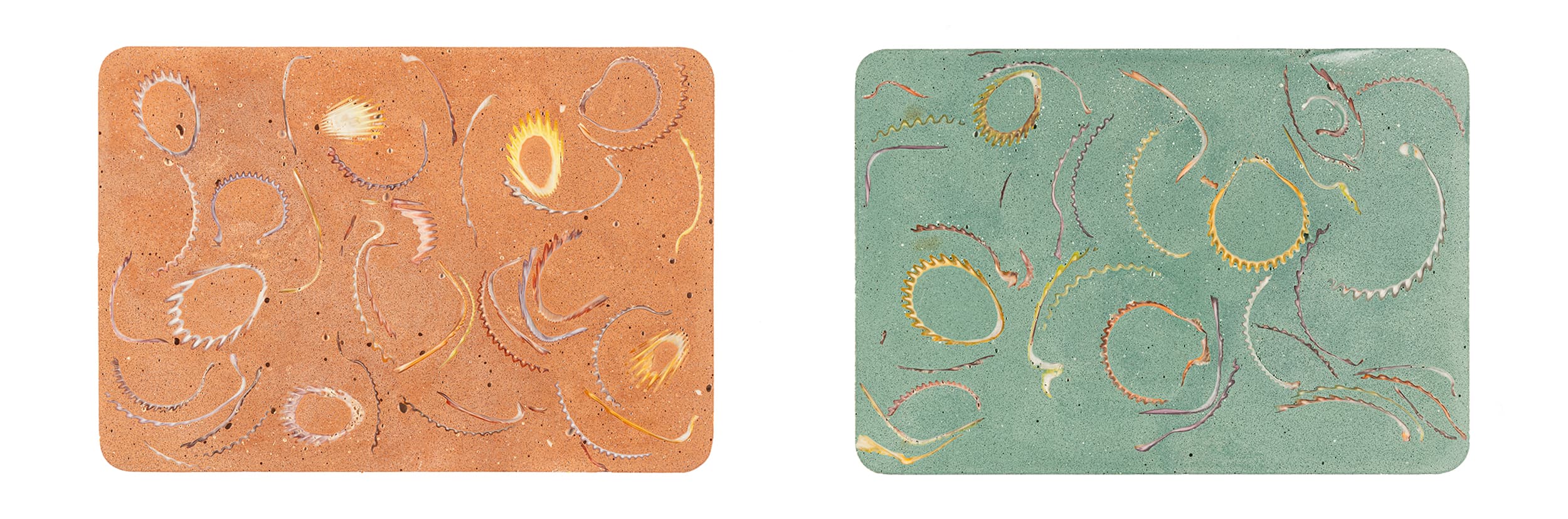
Through multi-layer process interventions including pre-treatment, surface modification and admixture tuning, inorganic silicate minerals, organic plastic polymers and calcium carbonate biological waste achieve microscopic compatibility and coexistence. Distinct raw materials mutually fill pores, interlock and encapsulate one another, and crystallise in tandem via ongoing hydration reactions over time, ultimately forming dense, stable artificial rock. Certain optimised formulations even outperform conventional portland concrete in compressive strength and wear resistance.
Every sample archived in the Inorganic Archive represents a complete set of controlled experimental records: with fixed waste compound ratios, manufacturing processes and curing conditions documented, each sample’s mechanical performance, durability metrics, surface texture and colour are fully catalogued. Complex microscale chemical reactions are translated into replicable physical specimens, forming a tangible database of regenerated inorganic materials accessible for continuous reference and iterative refinement.
III. A Novel Material Aesthetic for the Low-Carbon Era
Mass industrial production has long entrenched a standardised public aesthetic: preference for uniform base hues, seamless surfaces and flawlessly smooth finishes. This homogeneous aesthetic standard relies on high-purity raw materials, precision high-temperature calcination and massive fossil fuel consumption, rendering it an aesthetic byproduct of the high-carbon industrial system. The core aesthetic proposition advanced by Inorganic Archive holds that natural heterogeneity represents the exclusive visual language of low-carbon regenerated materials.
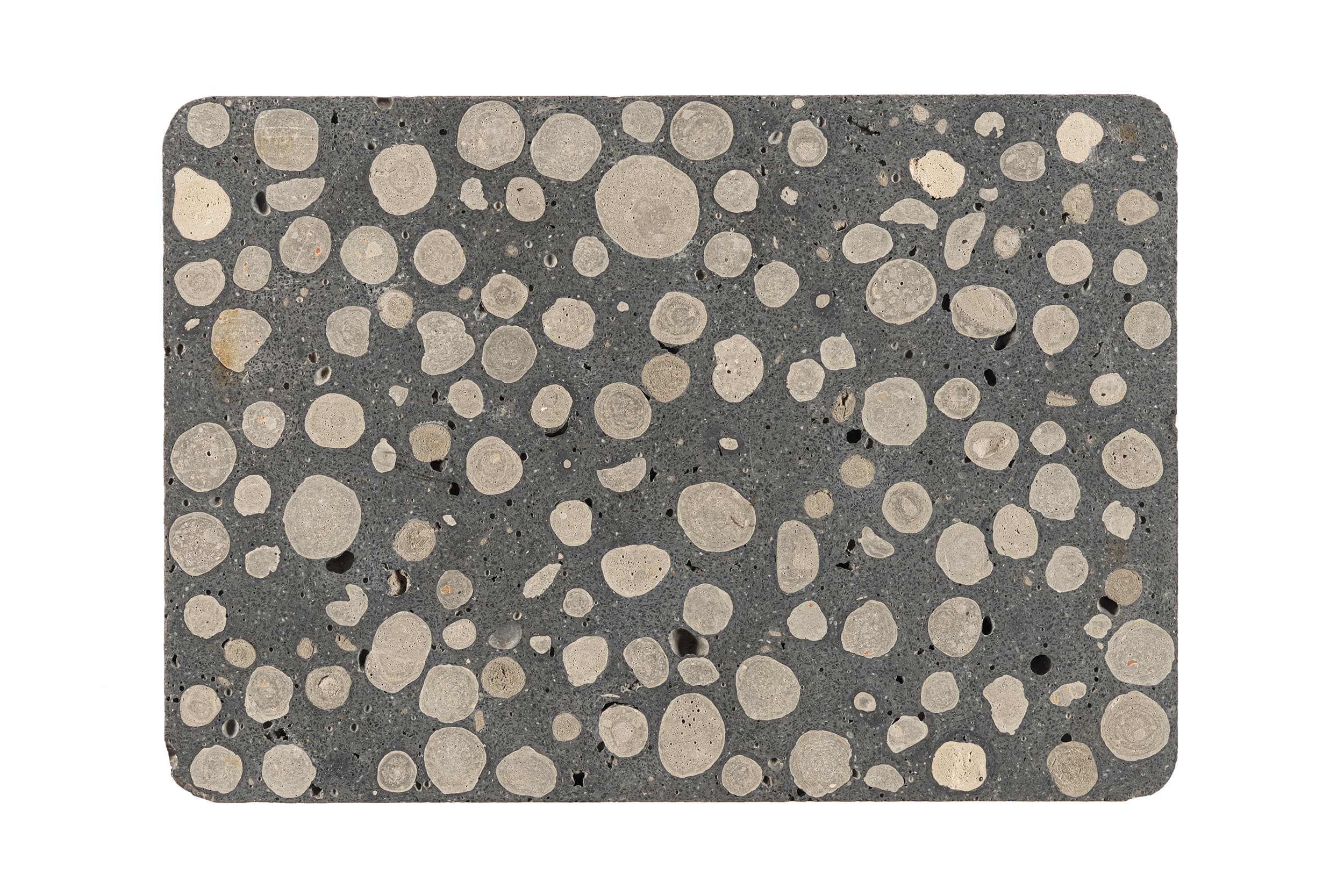
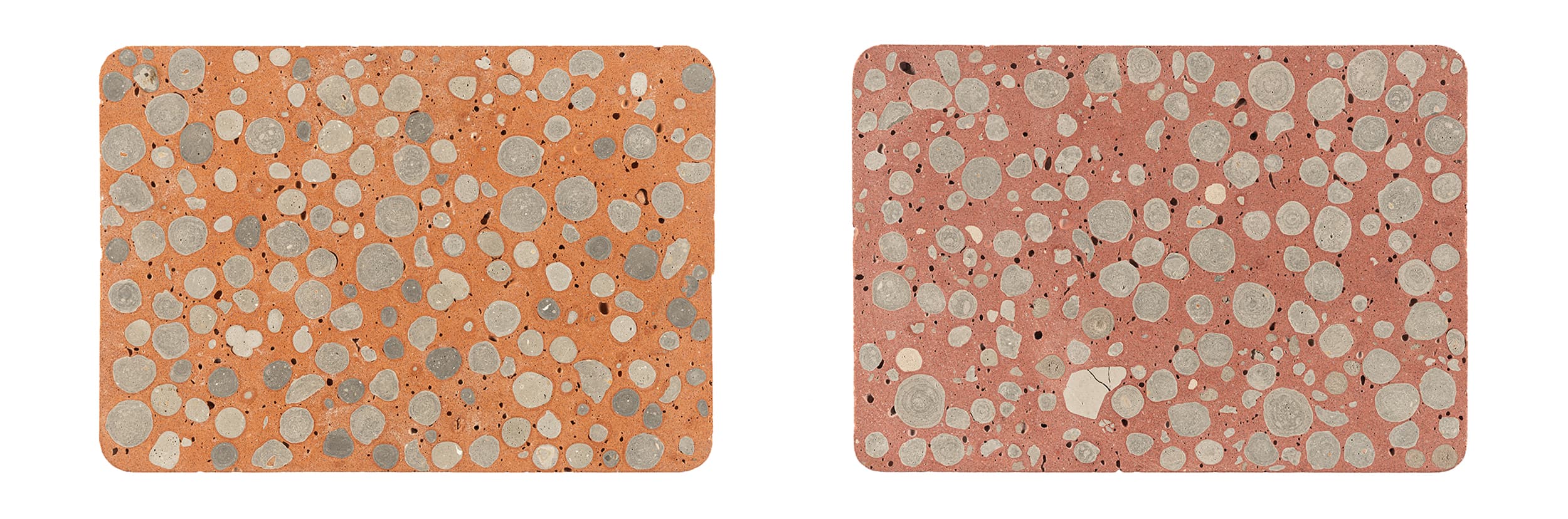
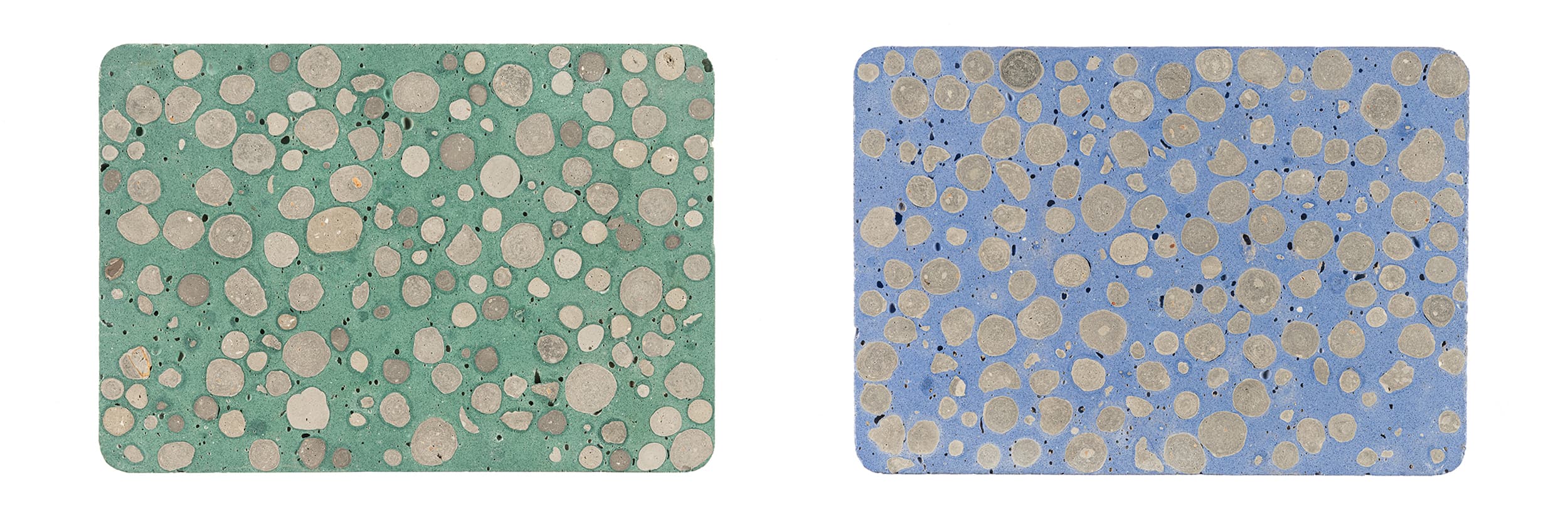
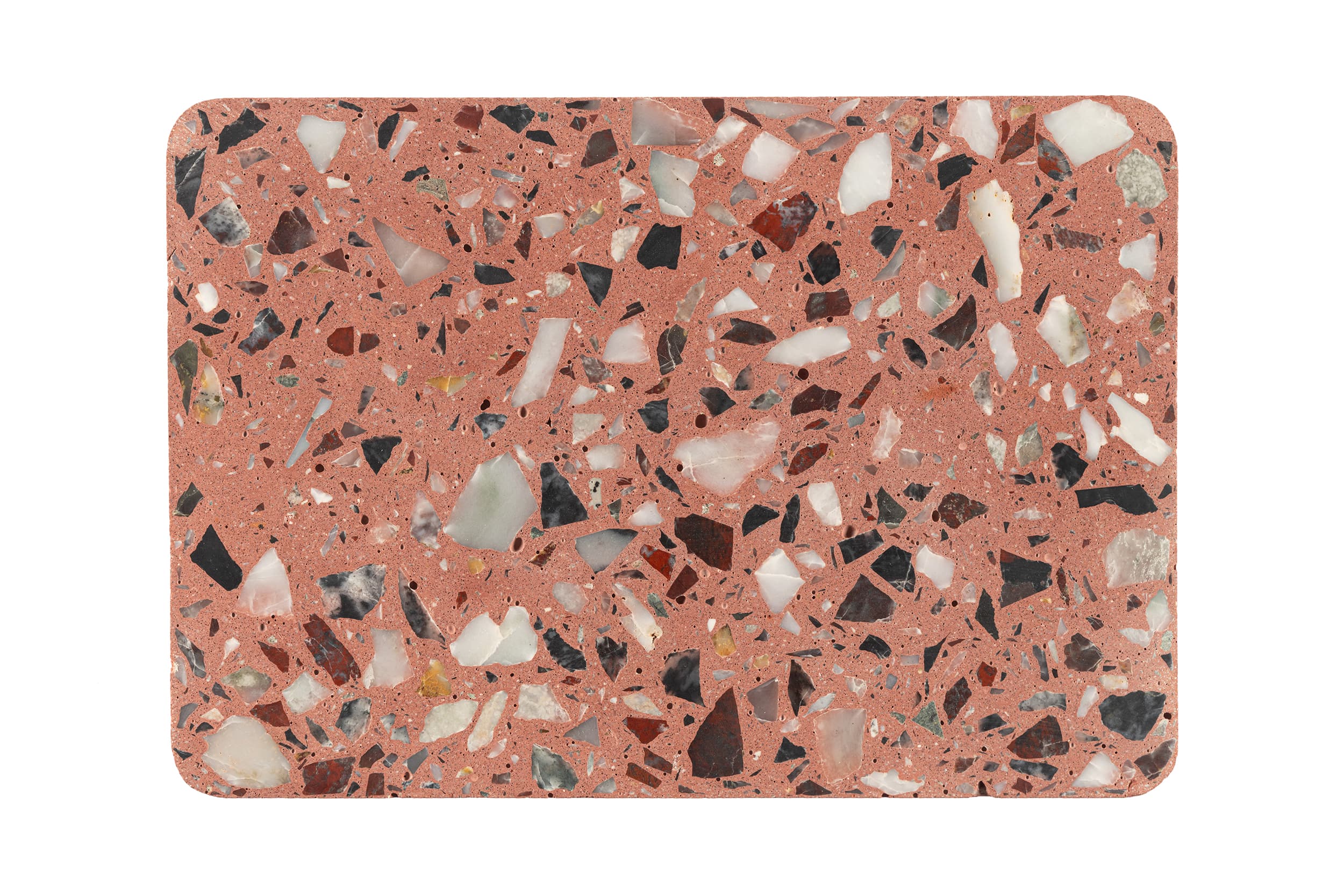
Multi-source solid wastes carry inherent differentiated mineral particles, native colour variations and irregular crystalline formations. These visual traits, labelled as “defects” under traditional industrial standards, are in fact authentic imprints of material regeneration, recording the industrial and natural histories of raw materials and yielding irreplicable unique textures.
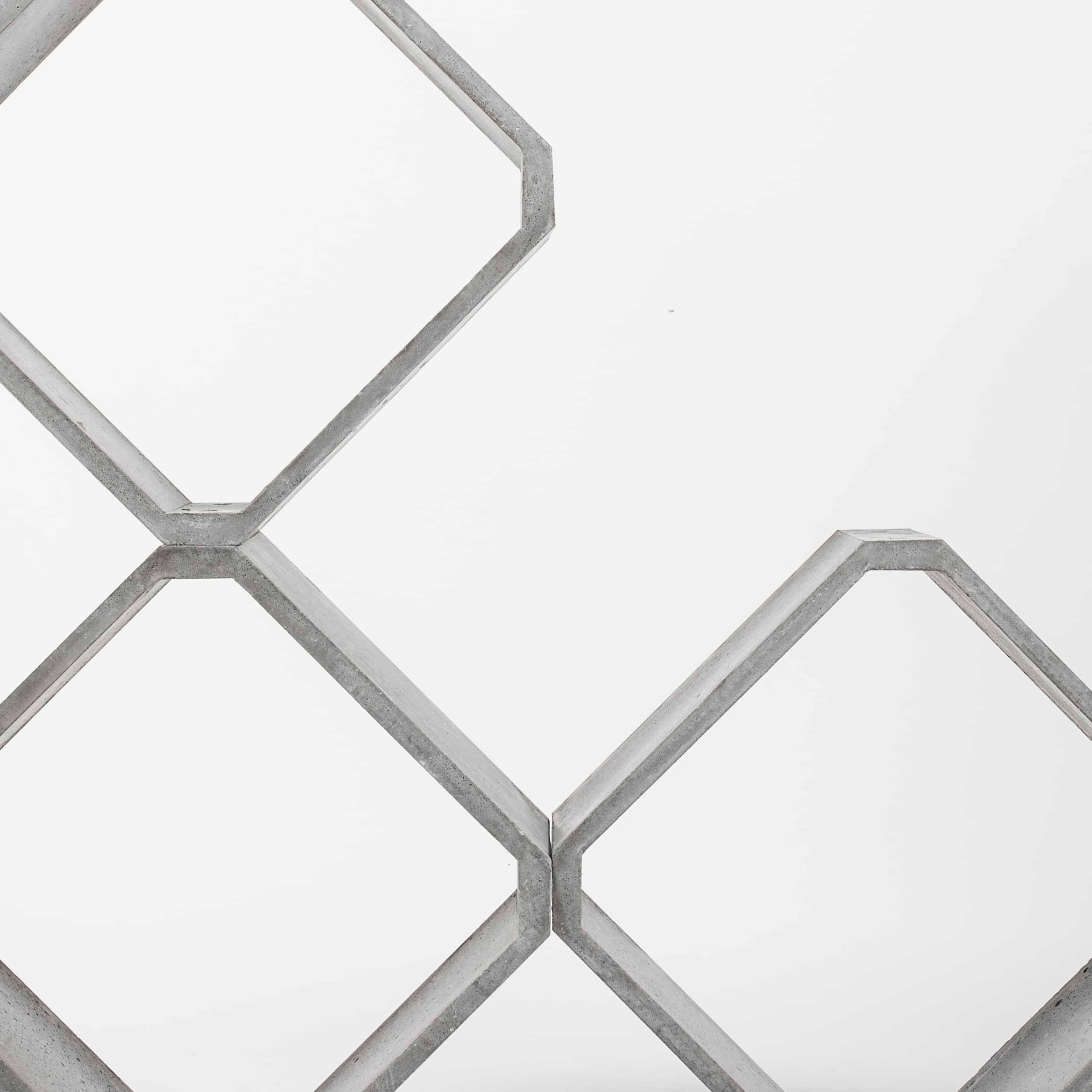
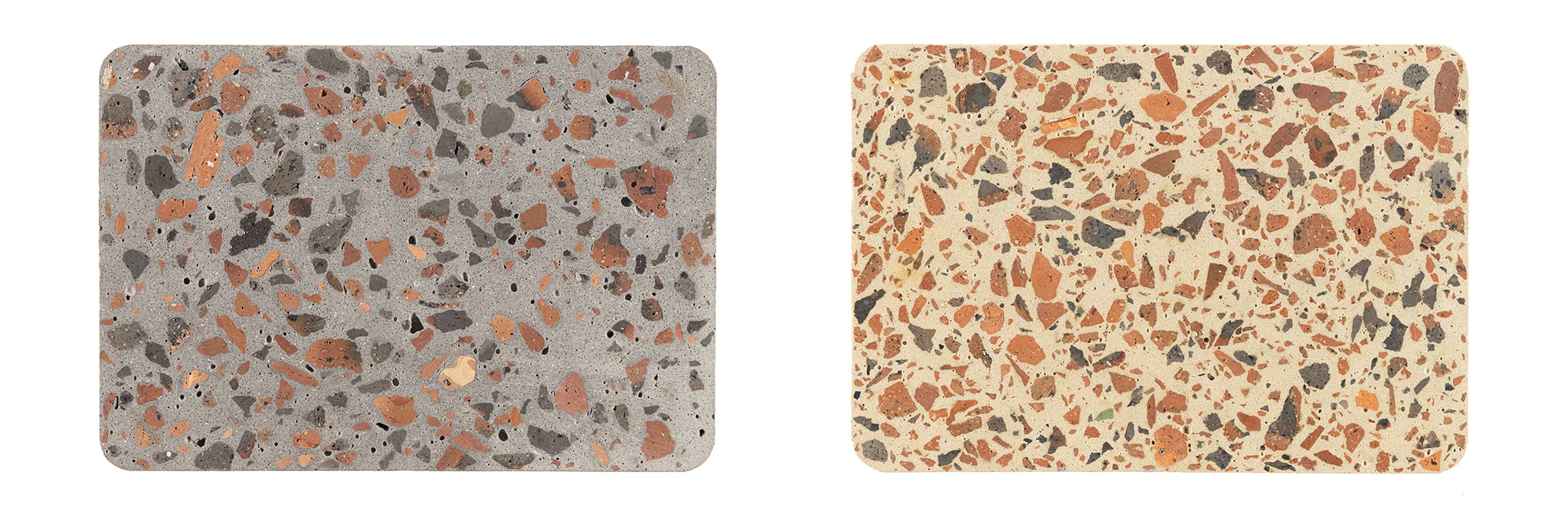
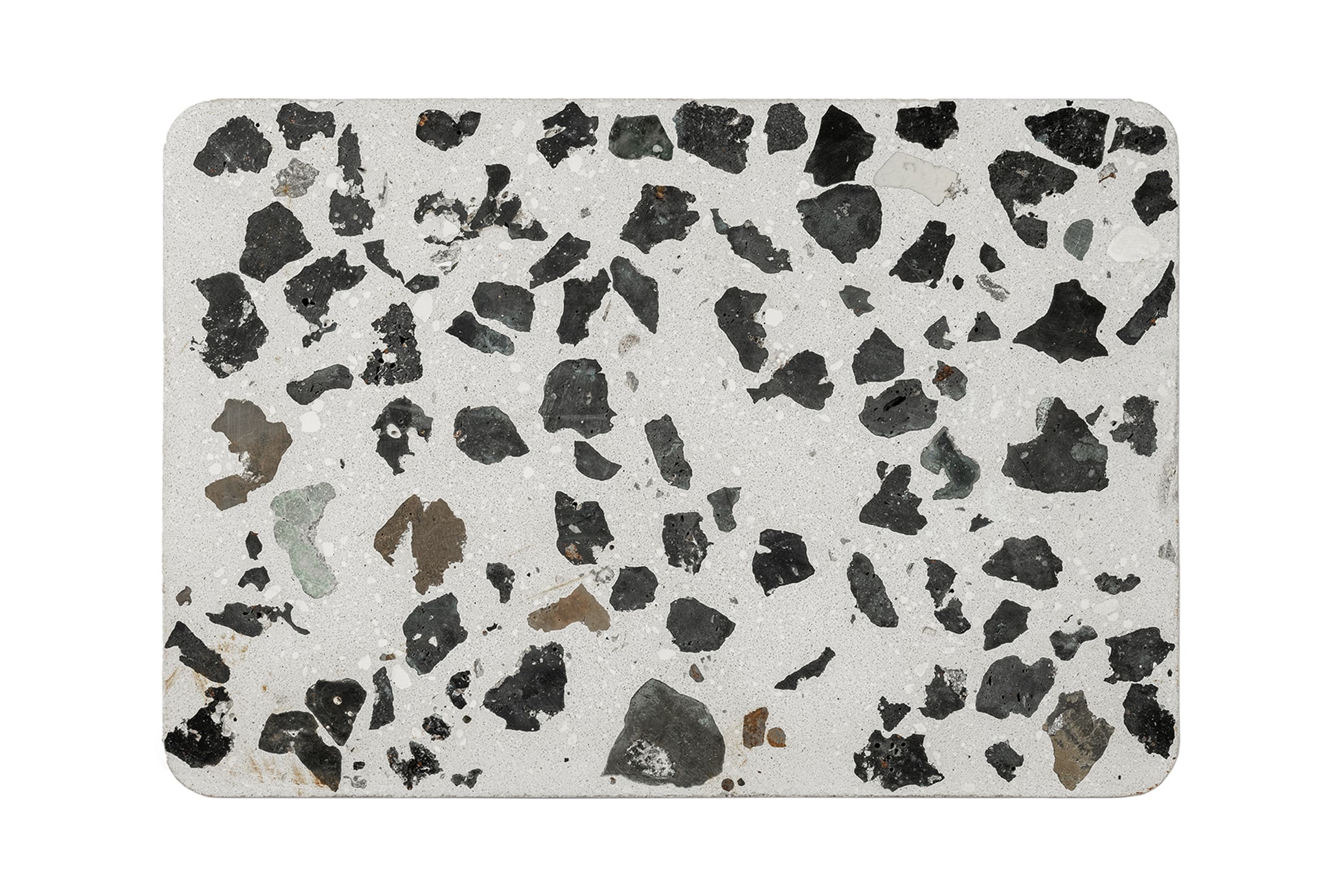
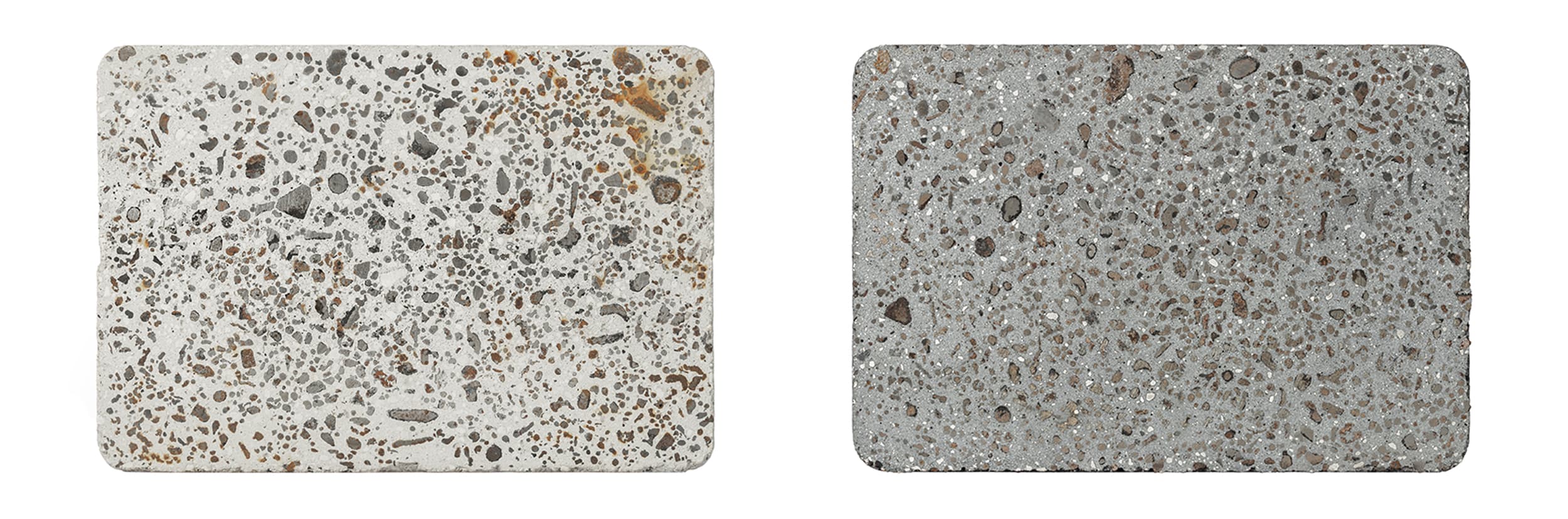
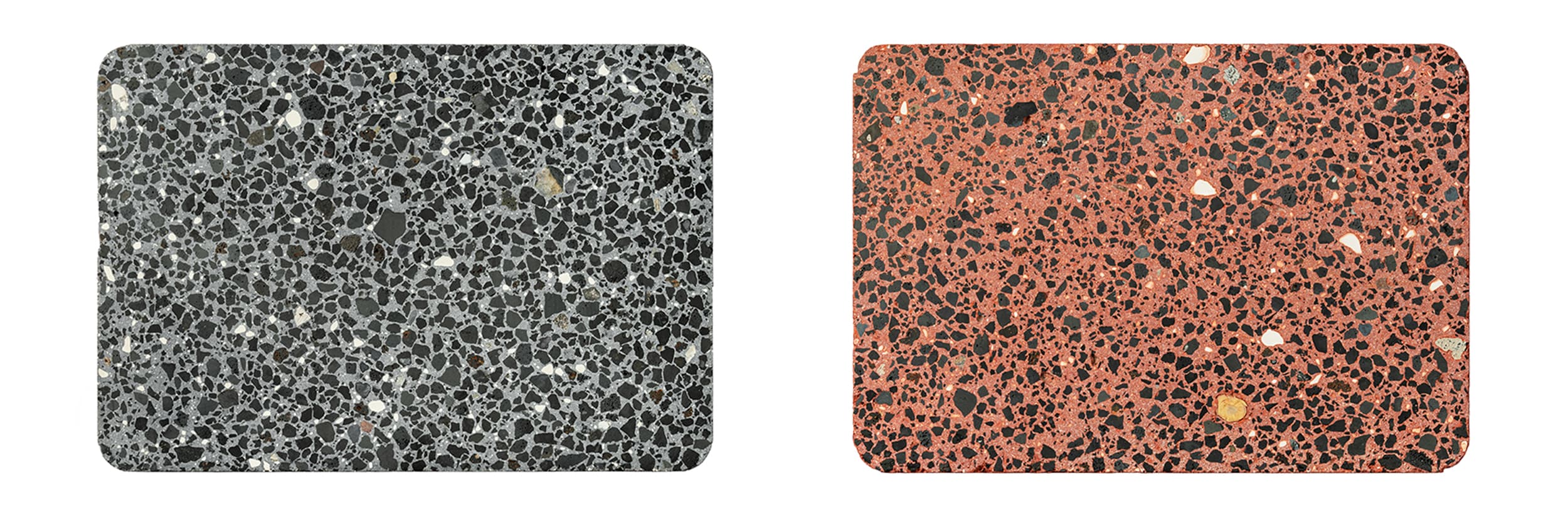
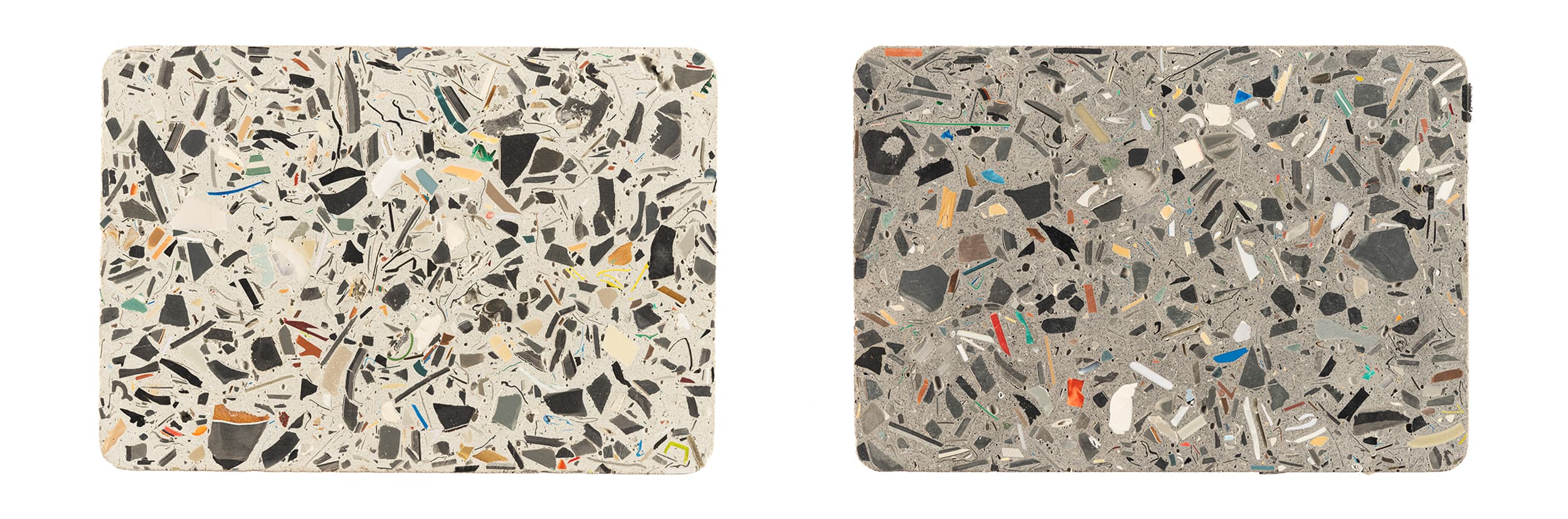
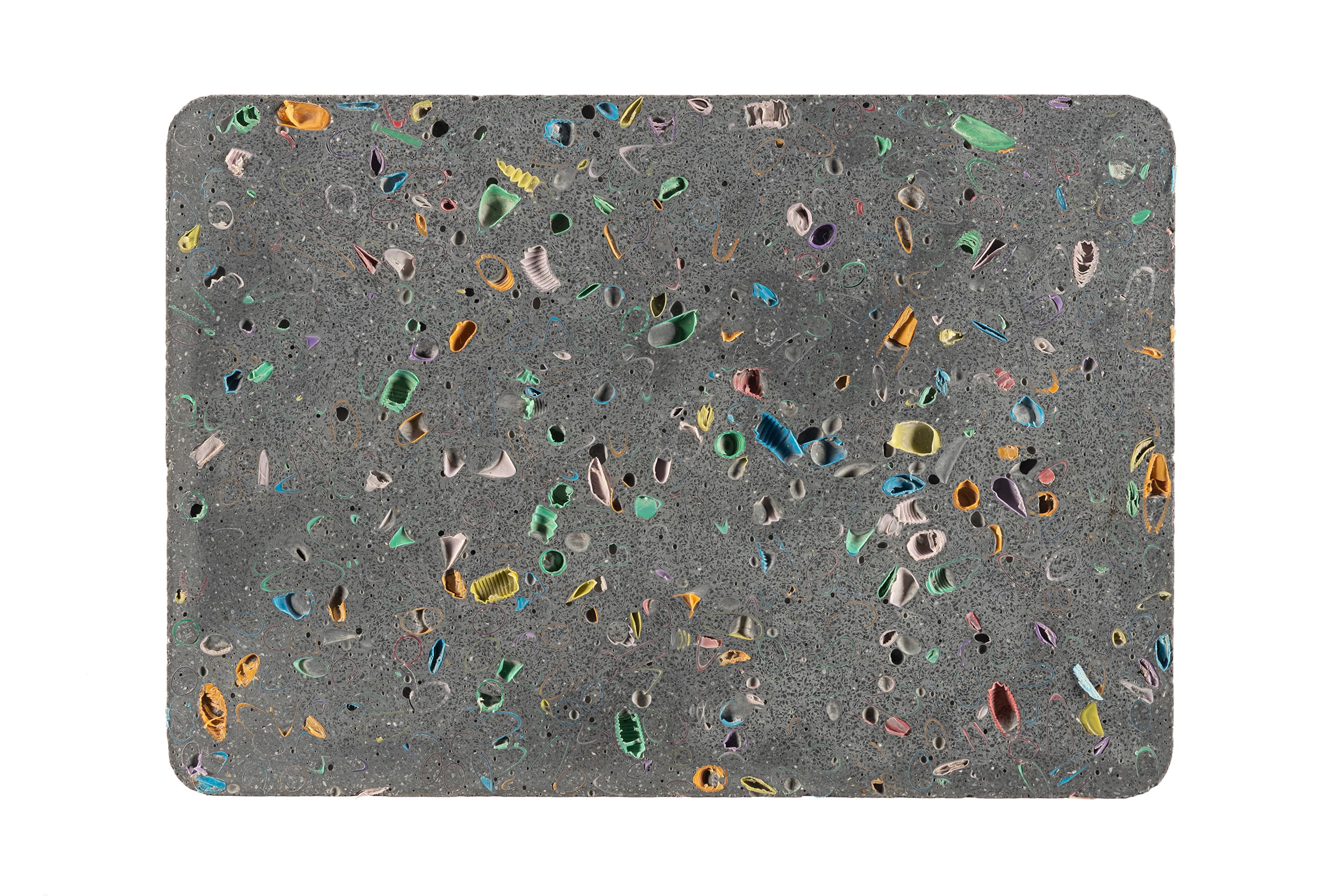
• Blast furnace steel slag and coal fly ash imbue materials with desaturated cool grey tones, where scattered fine mineral particles forge the stark, austere texture characteristic of heavy industry.
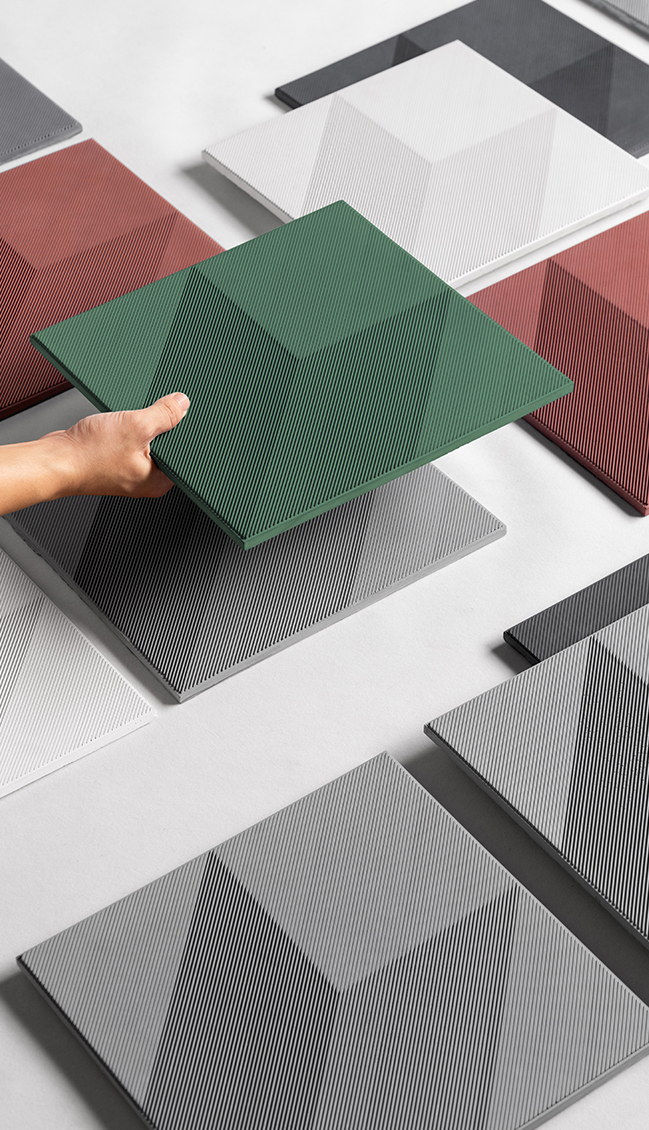
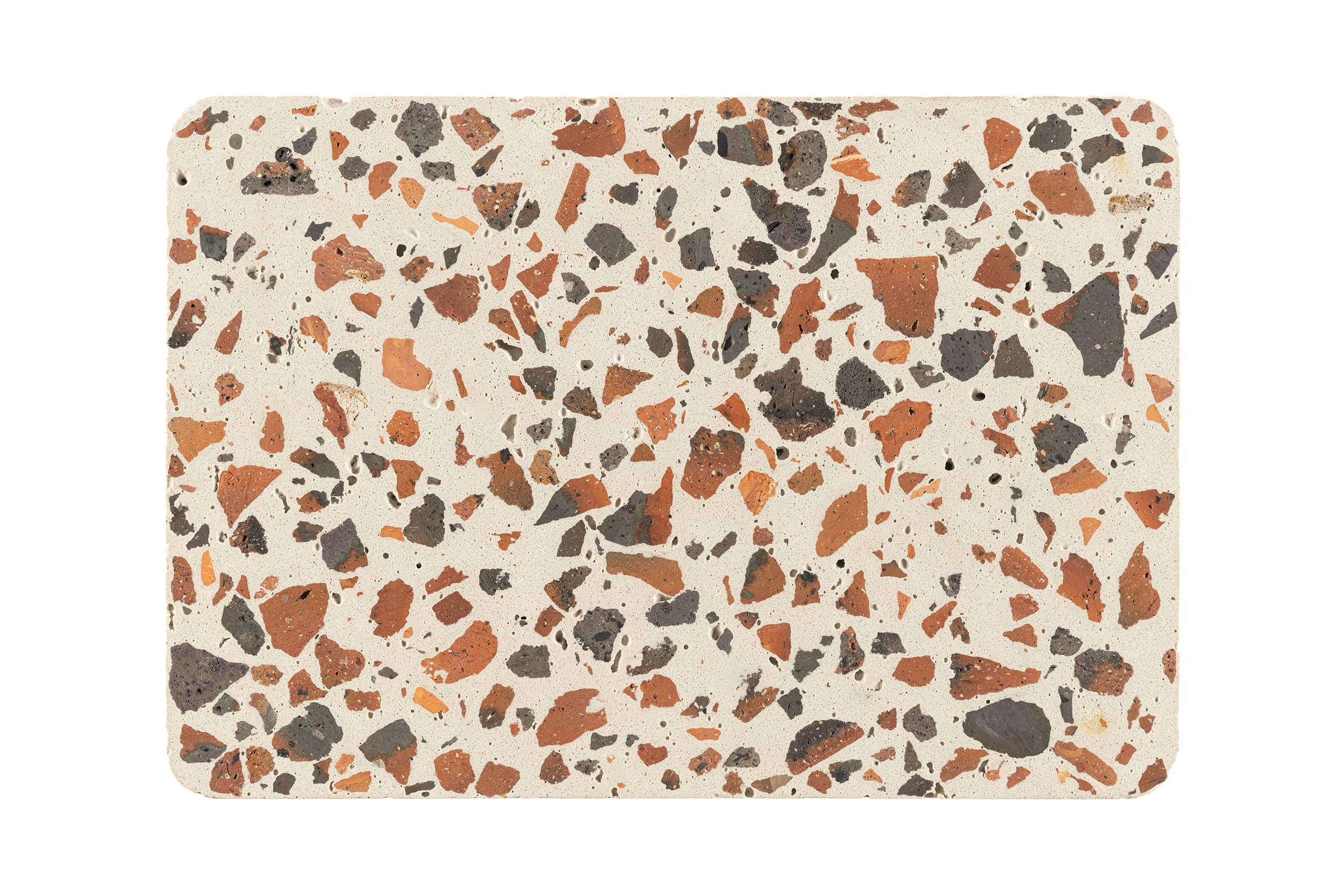
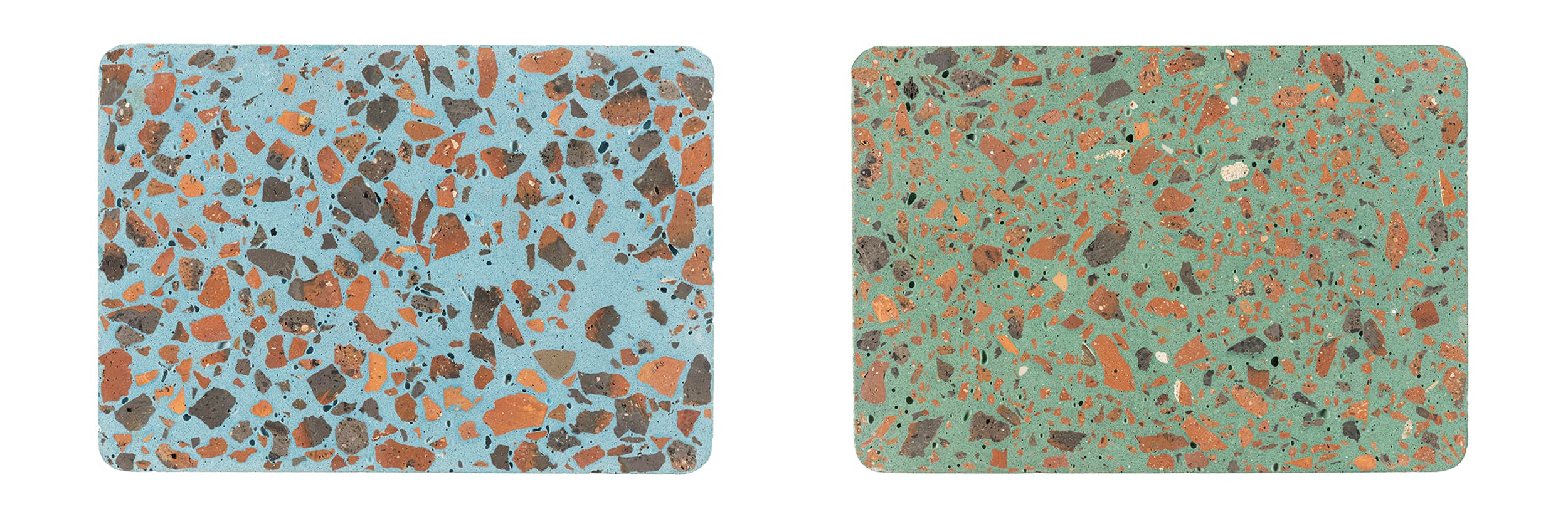
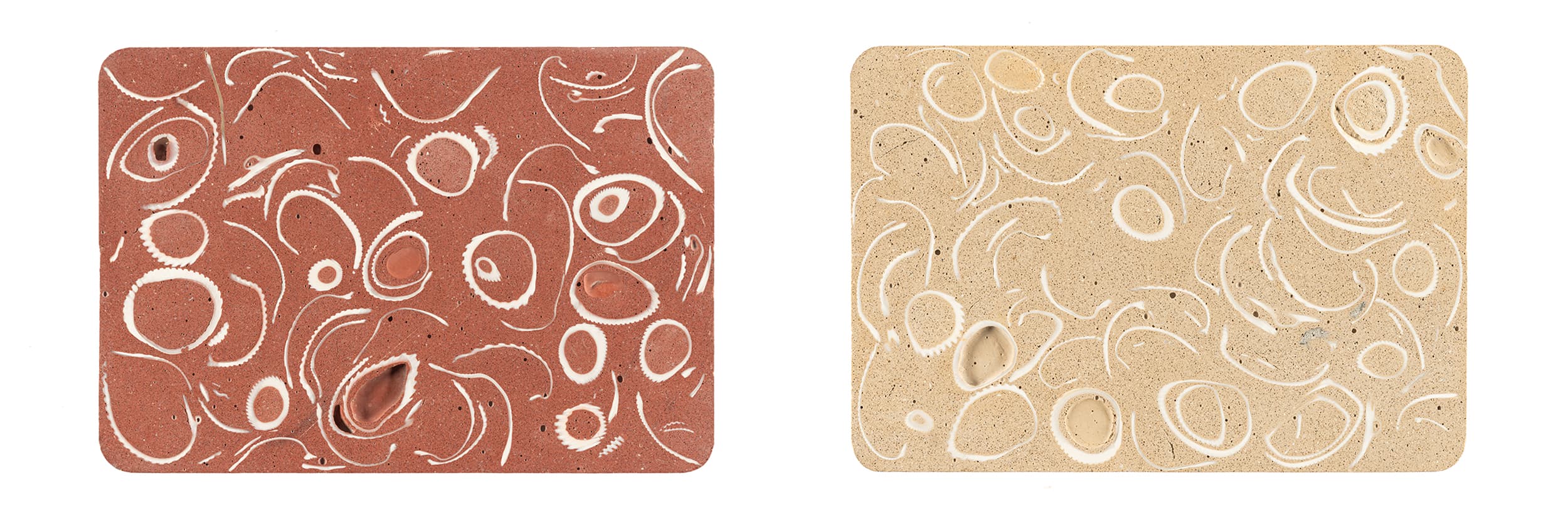
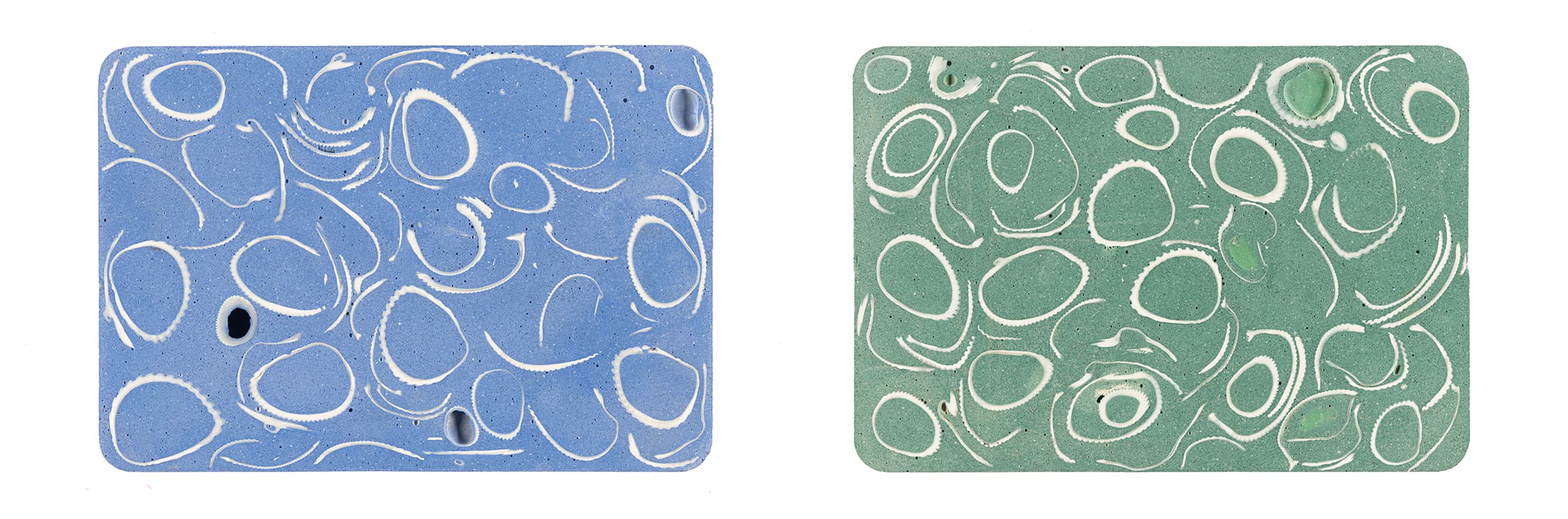
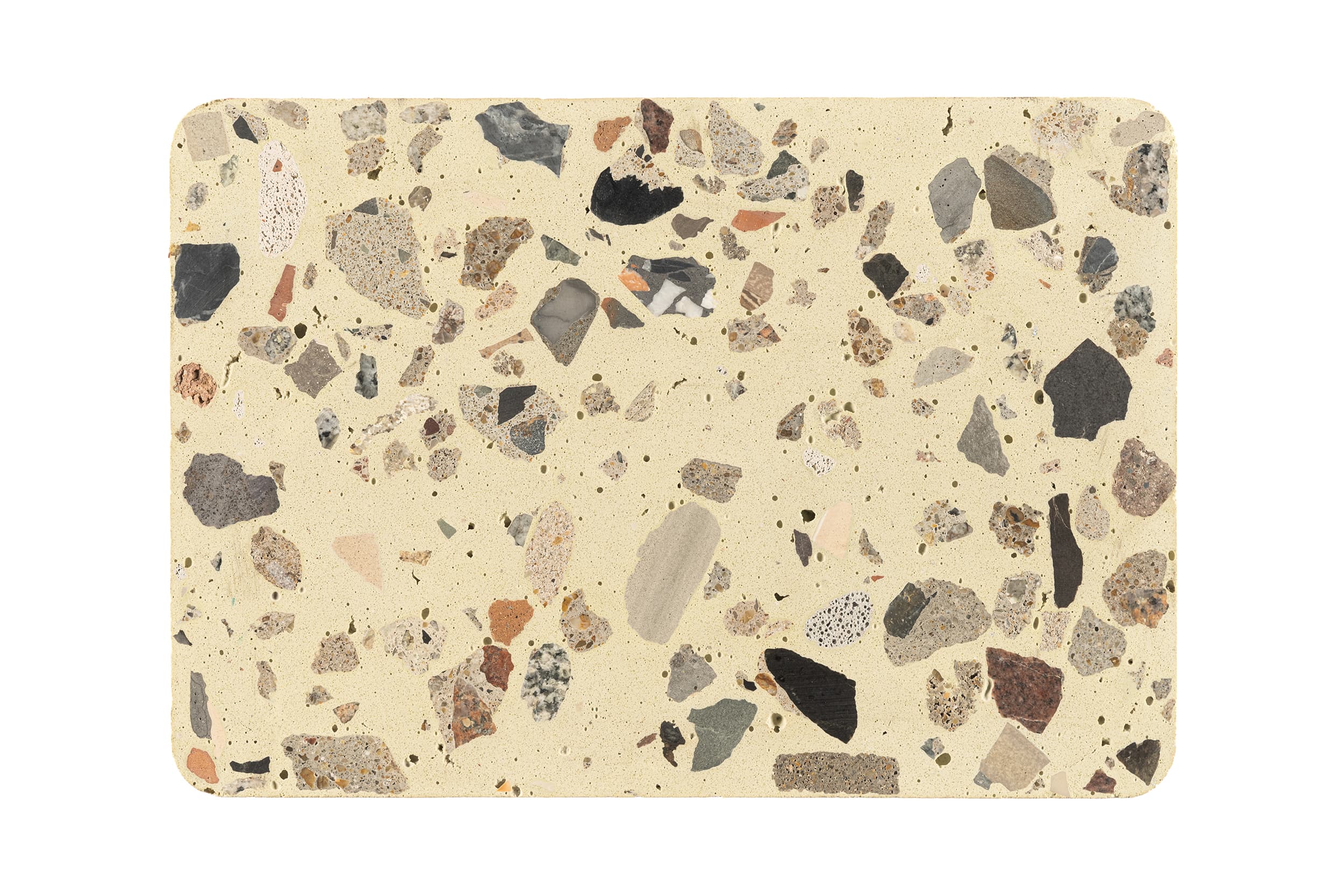
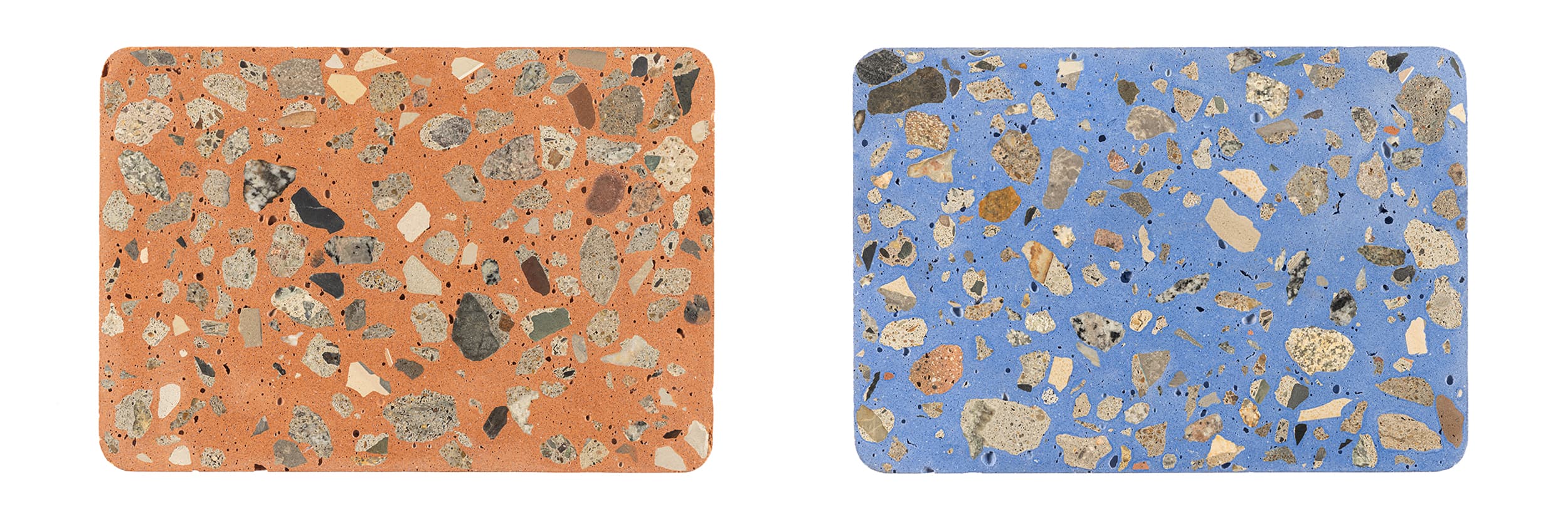
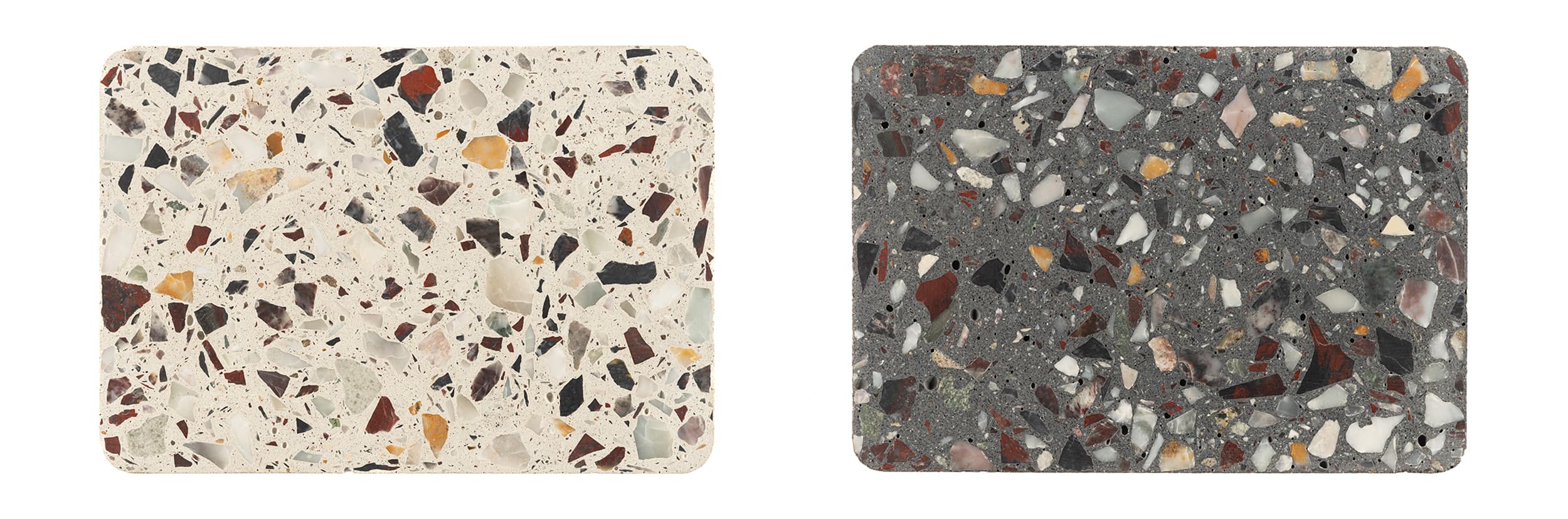
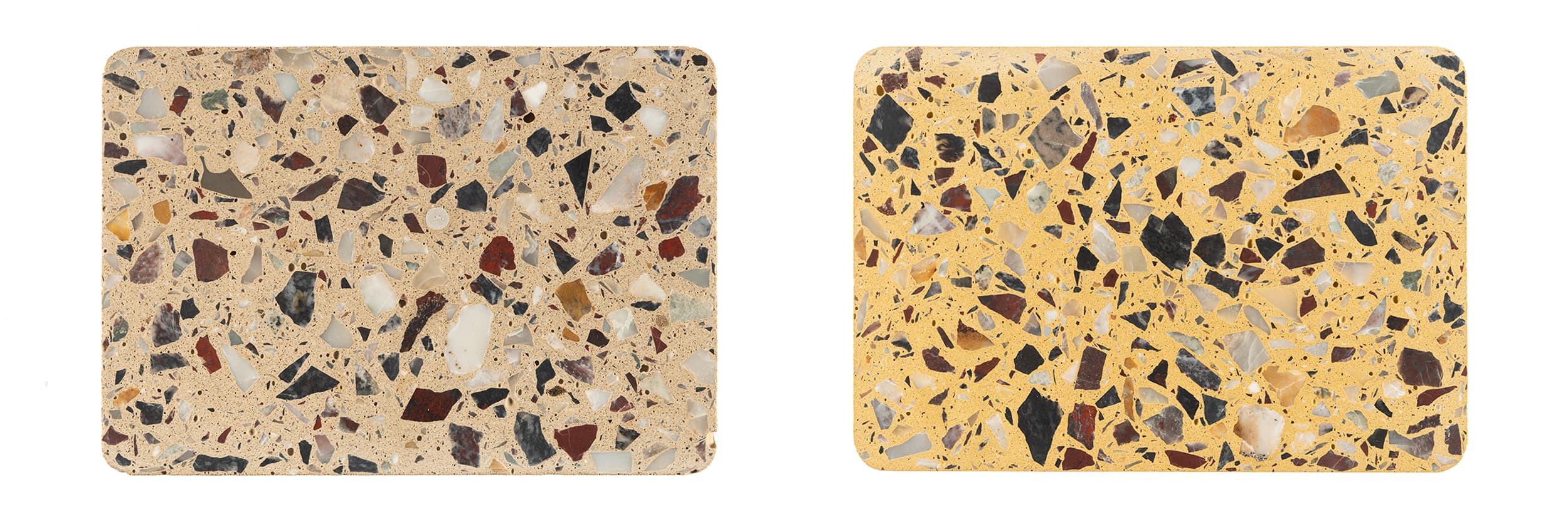
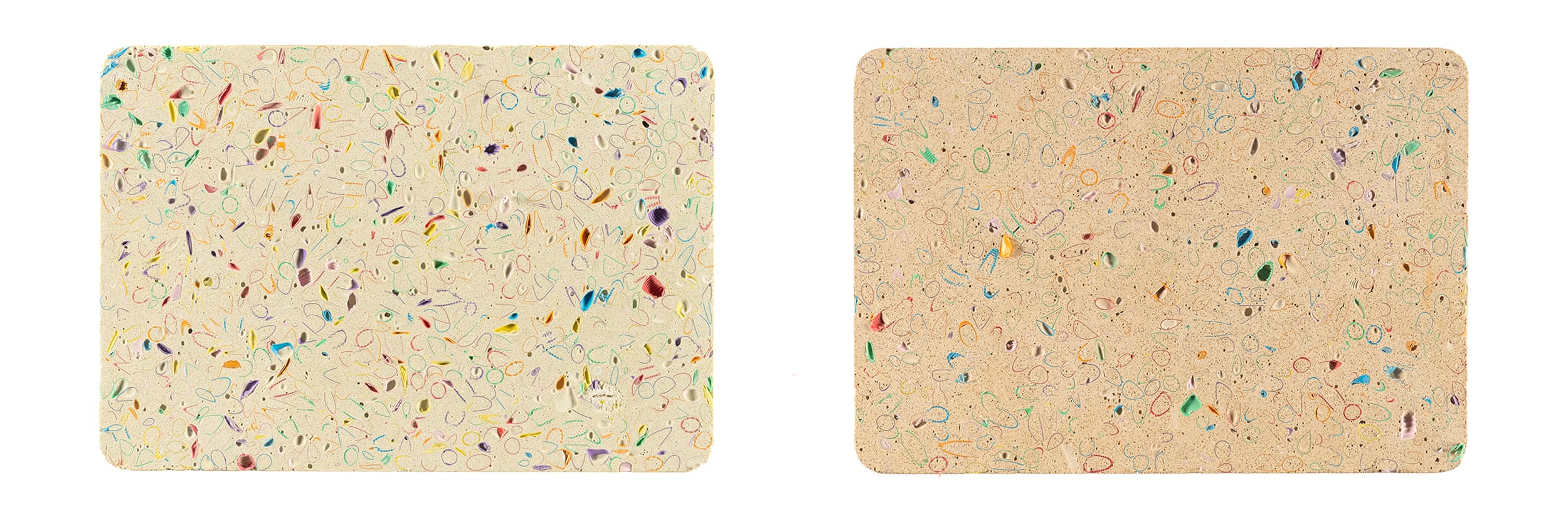
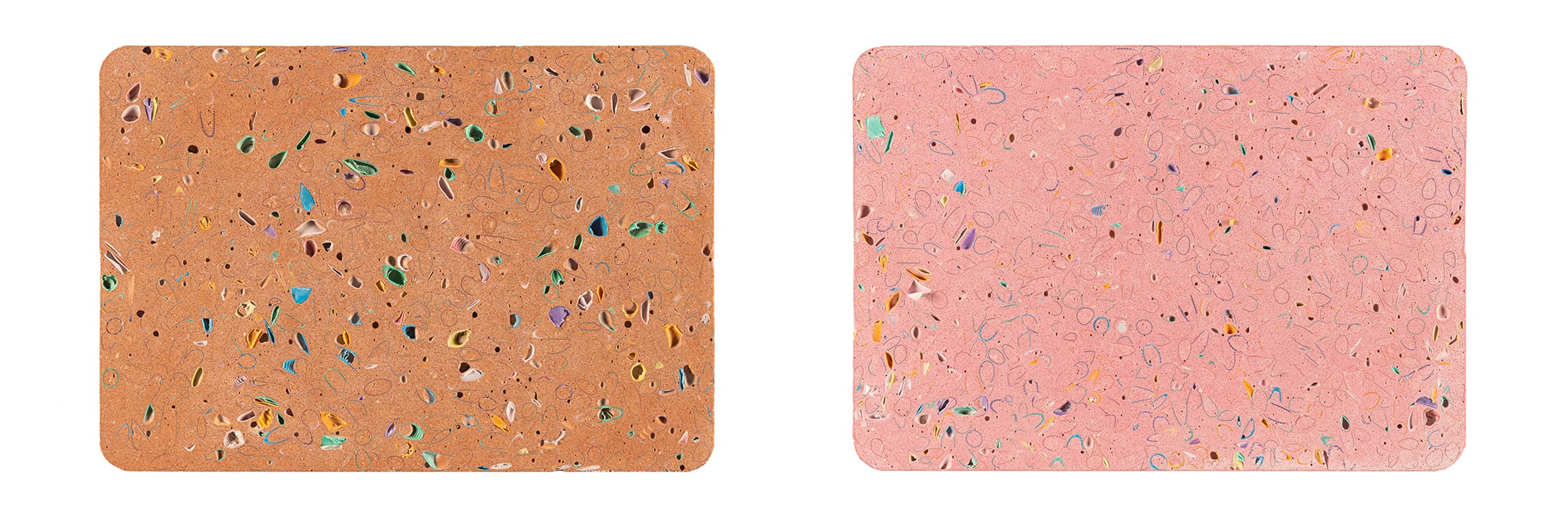
• Demolished brick and waste ceramic fragments introduce earthy tones including terracotta red, celadon green and ochre beige, with mottled colour patches spreading naturally to deliver the mellow weight of fired clay.
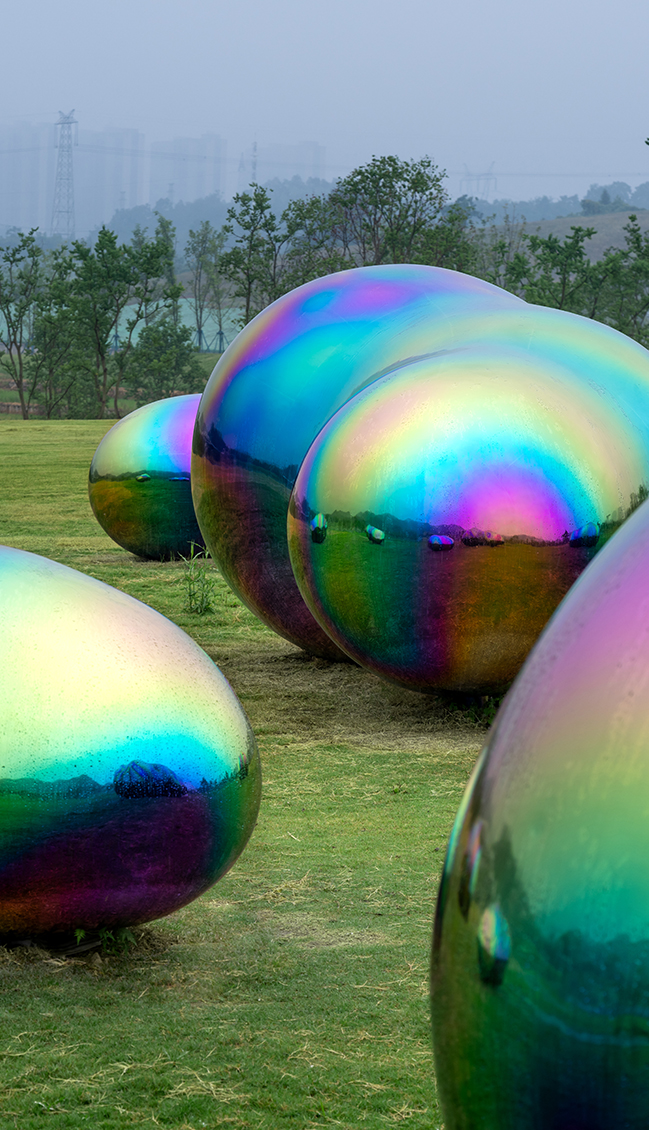
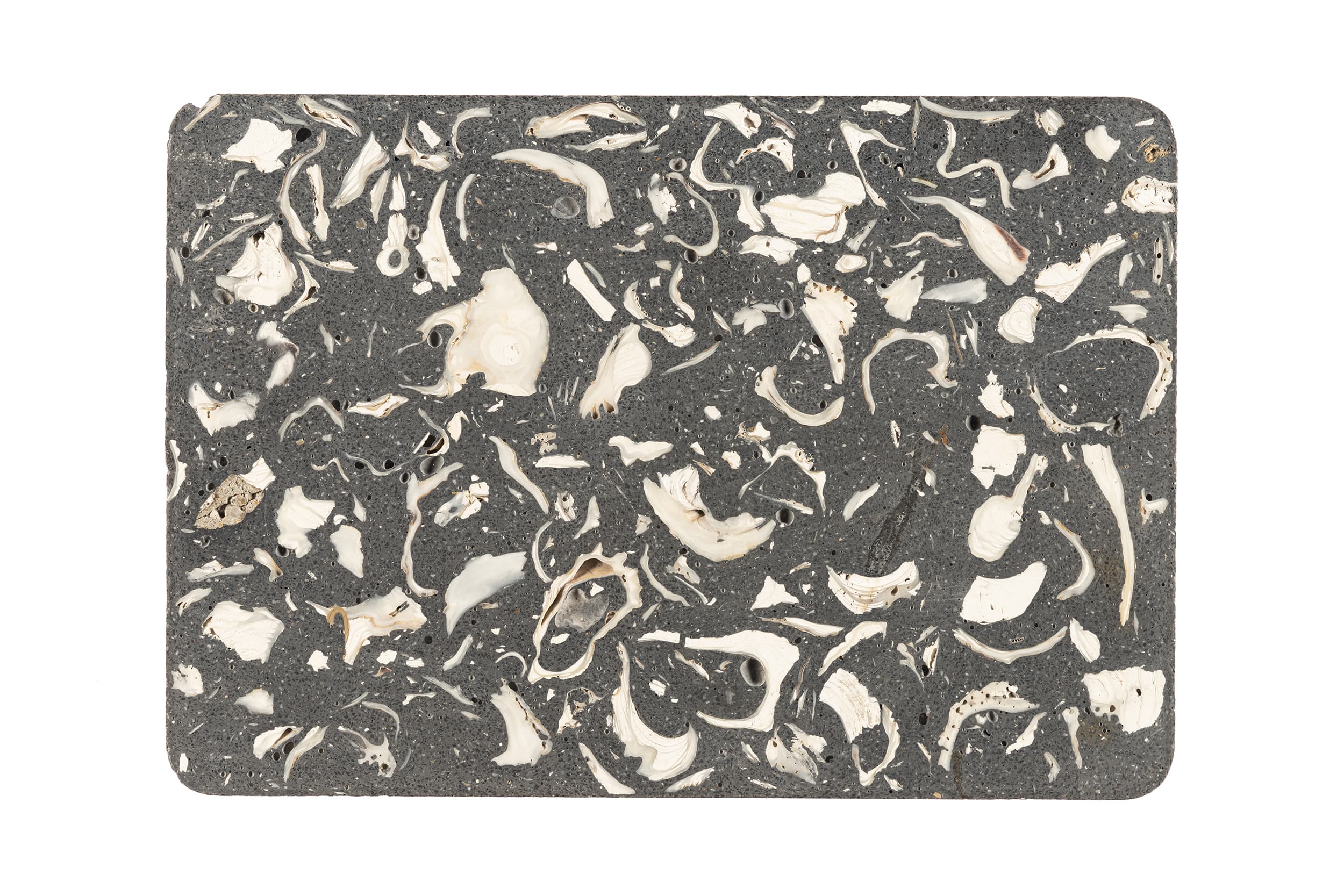
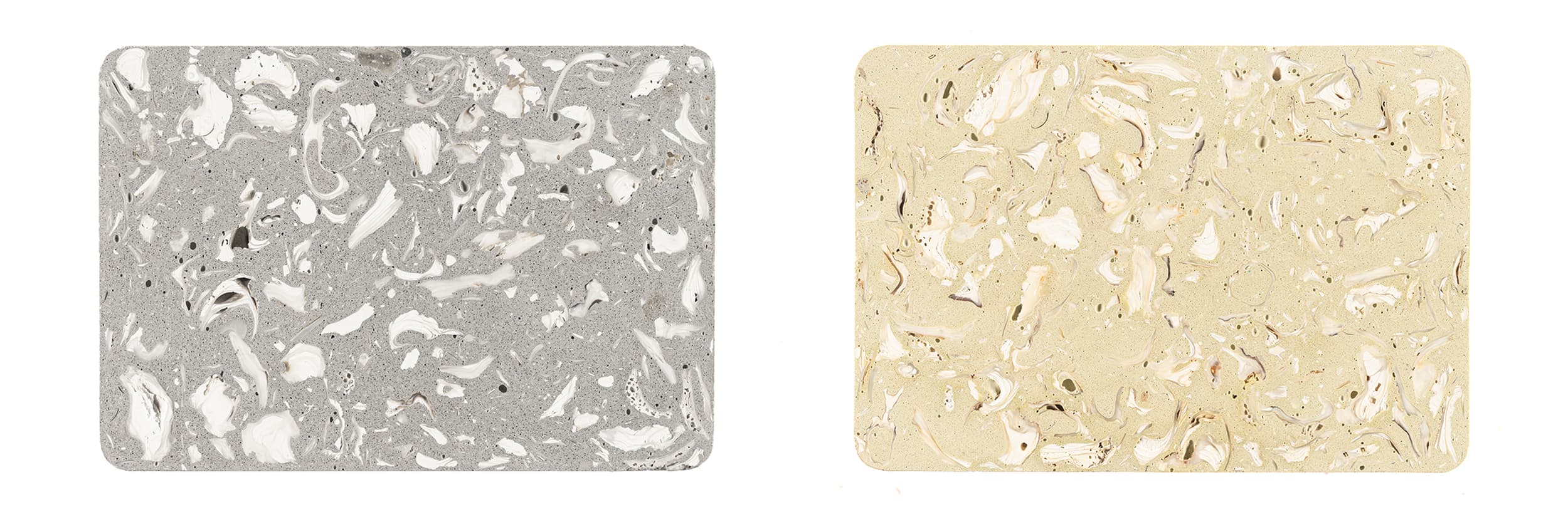
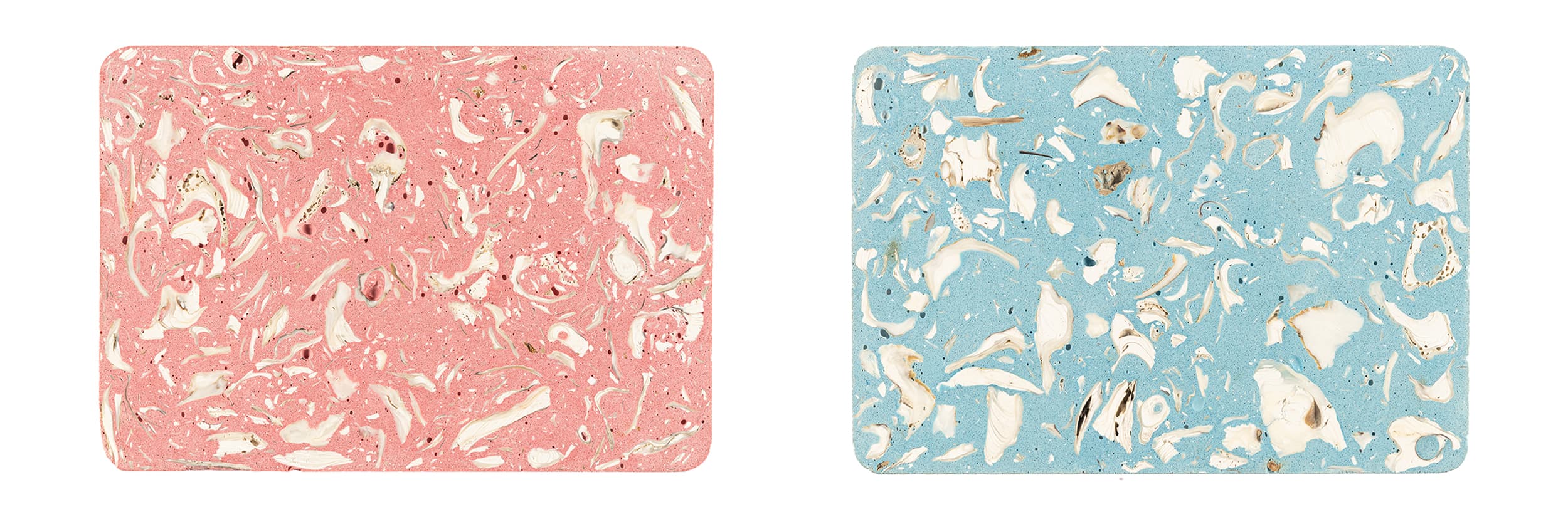
• Ultra-fine seashell particles embedded just below material surfaces release irregular pearlescent iridescence upon polishing, resembling scattered silver glimmers left by glacial meltwater.
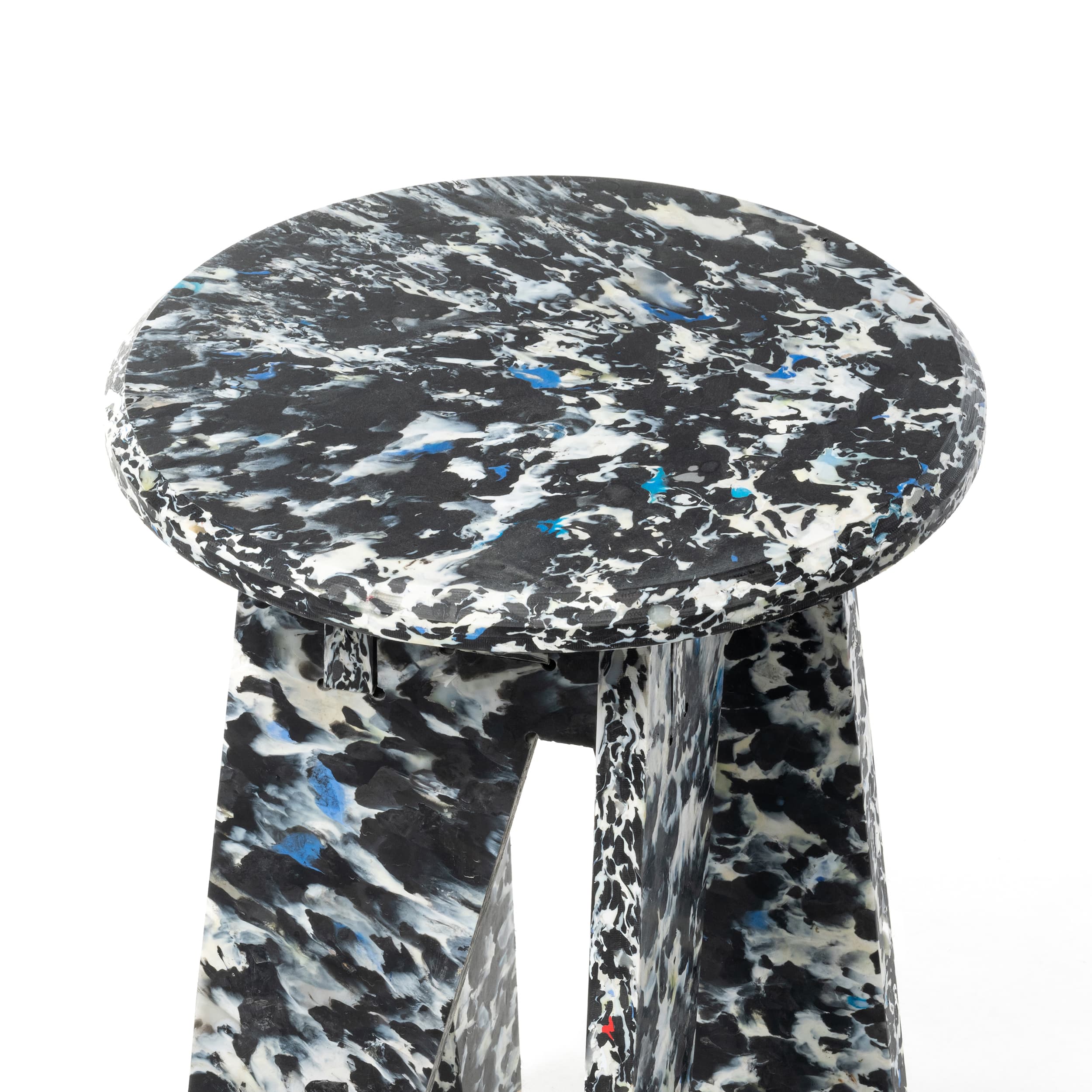
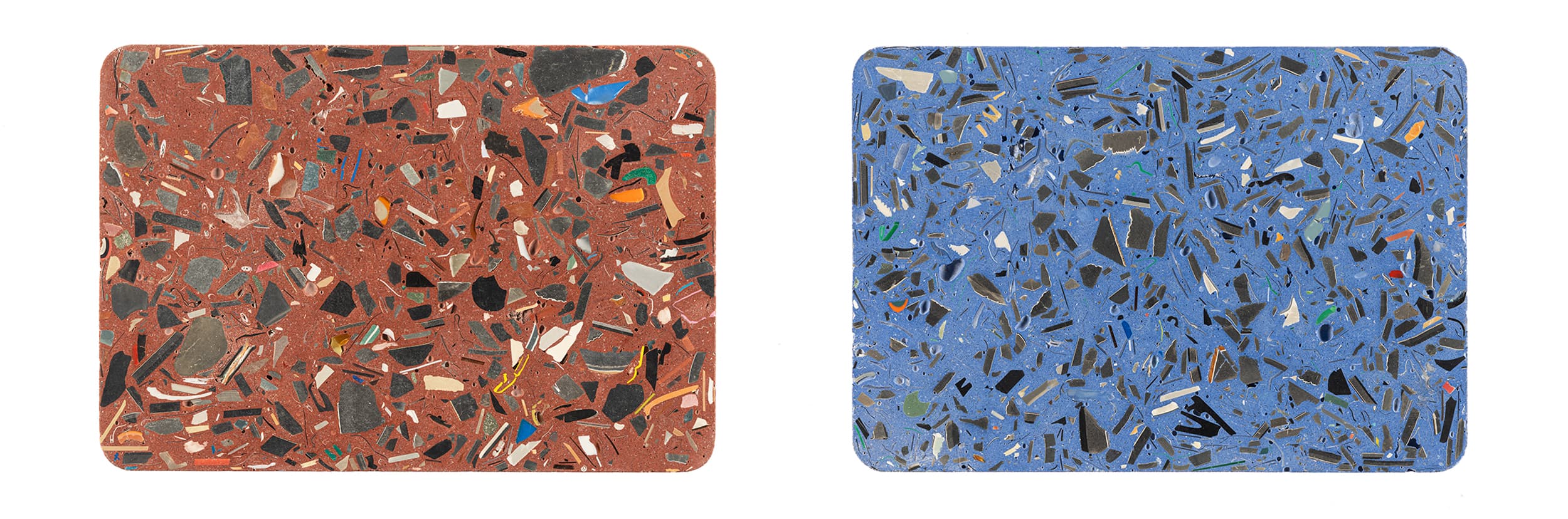
• Crushed plastic granules scatter randomly across grey inorganic substrates, with red, blue, transparent and black colour flecks creating avant-garde pop-art visual contrast.
Leveraging differentiated forming and surface finishing techniques, a single waste compound formula can generate three entirely distinct visual and tactile systems, covering all application scenarios from refined indoor decoration to outdoor landscape construction:
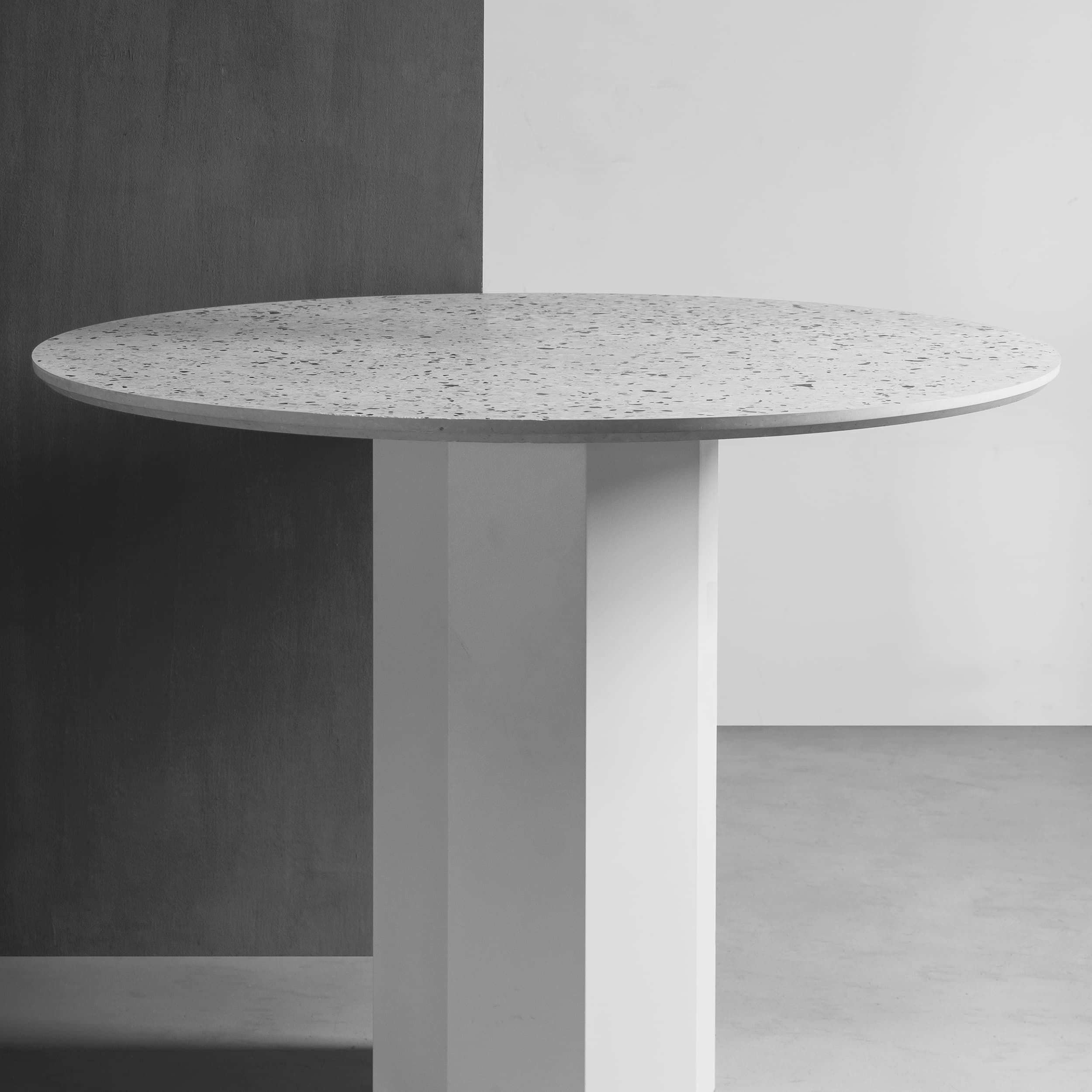
1. Precision compounding of ultra-fine mineral powders + fine polishing: Surfaces attain a delicacy comparable to high-temperature ceramics, developing soft mirror-like lustre post-polishing with no coarse grains, balancing refined visual appeal and robust durability.
2. Irregular aggregates + moderate surface grinding: Heterogeneous particles sit partially exposed on the surface, with colour and texture flowing organically to create soft, mottled tactile quality.
3. Sandblasting / impact gel stripping: Coarse internal aggregates are fully exposed, delivering a bold, three-dimensional granular texture with exceptional resistance to wind-blown sand and rain erosion.
We actively reject the uniform, flawless finish pursued by mass industrial manufacturing, embracing regenerated materials’ natural grain, colour gradients and heterogeneous textures without reservation. Cool steel slag greys, pearlescent seashell lustre, terracotta hues from waste ceramics and pop-coloured plastic flecks — every texture tells a visual narrative of waste reborn. Diverse overlapping material traces collectively construct a low-carbon aesthetic order distinct from traditional industrial materials, proving that environmental sustainability never demands sacrifices in visual beauty.
IV. The Material Matrix of Standardised Archiving Systems
Hundreds of physical samples are not disorganised lab test pieces. The Inorganic Archive establishes a complete, quantifiable and traceable matrix of regenerated inorganic materials, assigning an exclusive green identity file to each sample. It bridges information gaps between the solid waste raw material supply chain and architectural design end-users, translating abstract environmental ideals into rational design tools ready for direct deployment by designers.
A single sample archive incorporates four core information dimensions:
1. Raw Material Genealogy Classification
Solid wastes are sorted into four genealogical categories by source:
• Relics of the Earth: Construction debris, waste clay bricks
• Industrial Furnace Outputs: Steel slag, blast furnace slag, coal fly ash, carbide slag
• Echoes of the Ocean: Ground waste seashell and oyster shell powder
• Urban Surge Residues: Waste plastic pellets, plastic microfilaments
Each archive clearly records the types of raw materials contained in the sample, their blending proportions and raw material origins.
2. Colour & Texture Coordinates
Sample colour ranges are categorised: native inorganic grey series (lunar rock grey, basalt black, mineral mist grey), earth mineral tone series (terracotta red, celadon green, ochre beige), and mixed polychrome series (pop-art plastic flecks, pearlescent seashell iridescence). Corresponding forming and finishing processes are documented, establishing clear positioning across both colour and tactile dimensions to enable designers to rapidly match samples to project stylistic requirements.
3. Quantifiable Low-Carbon Decarbonisation Metrics
Precise calculations detail the total volume of solid waste consumed per sample, the substitution ratio of carbon-intensive clinker, and the net carbon reduction achieved relative to conventional portland materials. These figures intuitively demonstrate the material’s environmental value and satisfy material traceability requirements for green building certifications and low-carbon real estate developments.
4. Engineering Performance & Applicable Scenarios
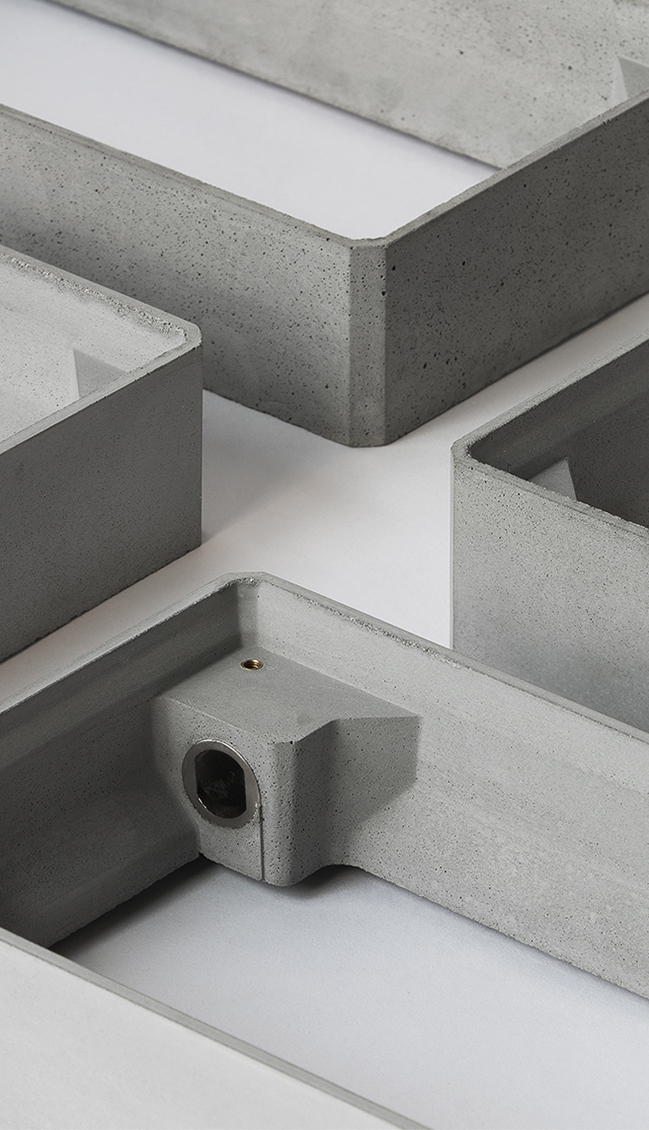
Comprehensive records document mechanical and durability parameters including compressive strength, drying shrinkage resistance, weathering grade, sulphate corrosion resistance, stain resistance and impact resistance. Clear applicable scenarios are defined: thin-walled translucent lighting fixtures, indoor decorative countertops, residential flooring, outdoor public landscape components and urban street furniture. This technical data prevents cracking and weathering issues arising from mismatched material deployment.
This archiving system connects upstream waste producers from metallurgy, power generation and municipal solid waste treatment sectors, while directly serving architects, interior designers and landscape planners downstream. Users can swiftly filter regenerated inorganic materials matching specified colour, texture, strength and low-carbon indicators, drastically cutting implementation costs for low-carbon design schemes.
Conclusion: Inorganic Regeneration, Perpetual Material Cycles
Inorganic Archive does not mark the concluding summary of material experimentation, but rather the opening preface to the widespread application of regenerated inorganic materials.
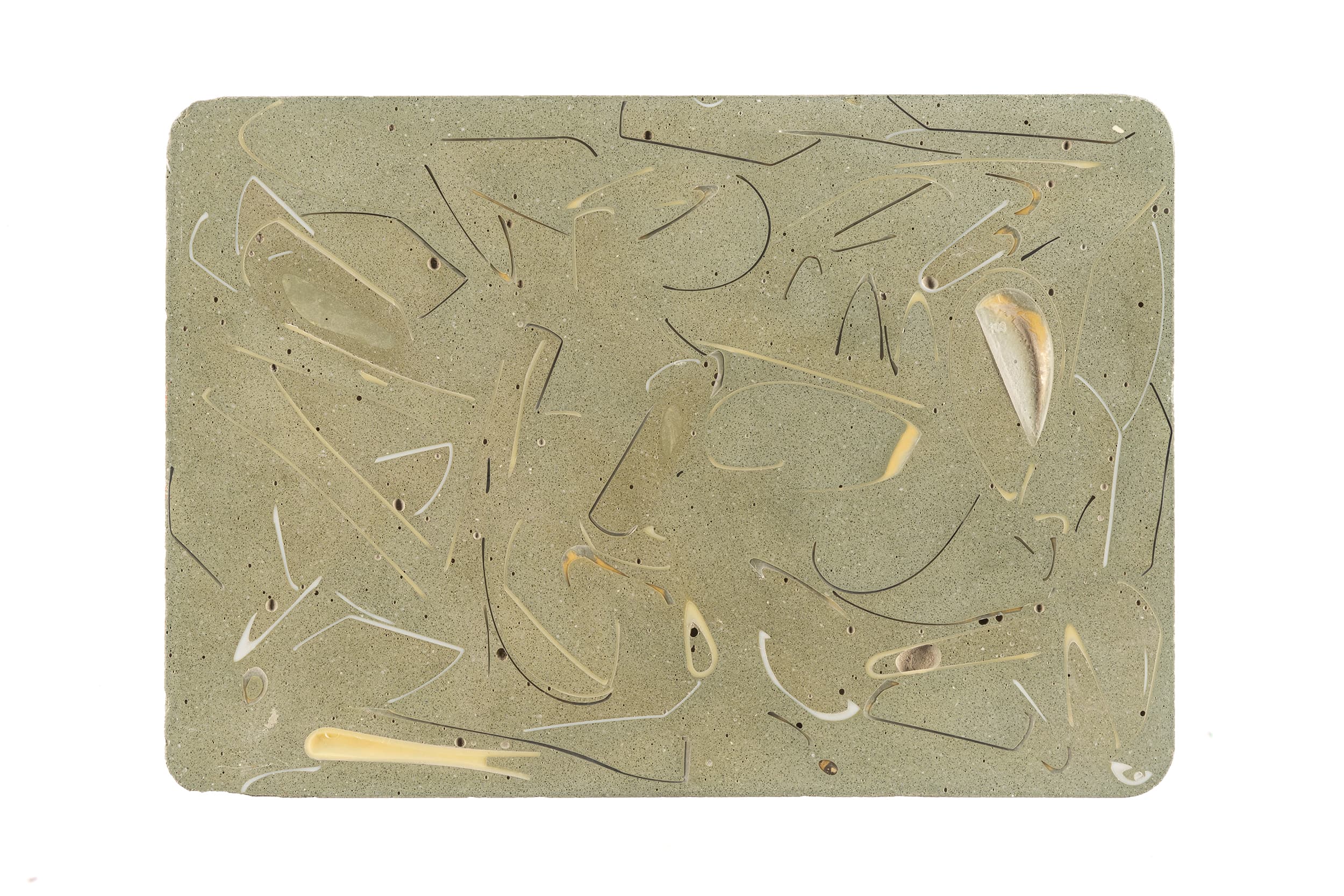
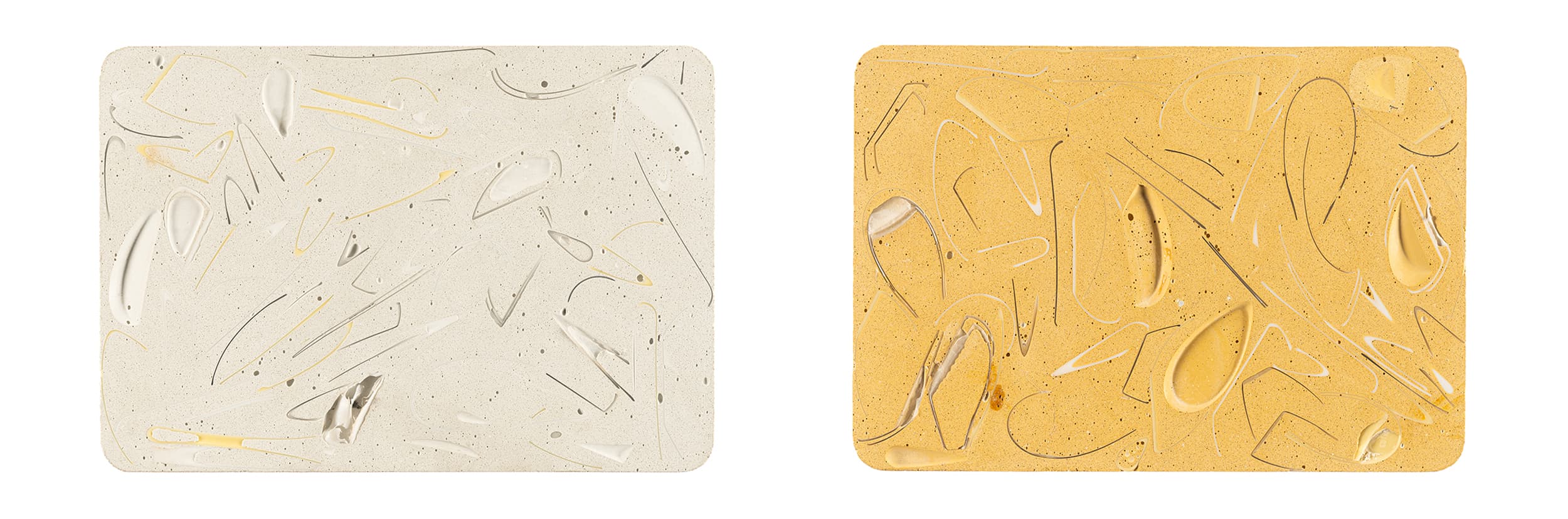
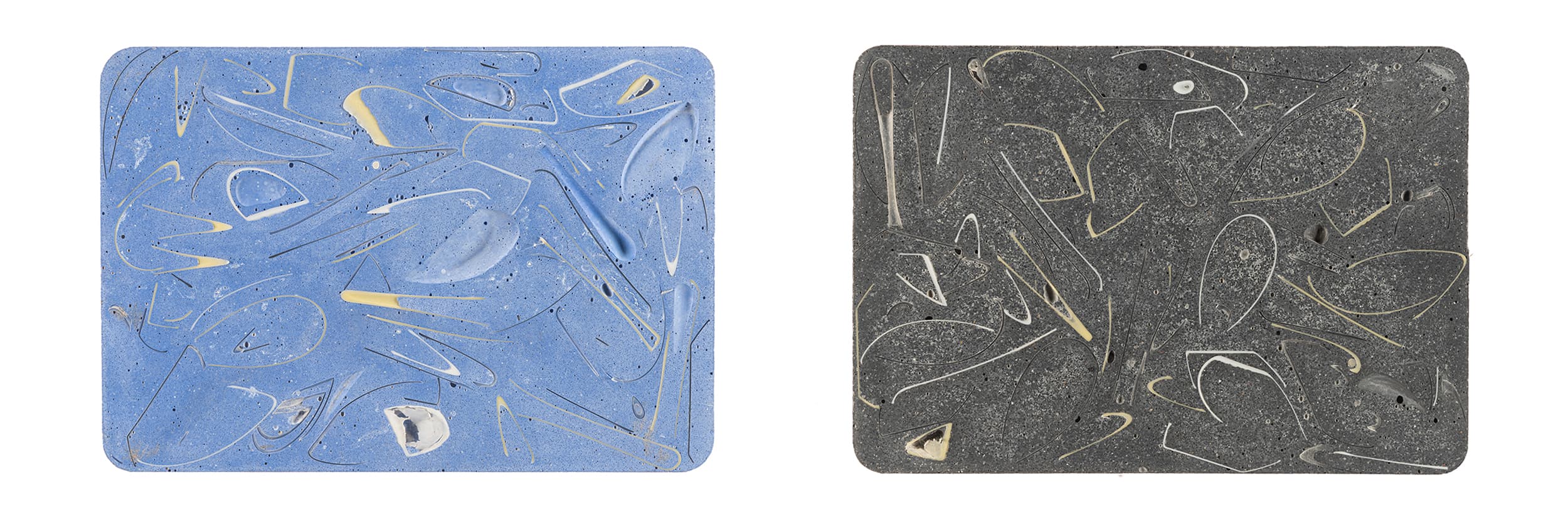
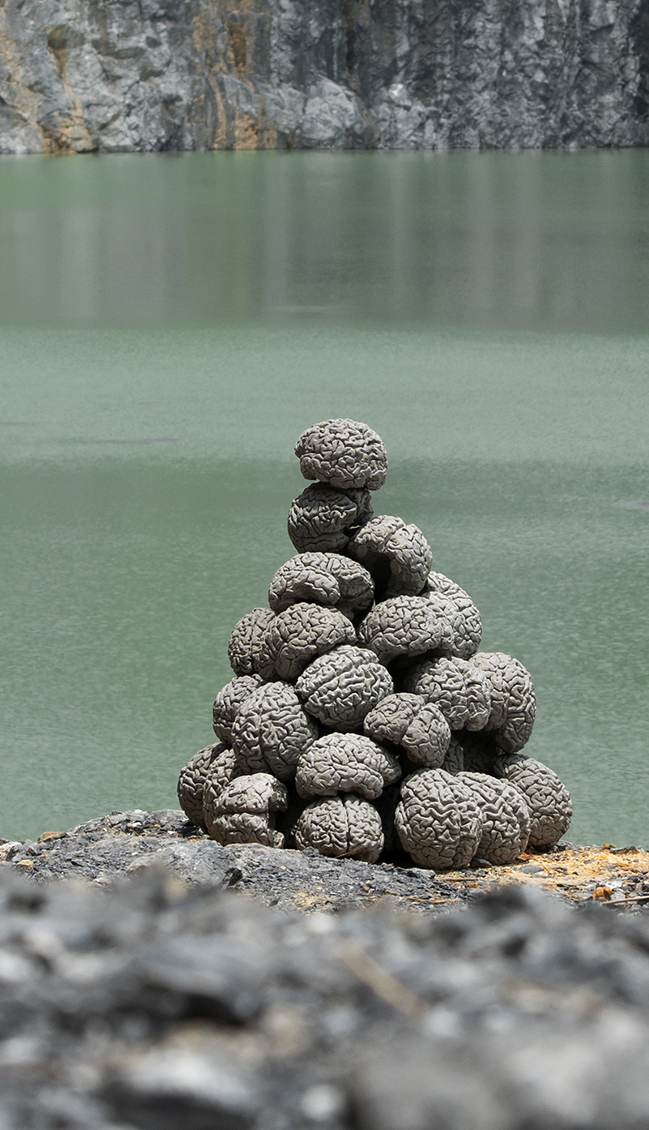
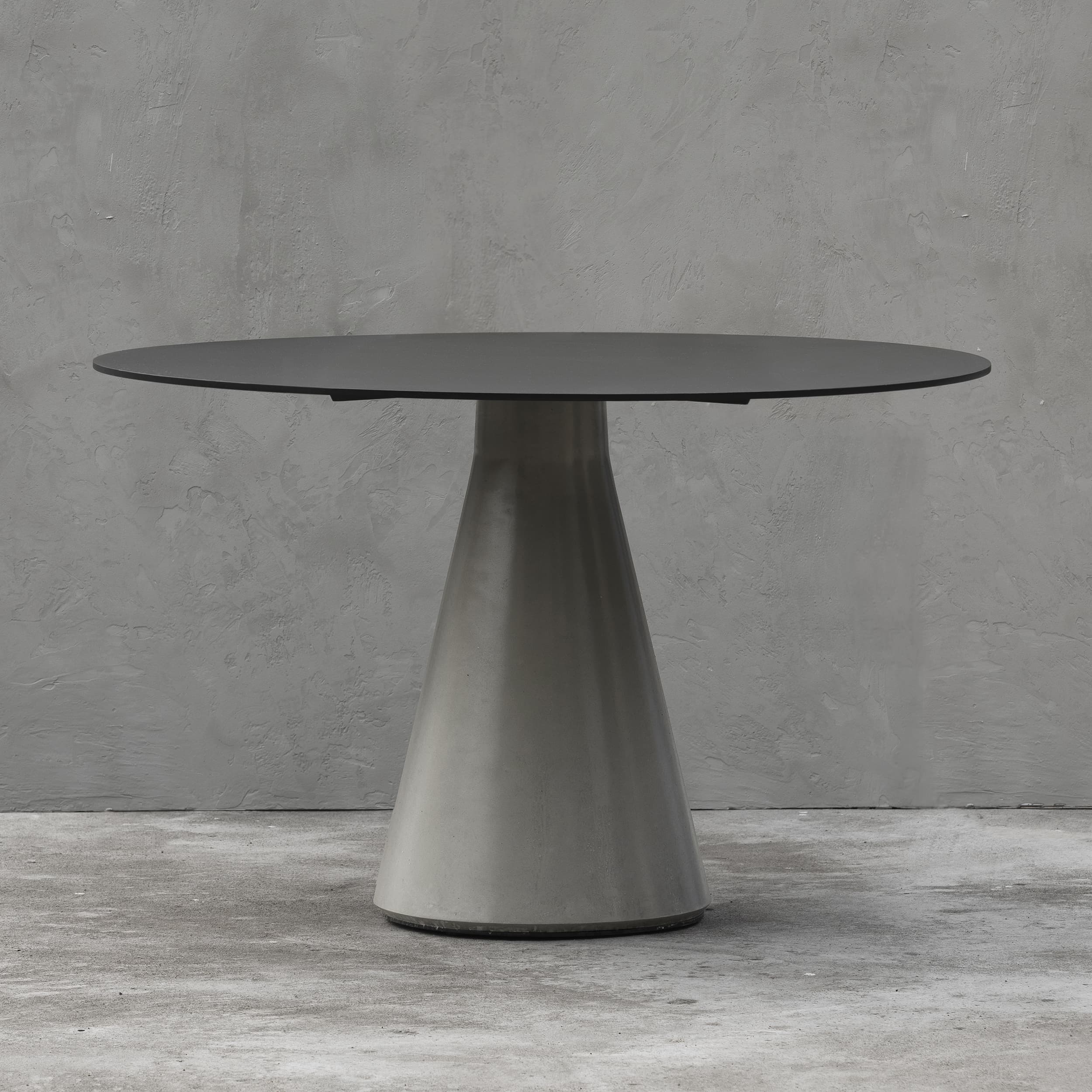
For interior applications, regenerated inorganic materials modified with polymer additives and fibre reinforcement can be crafted into soft-glow artistic lighting fixtures, or processed into high-density stain-resistant panels for furniture countertops and decorative wall panels, reconciling aesthetic appeal, environmental friendliness and long-term durability. For urban outdoor contexts, treated with nano anti-graffiti and pore-sealing coatings, finished components deliver outstanding weather resistance, anti-moss properties and anti-ageing performance, suitable for fabricating urban artistic benches, planting planters and other public facilities that endure year-round sun and rain exposure. Fundamentally, we leverage the eternally stable crystalline structures of inorganic minerals to solidify urban waste destined for landfilling or incineration into artificial stone capable of lasting for decades. Every finished product deployed on site stands as tangible documentation of material transformation within the circular economy era.
Looking ahead to the industry’s long-term future, the technical boundaries of regenerated cement continue to expand. Next-generation carbon-negative cement technologies actively capture carbon dioxide from industrial flue gas throughout material production and curing processes. The captured CO₂ reacts with minerals to form stable carbonate crystals, freeing the cement sector from its high-carbon reputation and transforming it into a medium for artificial carbon sequestration. Cement plants of the future will evolve beyond simple construction material manufacturing workshops to become core hubs of urban circular systems, forming deep linkages with steel mills, chemical factories and municipal waste sorting facilities. They will fully consume all categories of industrial and urban solid waste to build a zero-waste closed-loop industrial ecosystem.
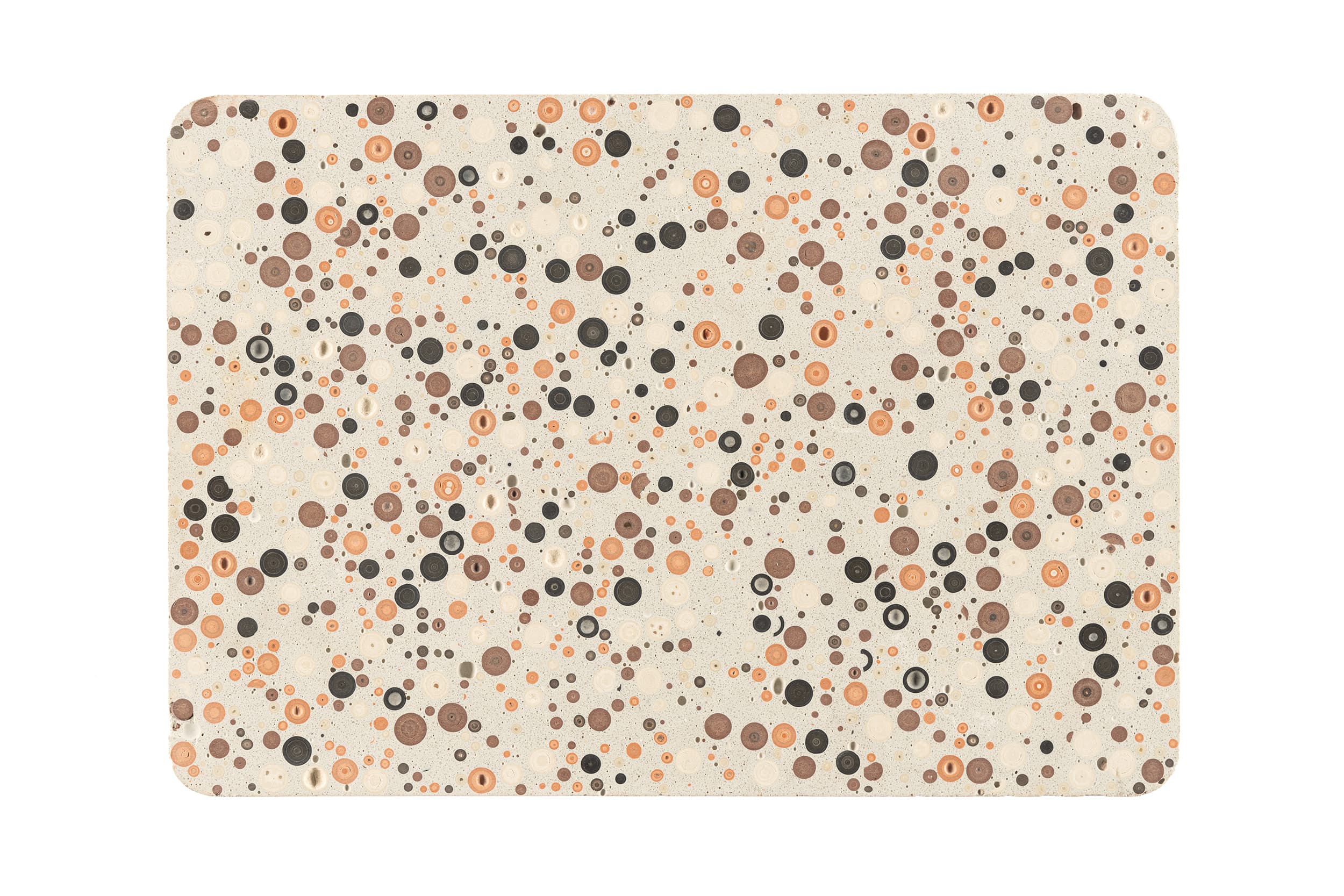
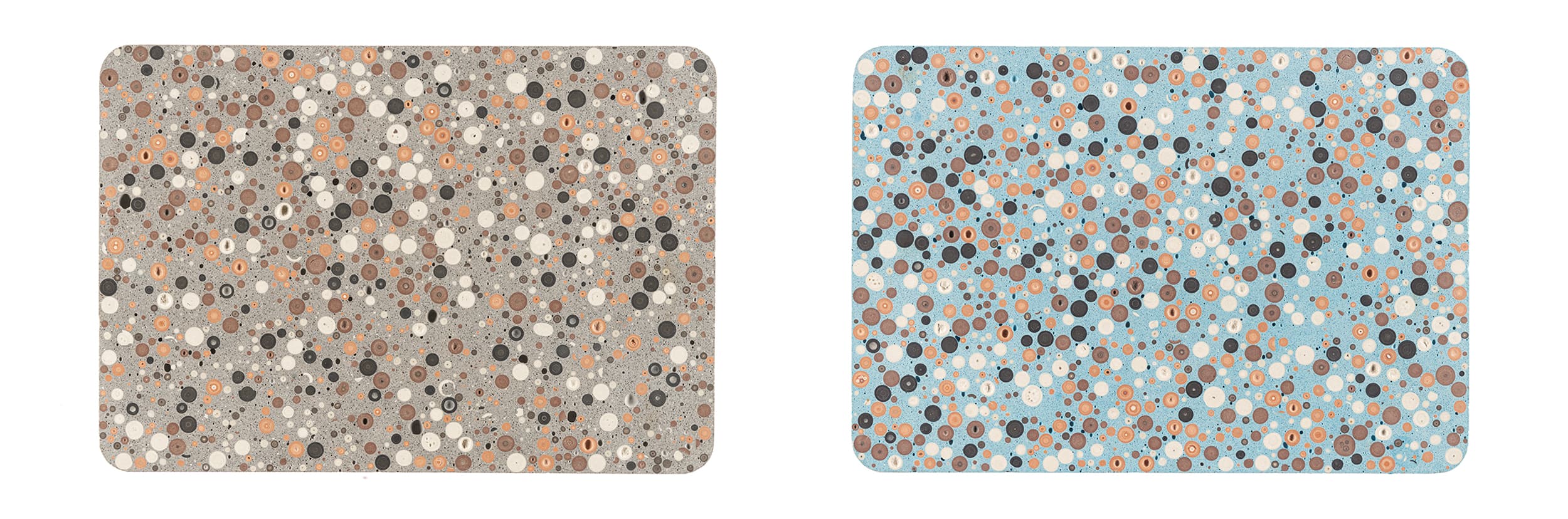
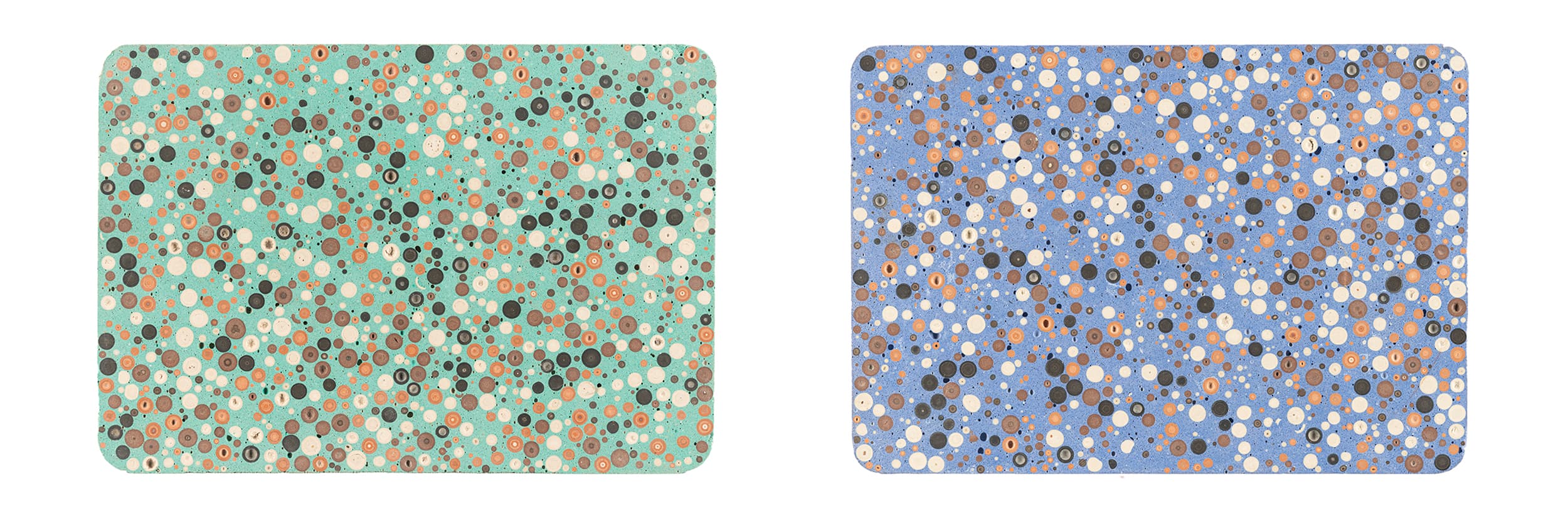
Inorganic Archive tames chaotic discarded minerals through rigorous craftsmanship and reveals materials’ authentic intrinsic value via minimalist design. The project conveys a central stance: advancing toward a low-carbon, perpetual future does not require curbing humanity’s demand for material goods. True sustainability lies in re-learning to respect every substance on Earth, and achieving harmonious coexistence between humanity and natural minerals through regenerative circular models.
Within the framework of existing construction material standards and engineering acceptance protocols, Inorganic Archive aims to supply designers with regenerated material options that are quantifiable, reproducible and traceable. BENTU pursues radical innovation in raw material sourcing, yet never compromises engineering safety benchmarks. Amid the microscopic realm of countless inorganic crystals, we build an entirely new material order rooted in sustainable development, founded upon discarded waste materials.
Design Director: Xu Gang
This original article belongs to the BENTU Material Regeneration Practice Series. Taking the Inorganic Archive waste-regenerated cement-based material project as its research subject, it explores the exclusive aesthetic system of low-carbon inorganic materials.

- Contact
+8620 8977 0506
- Press
press@bentudesign.com
- Enquiry & Sales
info@bentudesign.com