Particles of Light: Dynamic Aesthetics and Sustainable Design of Fair-Faced Concrete Decorative Bricks
Time: 2025 – 2026
Location: Foshan, Guangdong, China
Throughout the long history of architecture, building facades have long served a dual role as both the "skin" and the "mask" of structures. Following the Industrial Revolution, mainstream facade aesthetics were built upon a logic of material concealment and unrestrained resource consumption: natural stone cladding and chemical paint coatings were widely used to cover the rough texture of structural substrates. This design approach abandons material authenticity, turning architectural facades into high-carbon, resource-intensive burden zones.
Against the backdrop of tightening global ecological constraints and iterative advances in digital construction technology, architectural decoration is undergoing a fundamental aesthetic shift. No longer static, isolated physical barriers, facades evolve into symbiotic organisms that integrate material circulation, absorb natural energy, and embody digital order.
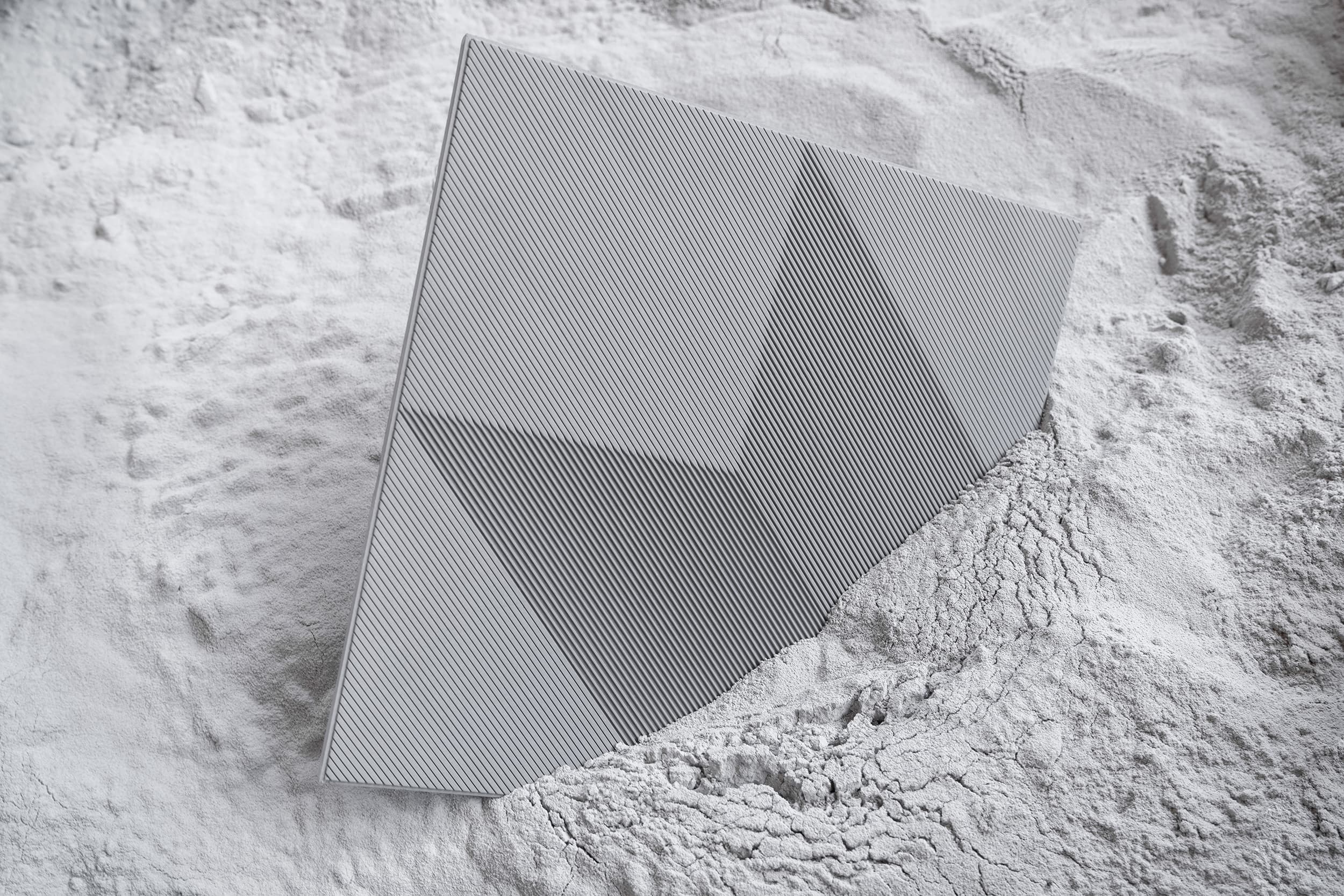
BENTU's high-solid-waste light-and-shadow fair-faced concrete decorative bricks represent a tangible practice responding to this transformation. The product deeply integrates a substrate composed of industrial solid waste, the unadorned essence of fair-faced concrete, and the dynamic traits of grazing-light shadow geometry. More than a mere upgrade of a single craft product, it constitutes a three-pronged design experiment that enables buildings to achieve low-carbon material self-consistency, incorporate temporal natural energy, and convey digital rationality through visual expression.
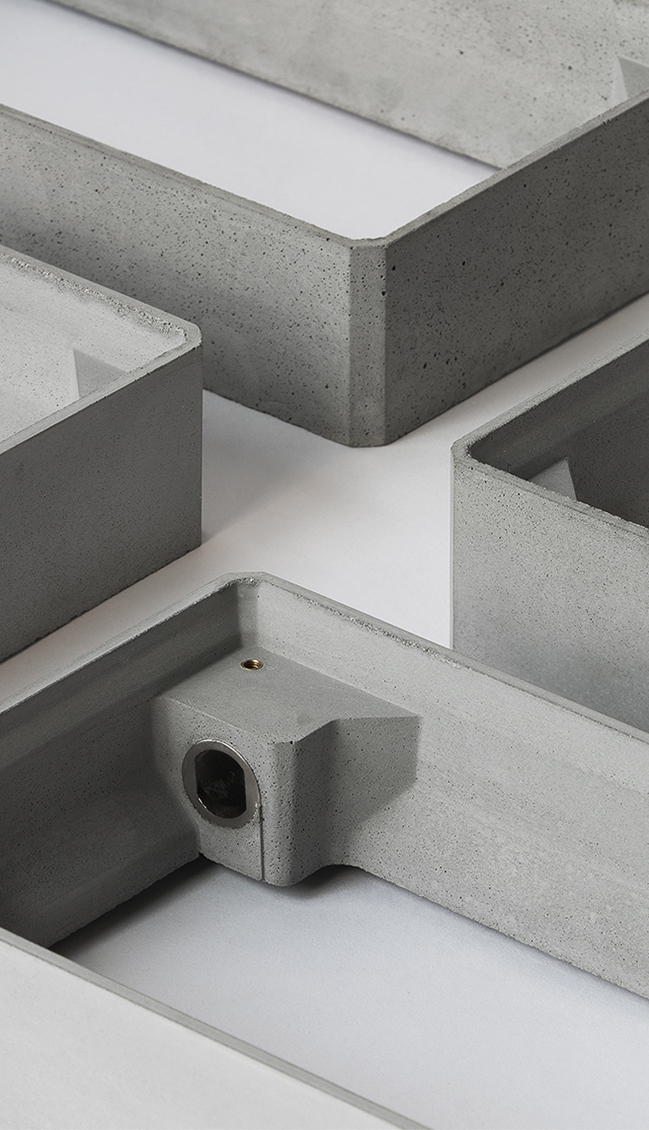
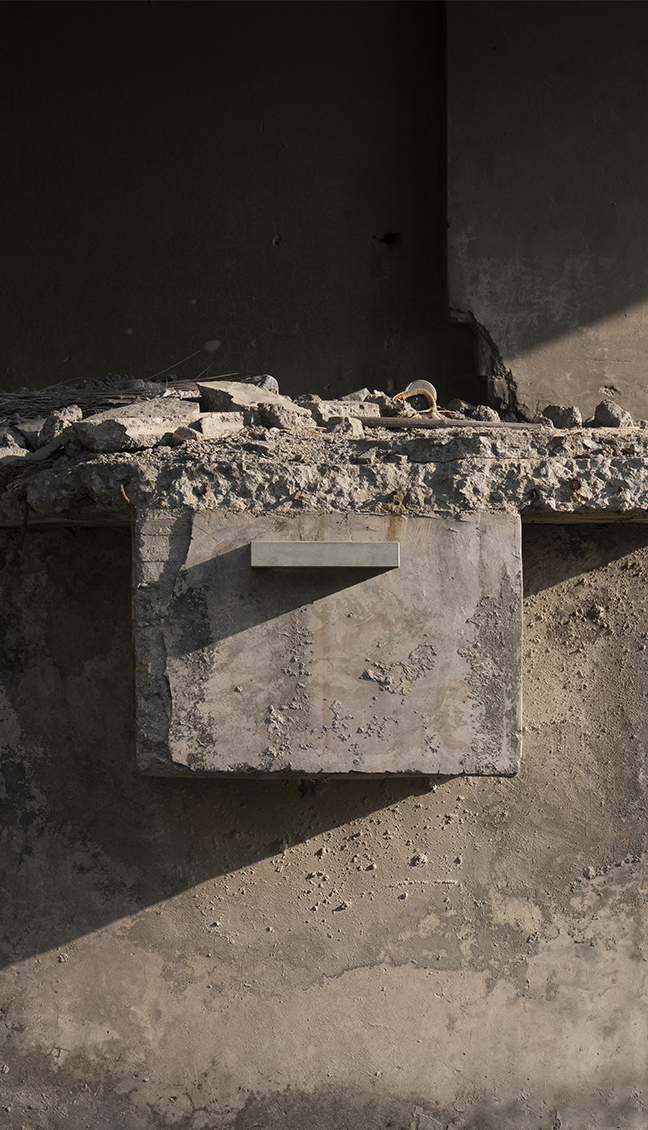
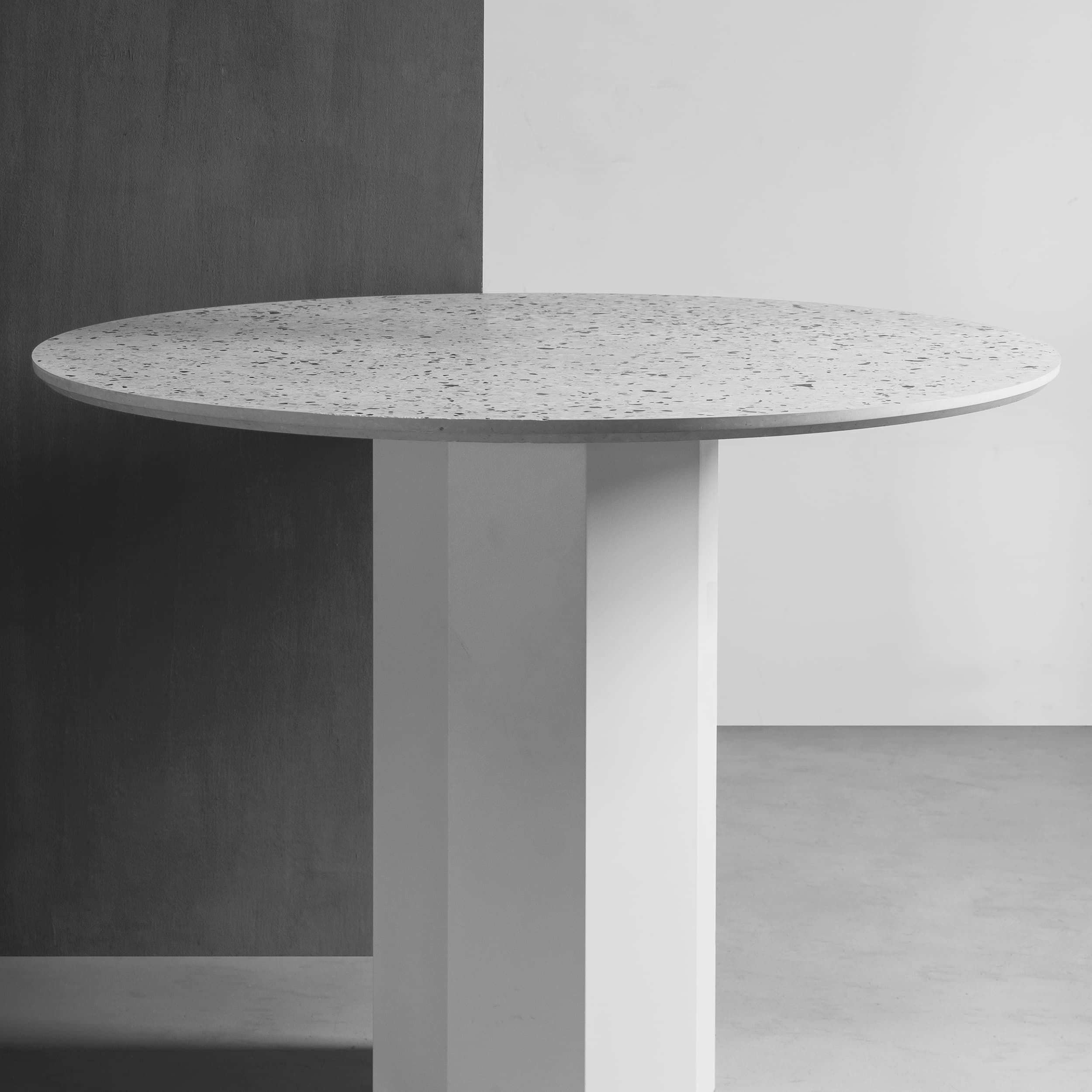
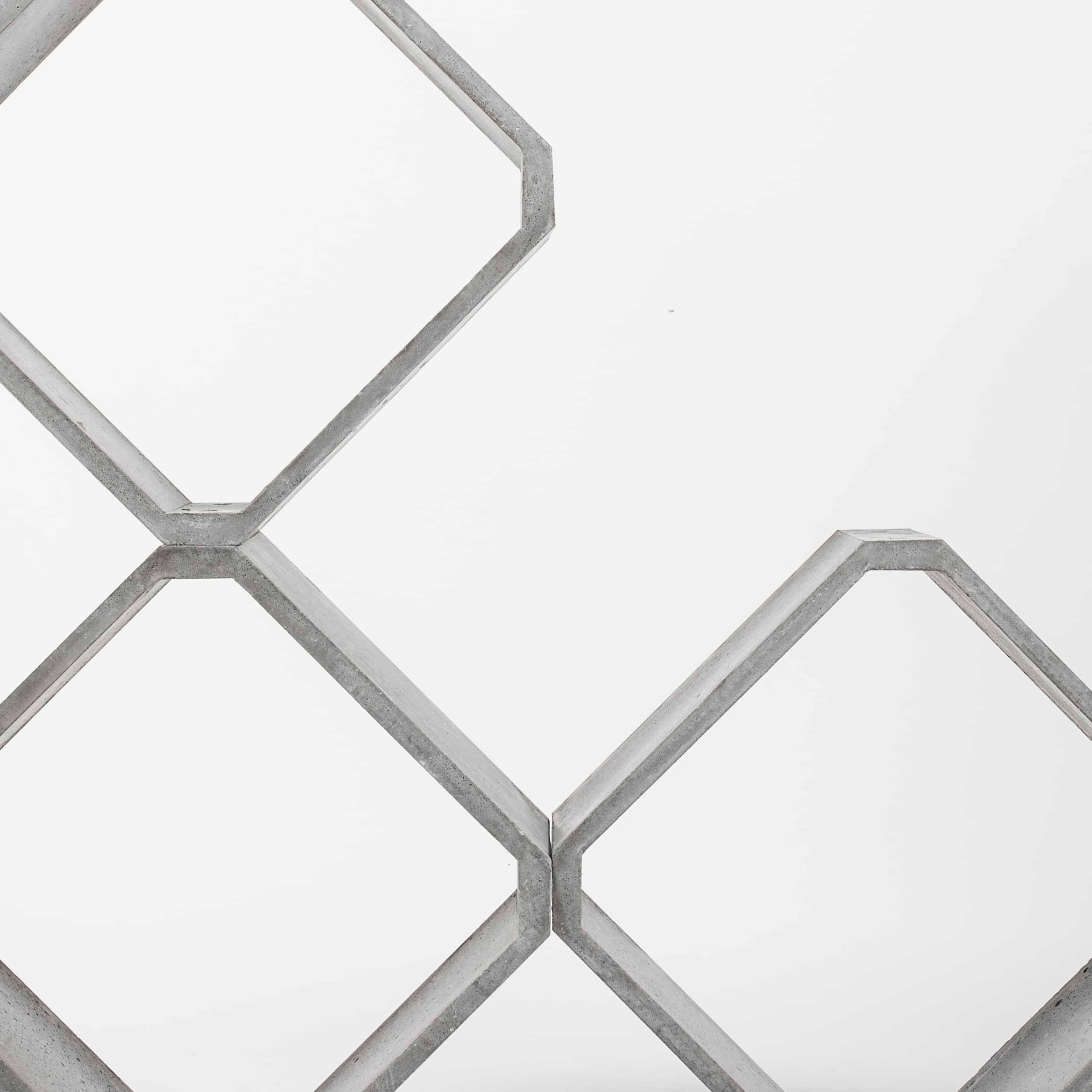
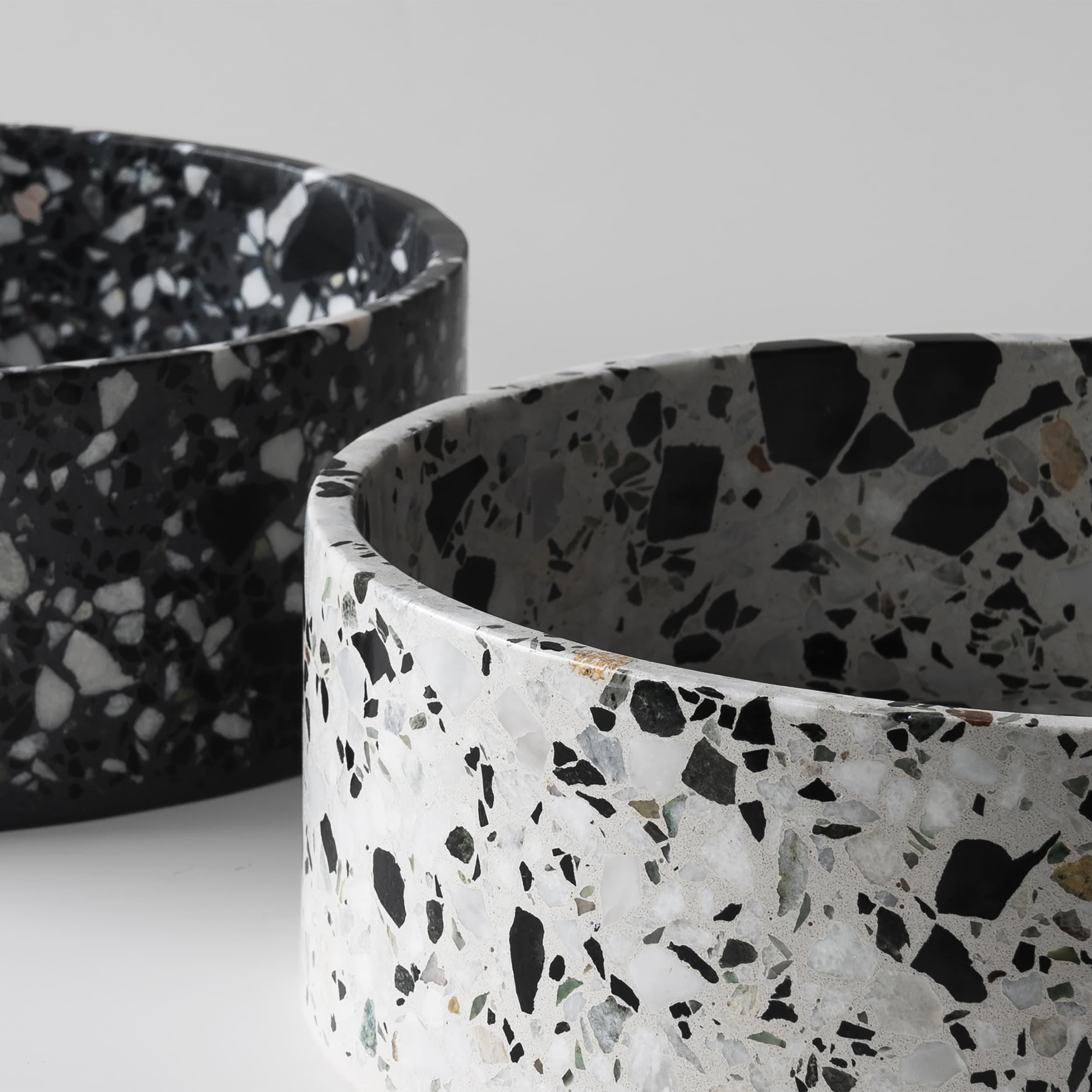
Fair-faced concrete inherently carries an authentic aesthetic that counters consumer symbolism. Rejecting all superficial ornamentation, it lays bare its native hue, tiny air pores and natural formwork seams. Its restrained, mellow and inclusive texture never pursues visual favor through gaudy gloss; instead, it constructs serene and tranquil spiritual spaces relying purely on plain grayscale and delicate textures.
This unembellished material substrate forms a pristine canvas for digital light and shadow. Free from interference by stray colors or extraneous textures, the interplay between light and matter strips away redundant impurities and returns to the most fundamental geometric optical relationships.
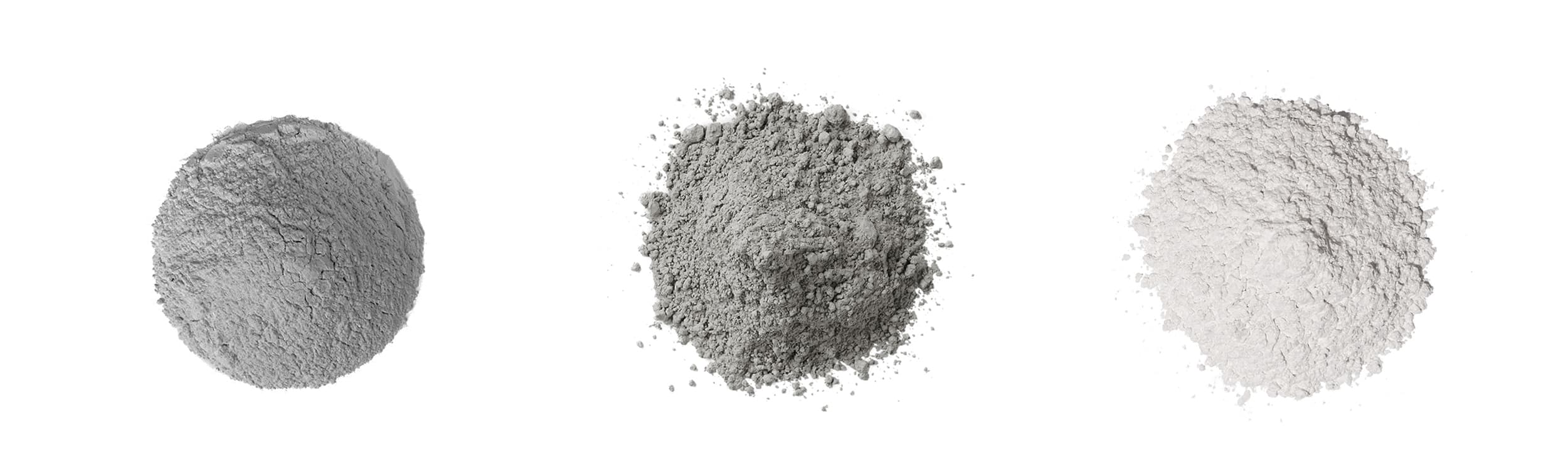
A microscopic examination of the brick substrate reveals the landmark ecological value of its blend of fly ash, blast furnace slag powder and other industrial solid wastes. Within conventional industrial systems, these byproducts of power generation and smelting are ecological liabilities requiring urgent disposal. Yet over the lifecycle of these decorative bricks, discarded particulate matter undergoes complete transformation and material regeneration.
Traditional green building materials have long been trapped in a binary dilemma: eco-friendly alternatives often suffer coarse, low-grade textures, while high-end facing materials rely heavily on non-renewable resource extraction. This high-solid-waste fair-faced brick breaks the divide. Precisely activated and restructured industrial residues stably deliver the silky, premium muted gray tone characteristic of fair-faced concrete. Instead of being buried deep within wall structures, solid waste feedstocks are exposed directly on exterior facades as the public-facing architectural skin.
This marks a restoration of material dignity. Industrial byproducts once disruptive to ecological balance harness advanced material technologies to unfold unique artistic tension and intrinsic material value.
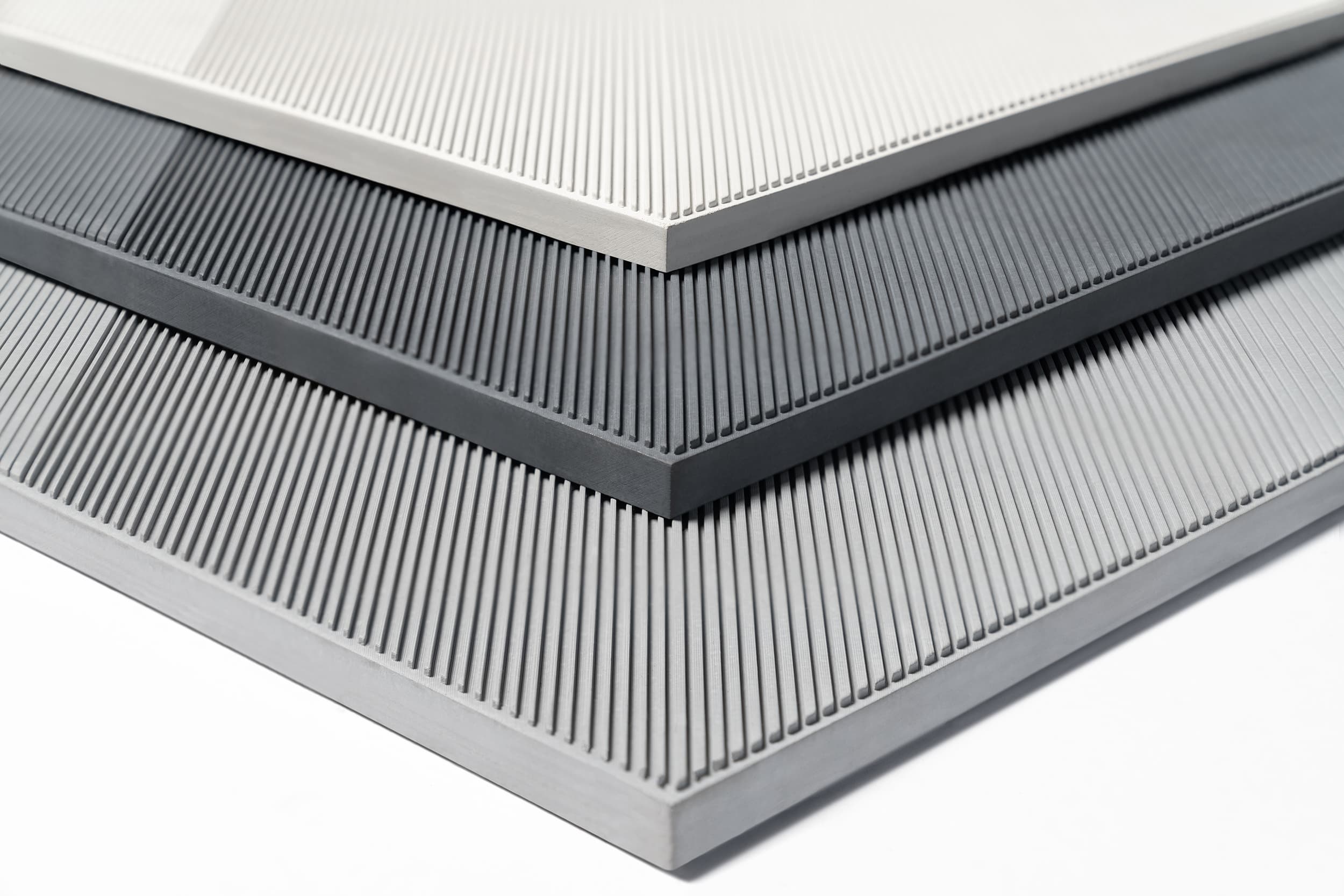
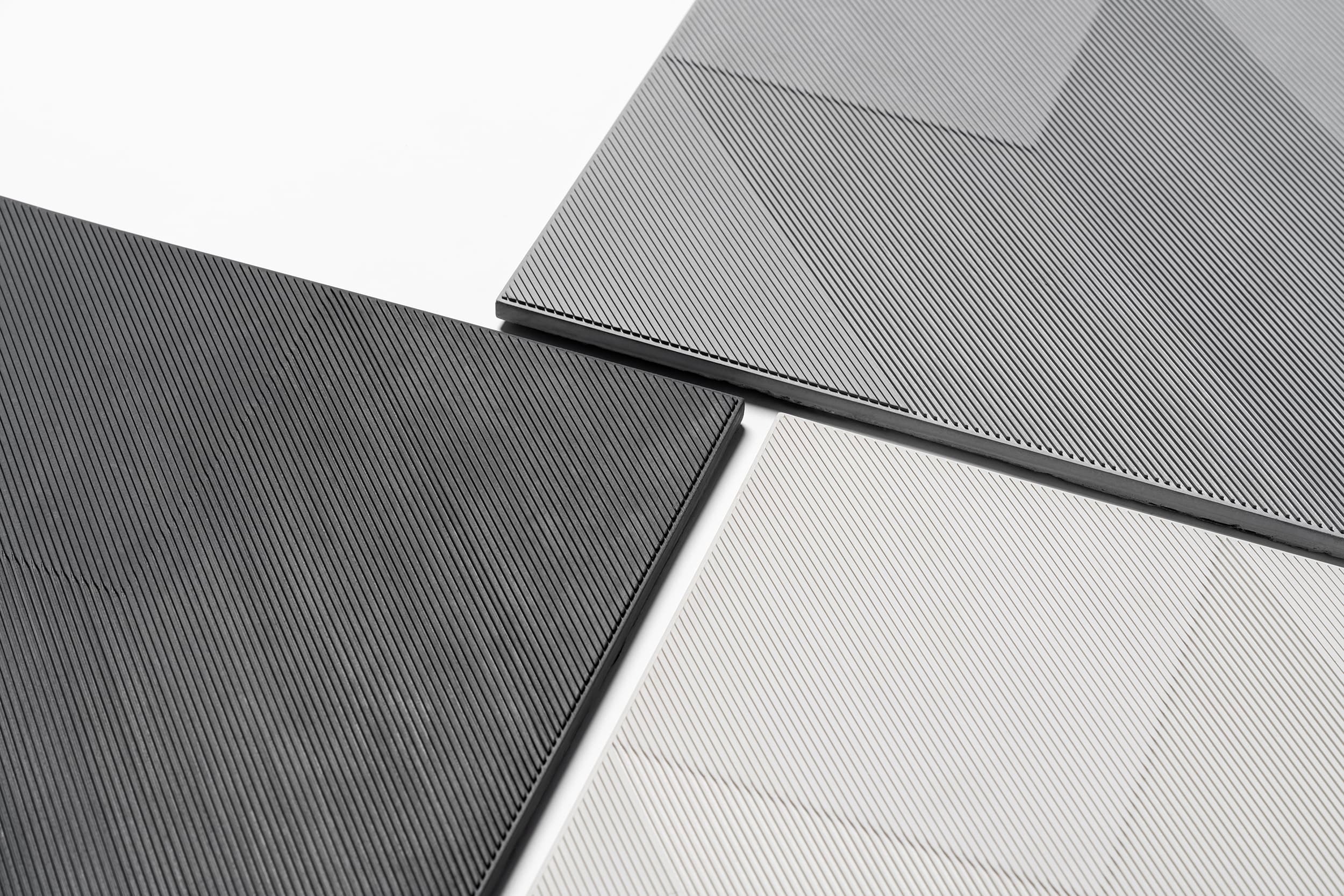
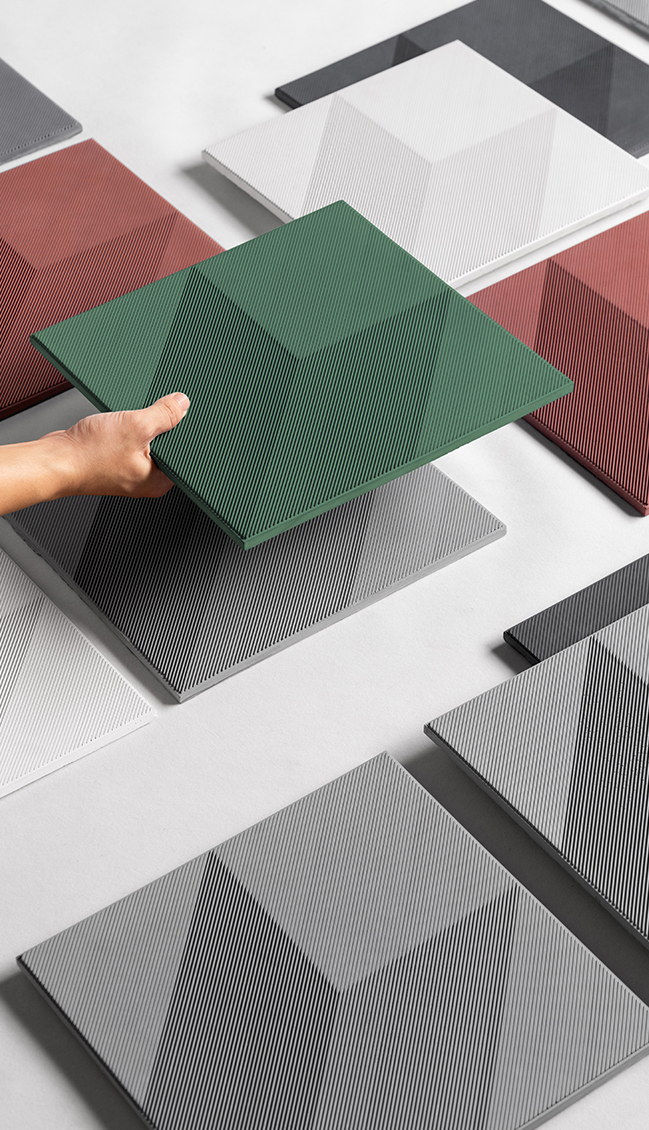
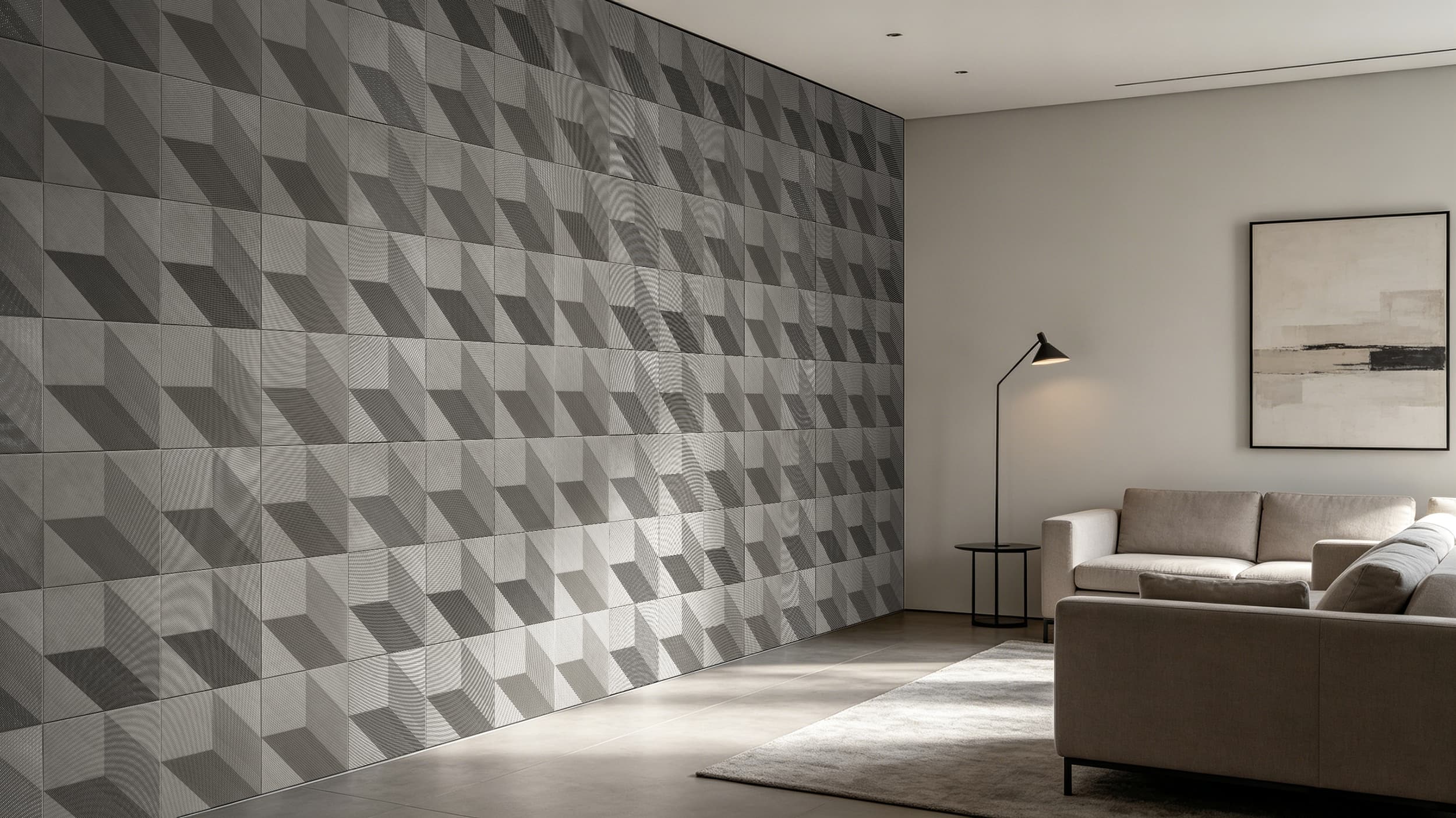
Grazing-light relief imaging hinges purely on physical geometry and optical shadowing, with zero pigment additives or electronic luminous components: precise micro-undulations on the brick surface interact with incident light, and shadow area precisely controls the brightness and shadow gradients of the visual pattern.
In graphical logic, patterns are first converted into 256-level grayscale digital files. Software calculates the exact depth, inclination angle and width of V-shaped grooves corresponding to each pixel on the brick face. When side light sweeps across the wall, steep, deep grooves cast broad shadows to form dark areas; shallow or absent grooves reflect ample light to create highlights. Entirely decoupled from artificial tinting, the visual effect emerges purely from the interplay of light, shadow and geometry.
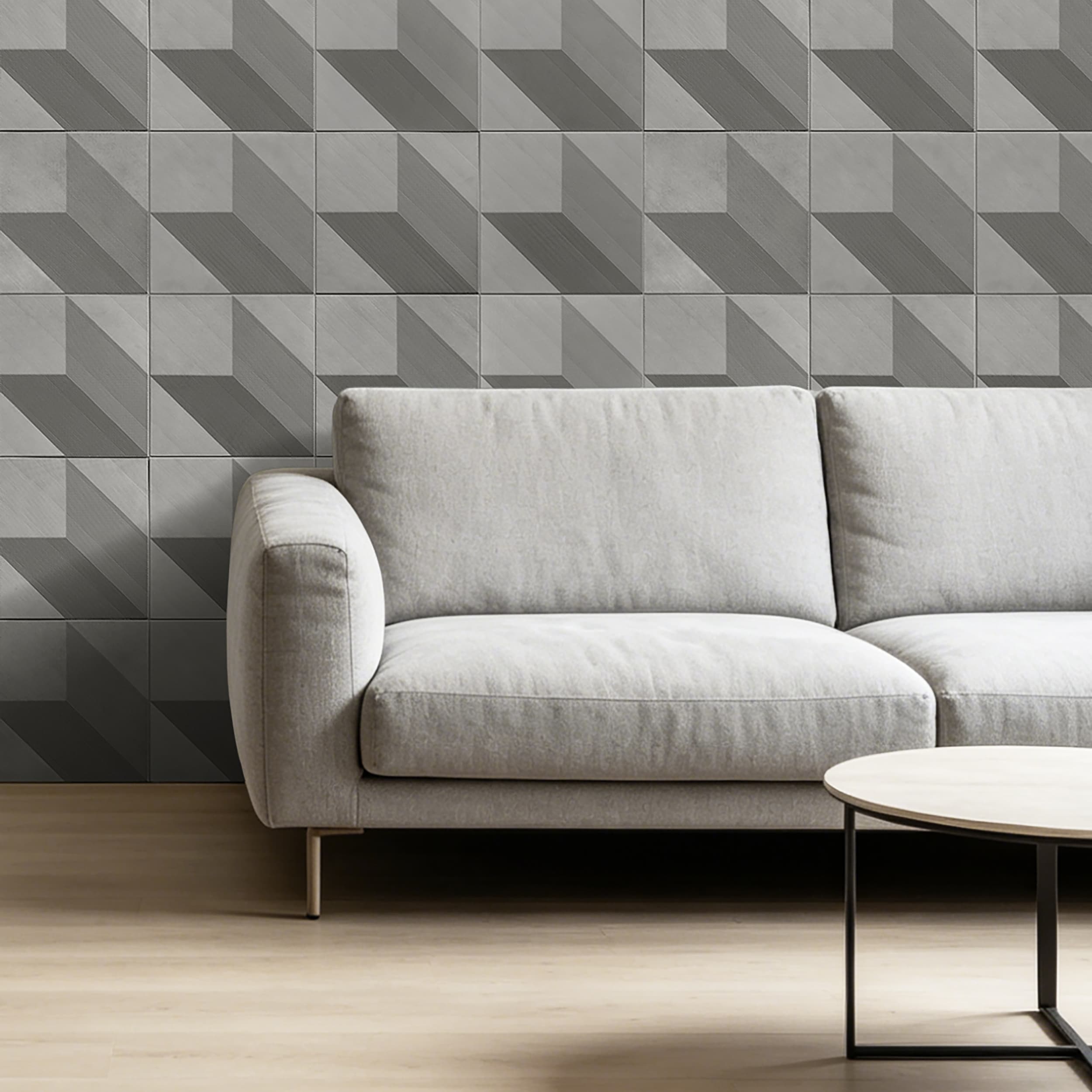
When applied to the "Modern Abstract Geometry" series, technical logic aligns seamlessly with aesthetic form. Abandoning figurative motifs such as flowers, birds, mountains and rivers, the series centers on pure geometric orders: stripes, squares, concentric circles and flowing wavebands. Sharp, precise lines embody digital rationality materialized within physical space.
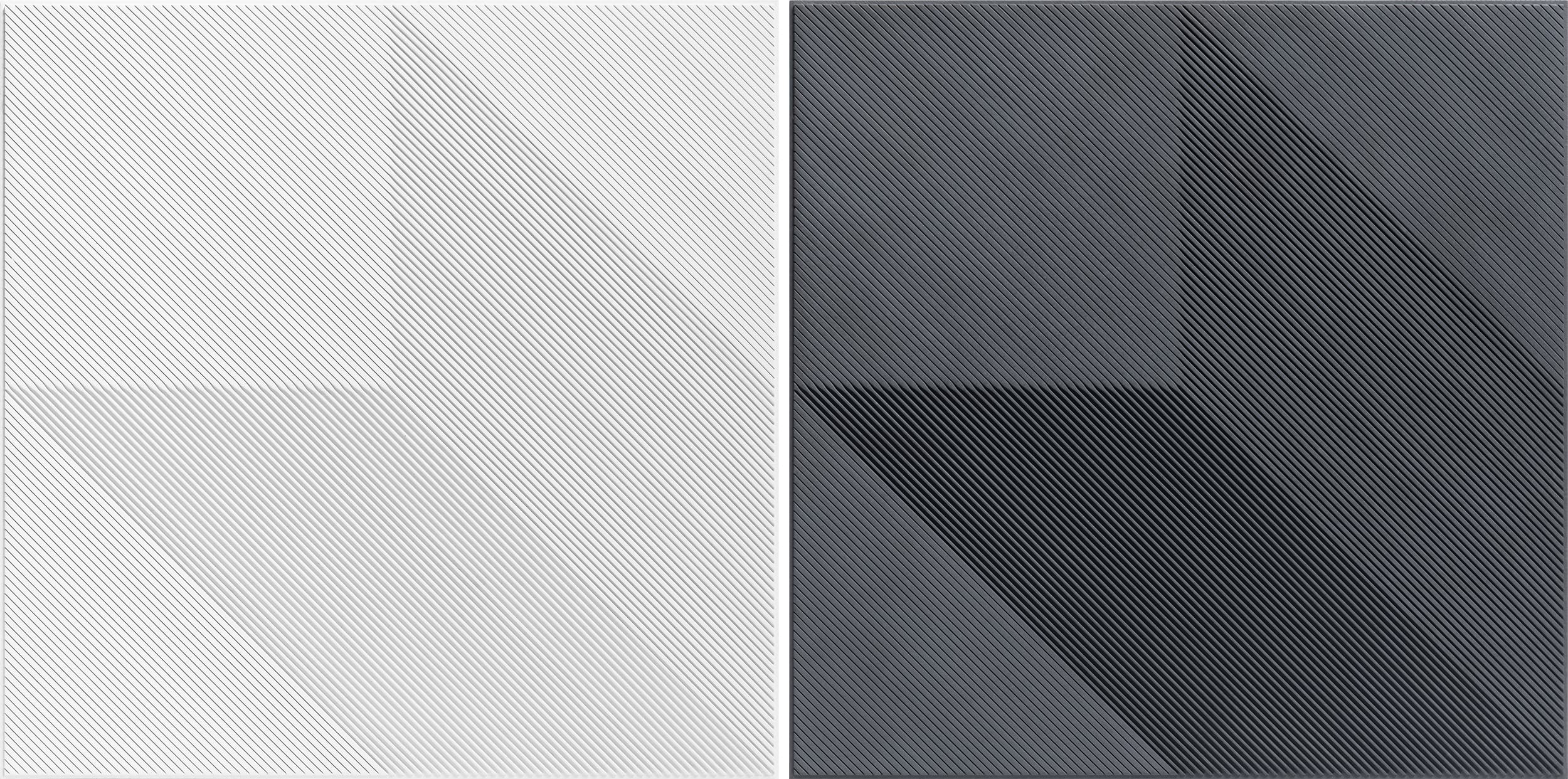
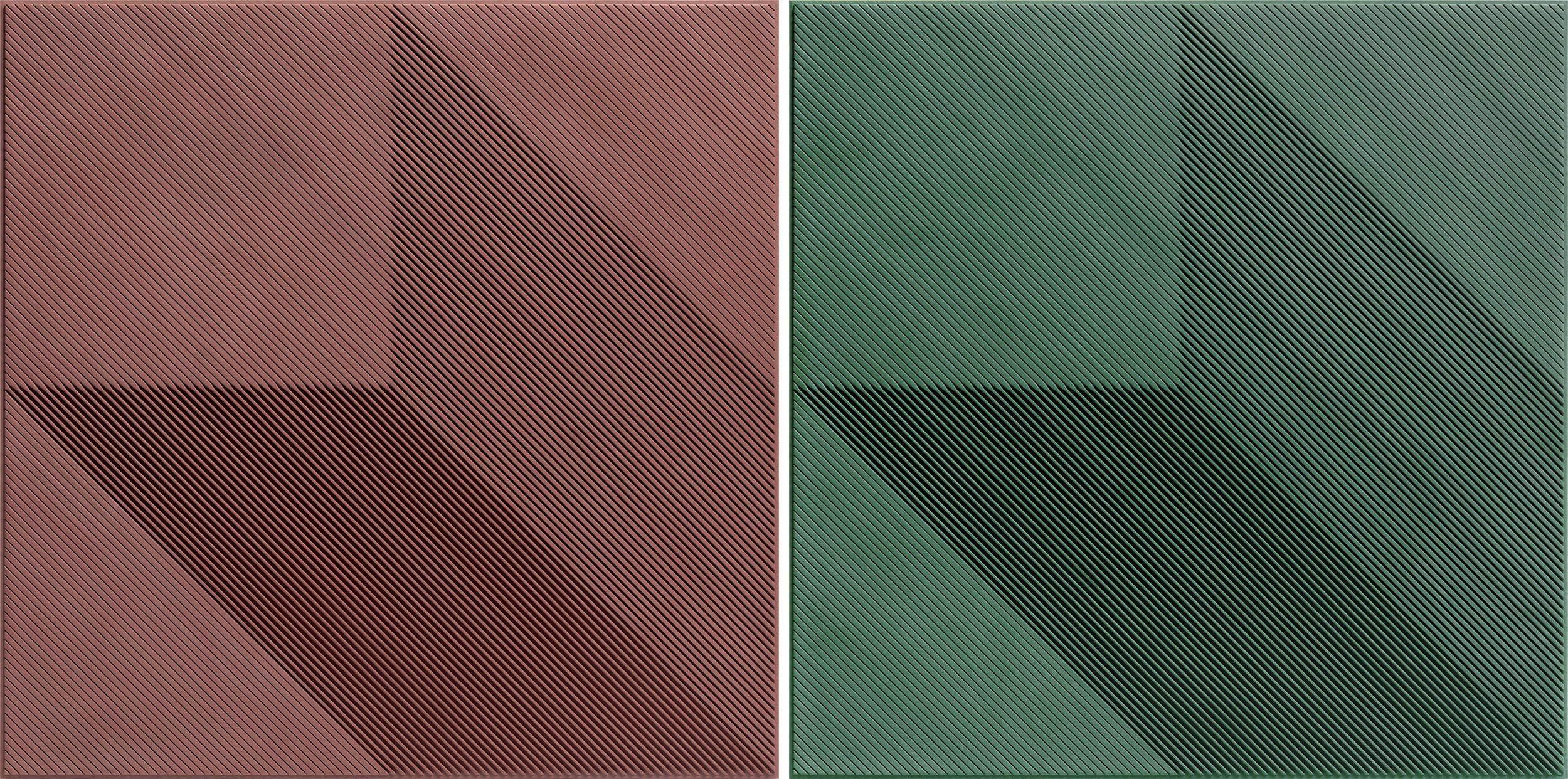
Up close, the brick surface bears delicate CNC-milled digital textures resembling computer pixel matrices and audio waveform pulses, realizing the physical transformation of virtual digital data into tangible material; from a distant viewing distance, fine rational micro-lines blur via optical illusion, merging into soft, expressive light-and-shadow gradients.
Near view perceives the rationale of geometric texture; distant view appreciates the poetic charm of light and shadow. This dual-texture charm endows facades with powerful visual tension. It adopts rigorous mathematical logic to accommodate the irregular variations of natural light, achieving a unified balance between stern rationality and fluid sensibility.
Conventional building materials retain a fixed shape post-formation, frozen within a single temporal frame. Yet nature's vital force stems from perpetually flowing time. The core aesthetic of these high-solid-waste light-and-shadow fair-faced bricks lies in building a dramatically interactive interface between static architectural mass and fluid time.
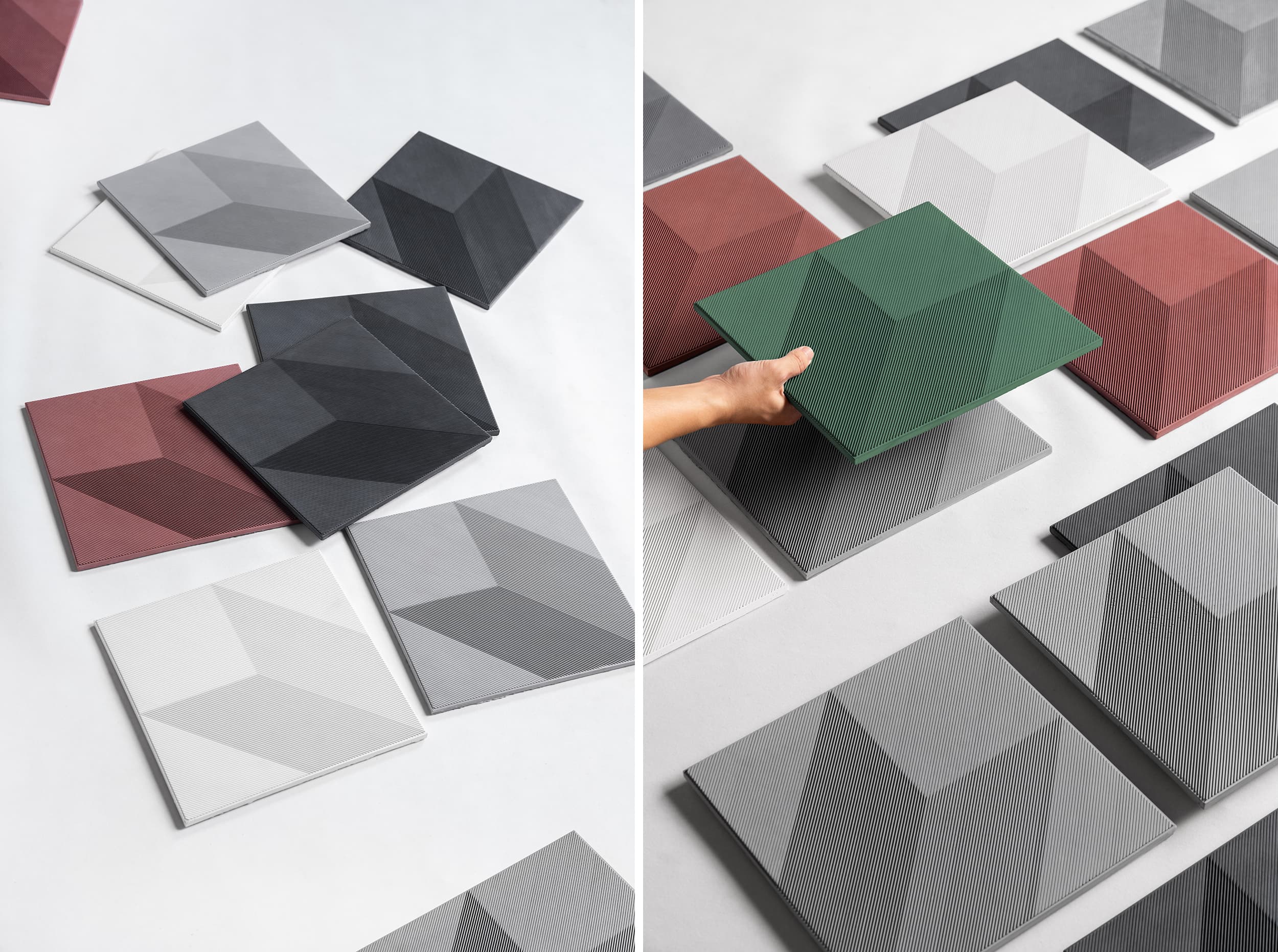
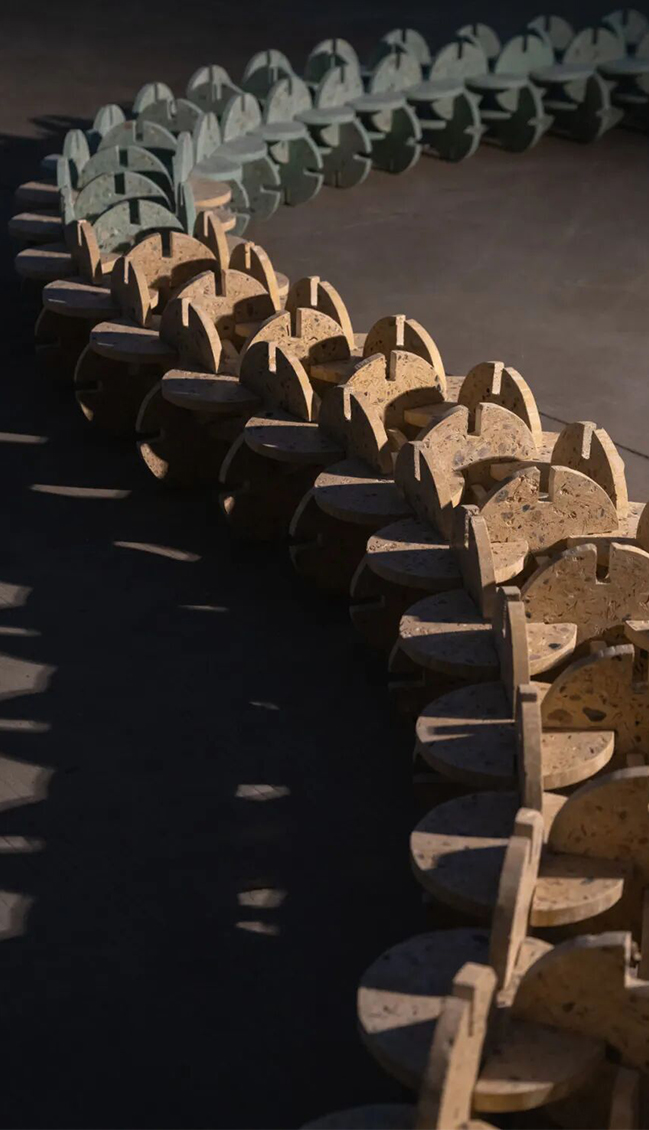
Rather than merely printing patterns, the V-groove relief essentially acts as a precision light captor. Micron-level calibrated angles and depths of abstract geometric V-grooves grant ultra-high light sensitivity, turning cold, isolating facades into natural chronometers that record the shift of sunlight throughout the day.
This light-mediated facade system delivers restrained, understated modern Oriental Zen narration: at dawn and dusk, low-angle side light stretches long, profound shadows within V-grooves; geometric patterns emerge with high contrast, marked by sharp, rhythmic lines. At midday under intense direct sunlight, groove shadows fade drastically, patterns recede, and the wall reverts to the plain, unadorned integrity of raw fair-faced concrete.
Its dynamic property — patterns emerge with light and fade without it — breathes rhythmic vitality into static walls. The solid-waste low-carbon substrate offsets historical industrial carbon footprints, while daily solar cycles convert natural light into dynamic facade visuals. Discarded industrial debris is reborn as perpetual kinetic art dancing with shifting sunlight.
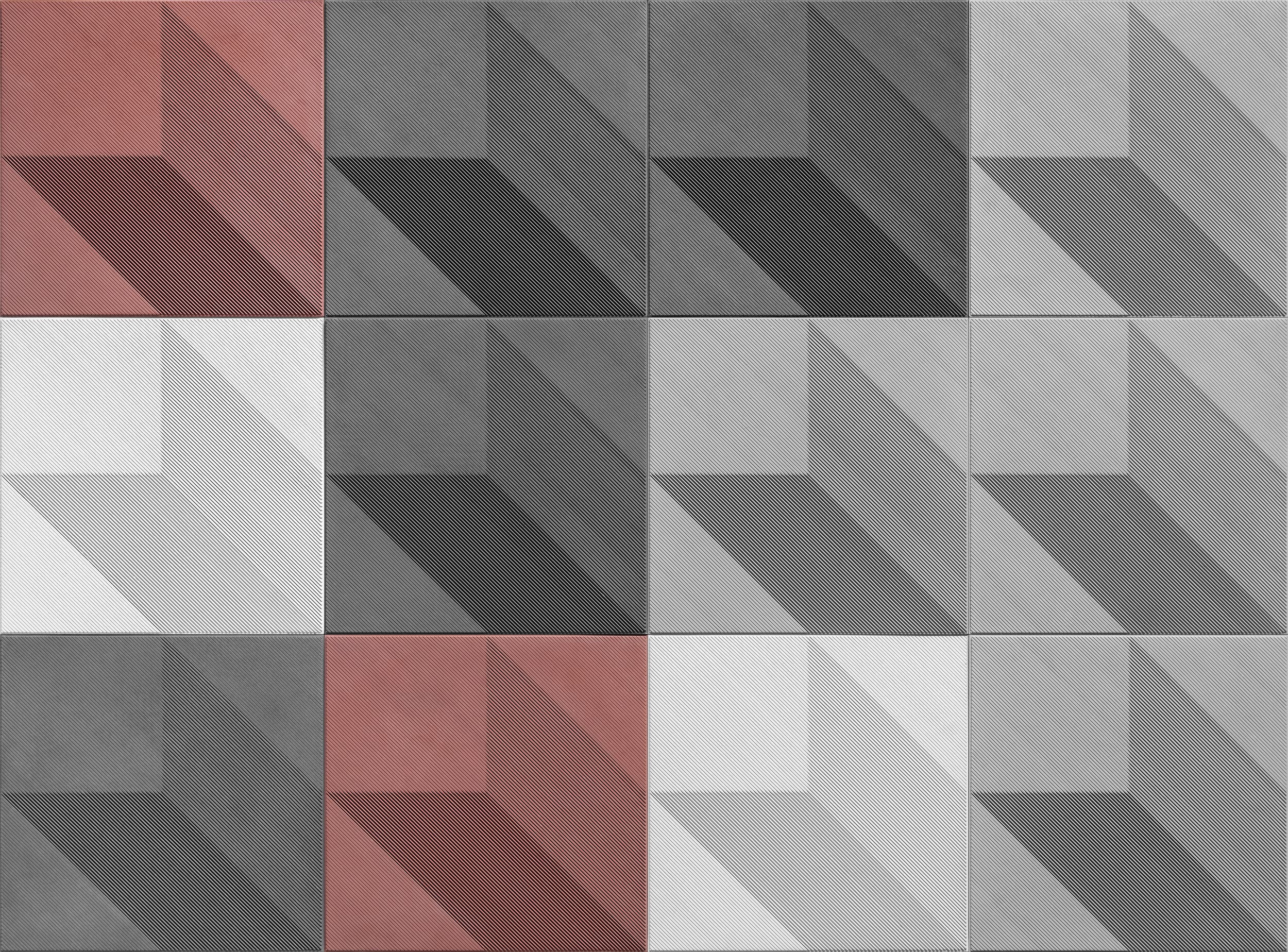
Stable mass production of light-and-shadow artistic components from industrial residues relies on a full suite of material engineering technologies to resolve multiple processing challenges brought by ultra-high solid waste dosage.
Traditional fair-faced concrete uses high-carbon Portland cement as its primary binder. To preserve structural performance at an ultra-high solid waste ratio, the product adopts an alkali-activated system. A composite strong alkali activator of water glass and sodium hydroxide activates reactive aluminosilicate glassy phases in fly ash and slag; through depolymerization and repolymerization, the system forms C–(N)–A–S–H / N–A–S–H gel networks. This binder system cuts carbon emissions by over 70% compared with ordinary Portland cement, while also boosting early substrate strength and acid rain resistance, laying a solid foundation for low-carbon performance.
Stringent pixel-grade precision governs the geometry: V-grooves span only millimeters apart with millimeter-scale depths. Ordinary concrete's abundant coarse aggregates and poor slurry workability would trap air bubbles at groove edges and cause chipping on demolding, blurring shadow outlines and distorting patterns entirely. To solve this, the formula applies UHPC dense particle-packing logic and rheological control. Coarse aggregate is eliminated; graded waste ceramic sand and ultra-fine solid waste powder precisely fill internal voids; polycarboxylate superplasticizer regulates molecular activity, driving the water-binder ratio down to an ultra-low range. The slurry achieves excellent self-compacting performance, fully filling micron-scale sharp V-shaped mold cavities with minimal or no vibration, ensuring groove edge sharpness meets optical imaging standards after demolding.
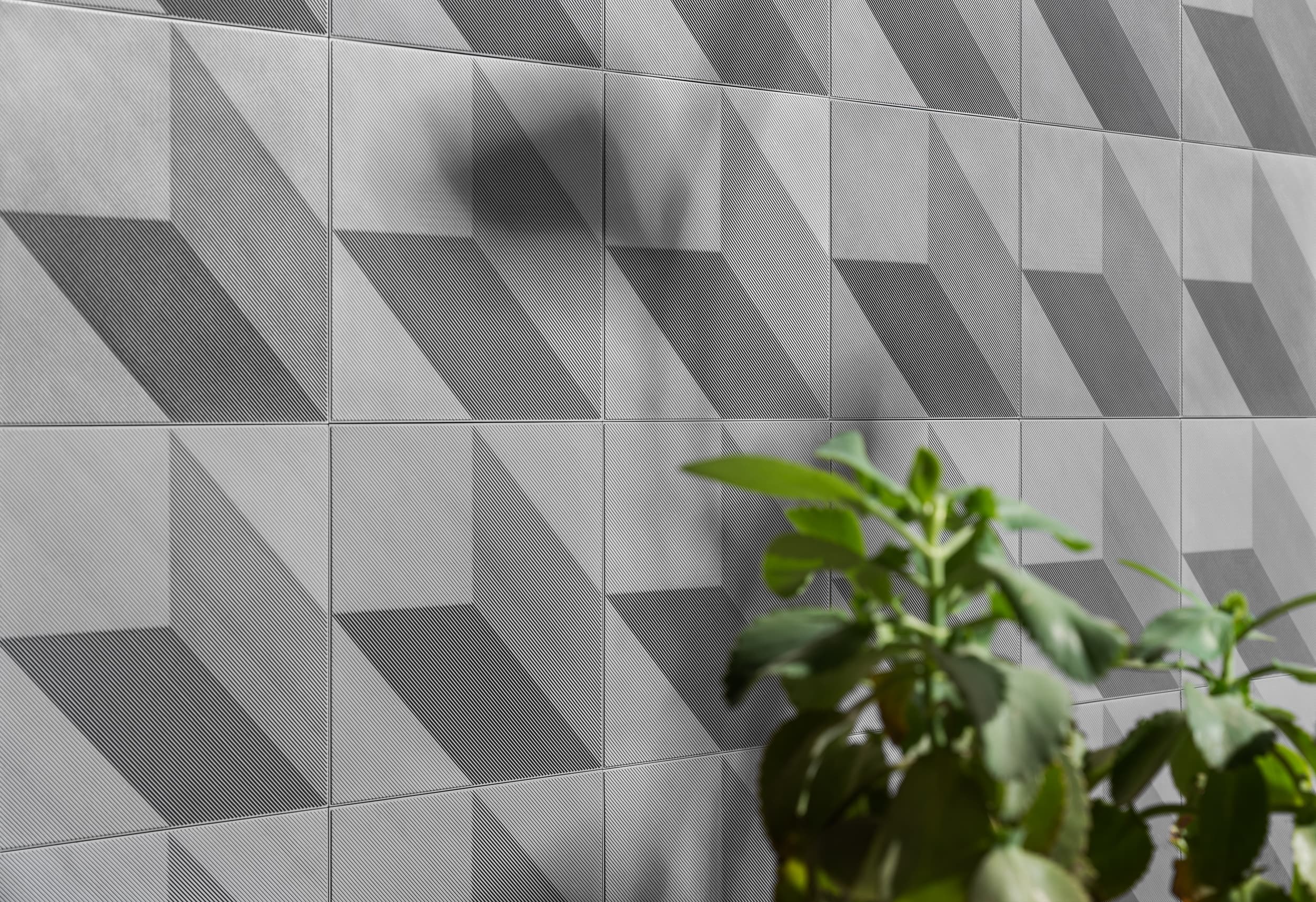
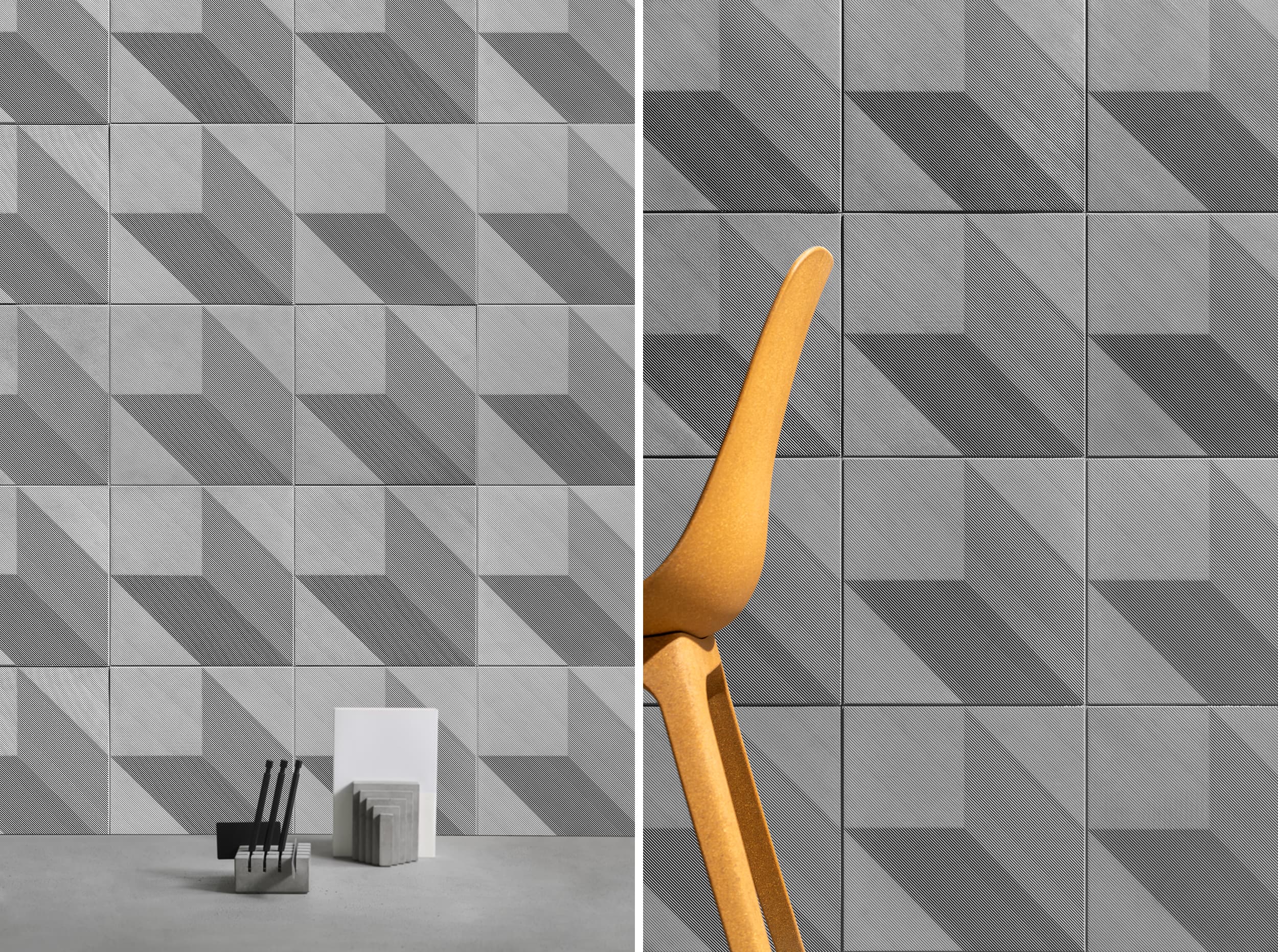
A uniform, pure gray base is critical for crisp geometric light-and-shadow contrast. High-slag alkali-activated matrices contain abundant free alkali ions; in humid outdoor environments, ions migrate alongside moisture and react with carbon dioxide to form white carbonate efflorescence, which completely ruins shadow contrast. The project deploys a three-tier protection system — internal alkali locking, surface shielding, and long-term self-cleaning — to eliminate efflorescence fundamentally. Nano-silica active admixtures trigger secondary pozzolanic reactions to consume free calcium hydroxide and refine capillary pores to block moisture transport, cutting off efflorescence sources at the root. After full curing, penetrating nano fluorosilane-modified silane emulsion is coated on the surface, infiltrating several millimeters deep into the substrate and forming a covalently bonded superhydrophobic invisible protective layer. Rainwater cannot seep into grooves; instead, it beads up and rolls off, washing away accumulated dust simultaneously. This keeps facades free of white stains and grime throughout their full service life, permanently preserving the original light-and-shadow aesthetic effect.
High-solid-waste light-and-shadow fair-faced concrete decorative bricks represent both a landmark breakthrough in material engineering and a transformative redefinition of facade aesthetics. The low-carbon sustainable substrate, minimalist fair-faced texture and grazing-light shadow geometry fuse integrally within a single component, forming a complete closed loop of matter, form and natural energy.
Sustainable building materials no longer require trade-offs in visual quality. Roughly eighty percent industrial solid waste, refined via algorithmic mapping and precision craftsmanship, delivers premium geometric textures infused with digital rationality. Architectural facades abandon their identity as resource-heavy static masks, evolving into active material carriers that track sunlight and record the passage of time.
These high-solid-waste light-and-shadow fair-faced concrete decorative bricks respond to ecological demands with unadorned material authenticity, softening the cold rigidity of architectural space through the language of light. The flowing light and shadow across facades fully narrates the story of industrial ash reborn as temporal art — this is the innovative material art belonging to the future.
Design Director: Xu Gang
This original manuscript belongs to the BENTU Local Regeneration Practice Series. Centered on the R&D of light-and-shadow fair-faced concrete decorative bricks, it interprets the sustainable dynamic aesthetics of high-dosage industrial solid waste integrated with grazing-light shadow geometry.

- Contact
+8620 8977 0506
- Press
press@bentudesign.com
- Enquiry & Sales
info@bentudesign.com