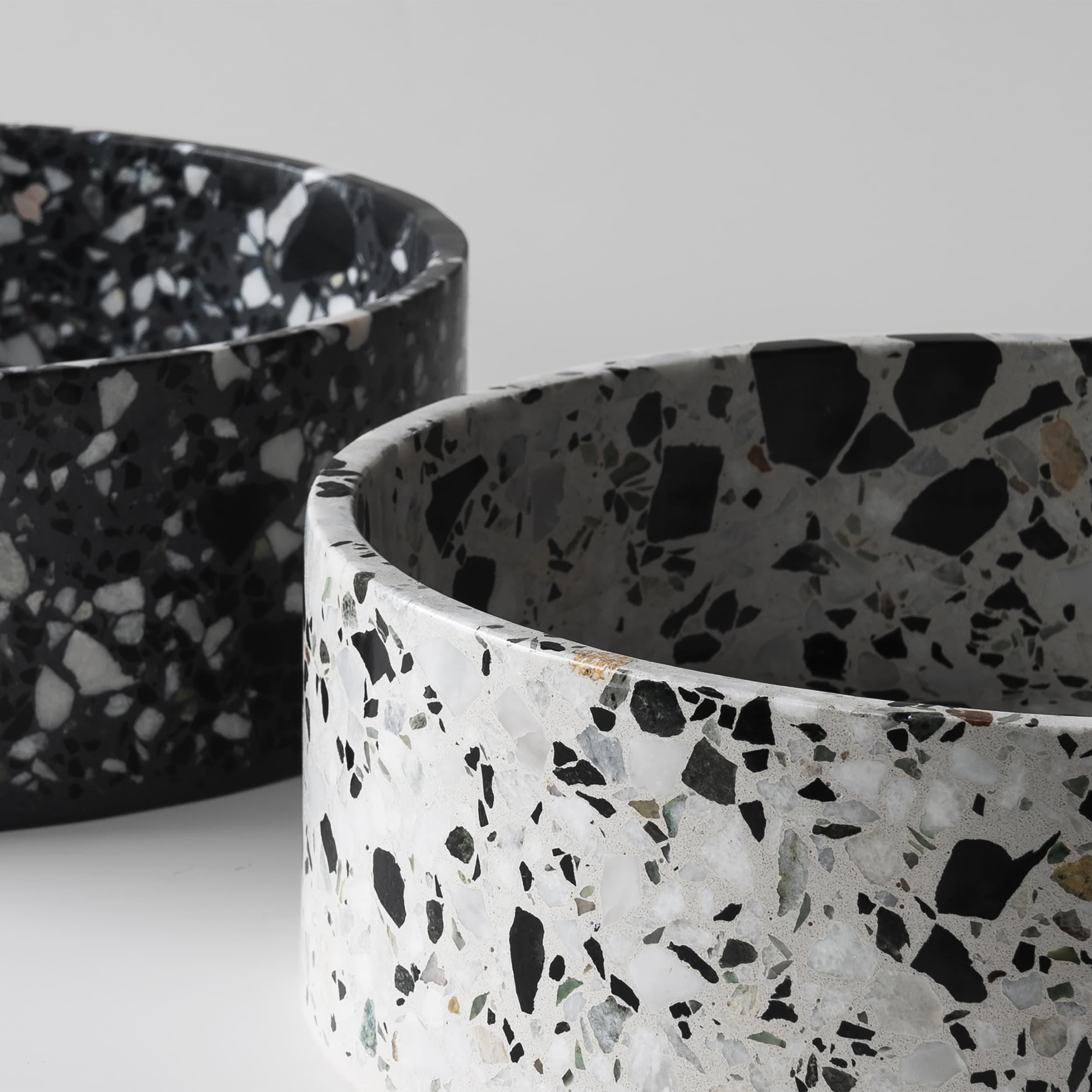
Recycling Woven Plastic Bags: Material Regeneration of Agricultural Waste
Time: 2023
Location: Shunde, Guangdong, China
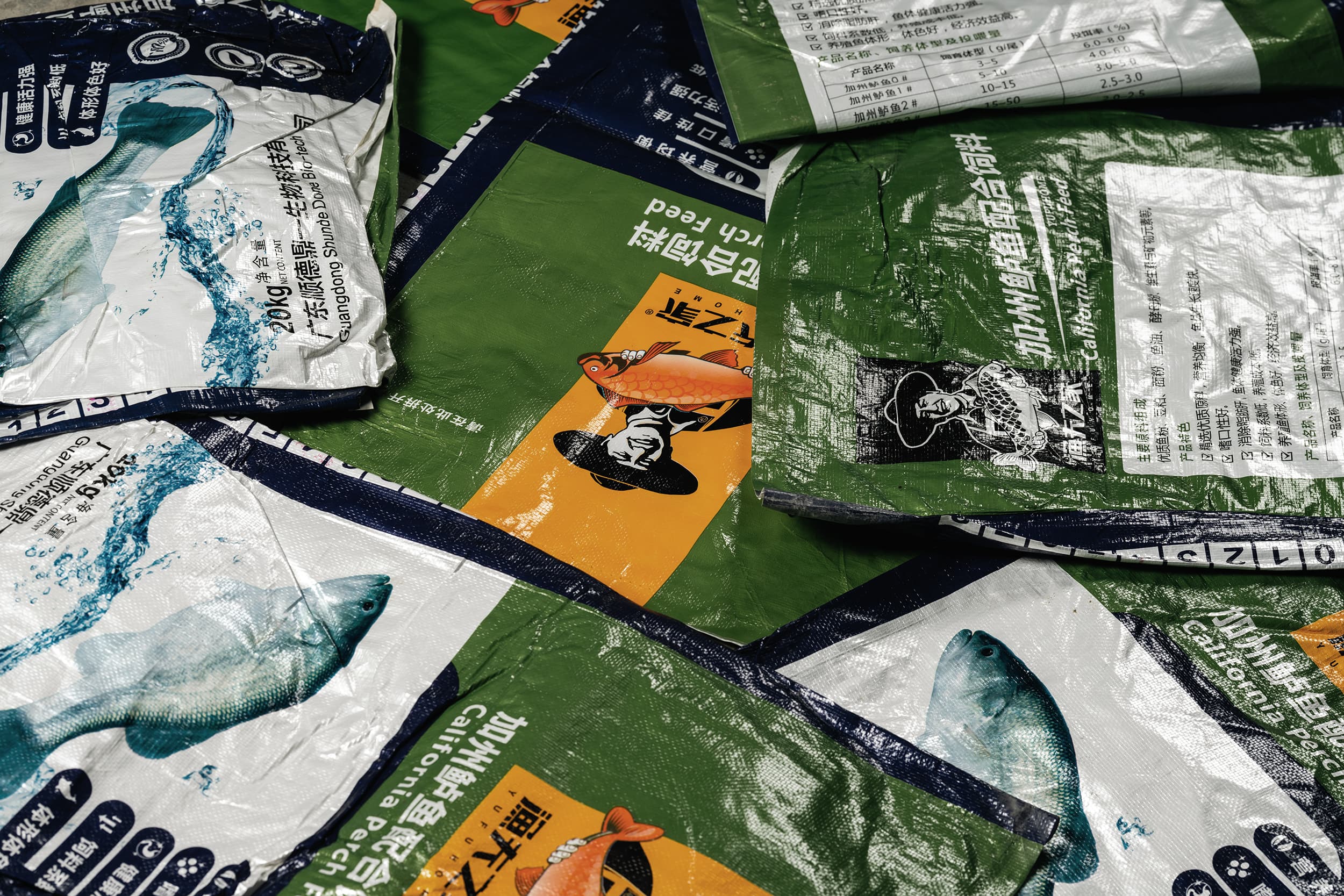
China generates approximately 4.2 million metric tons of plastic waste from its agricultural sector every year, including 2.46 million tons of agricultural film, 280,000 tons of chemical fertilizer packaging, and 130,000 tons of plastic pesticide containers. Behind these figures lie countless discarded woven plastic sacks left scattered across farmlands. Exposed to sunlight, wind and rain, the sacks weather and fragment, sink into soil, leach industrial additives, disrupt the growth of flora and fauna, and eventually enter the food chain to circle back to human beings.
This forms a vicious cycle. Once holding chemical fertilizers, seeds and animal feed to support farmland yields, these woven bags end up being swallowed by the land once their service life expires. Transformed from production tools into environmental burdens, they shift from visible objects to invisible pollutants. The material research and development carried out by BENTU aims to pull these substances, which would otherwise fade away into the earth, back to the surface and into people’s daily sightlines.
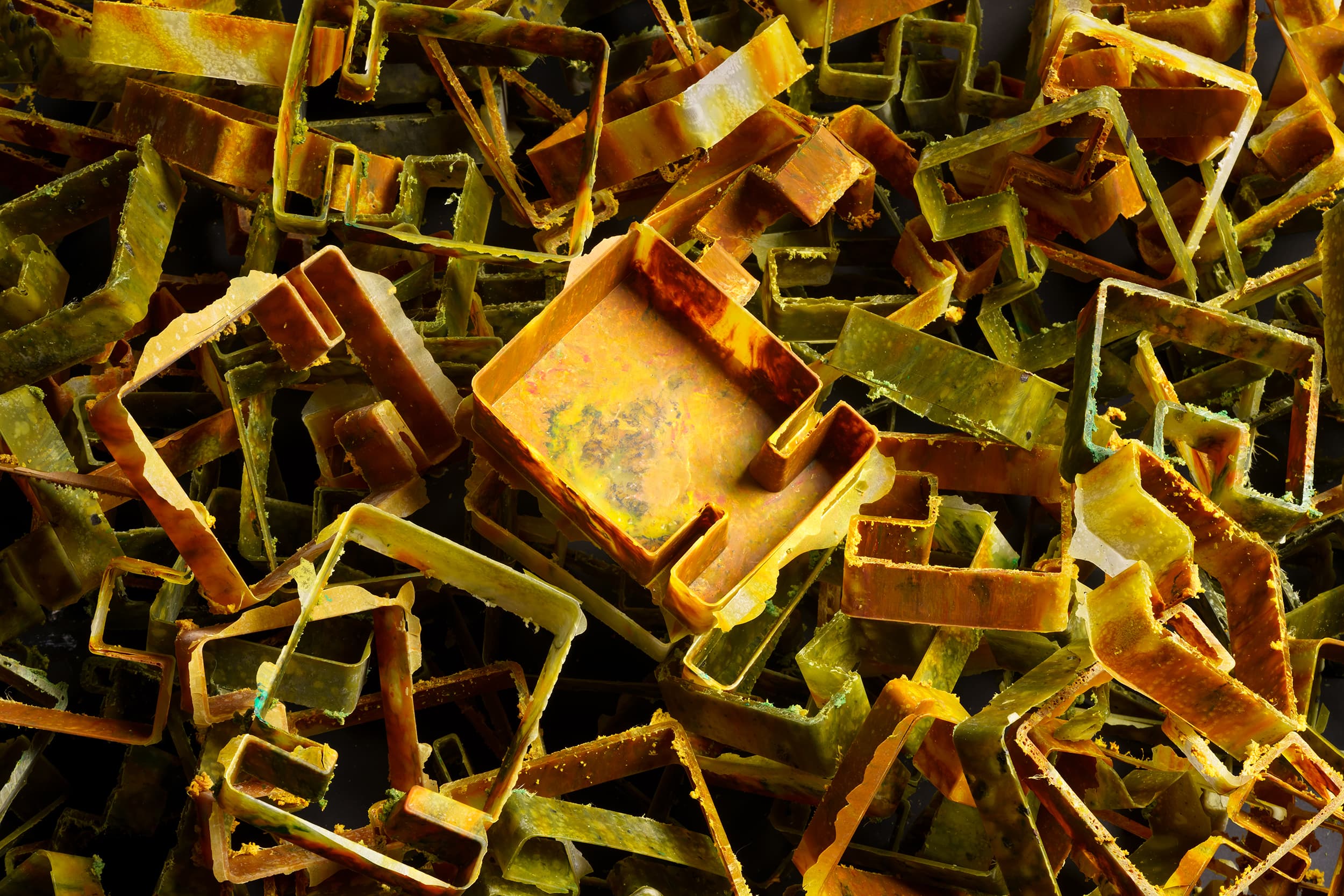
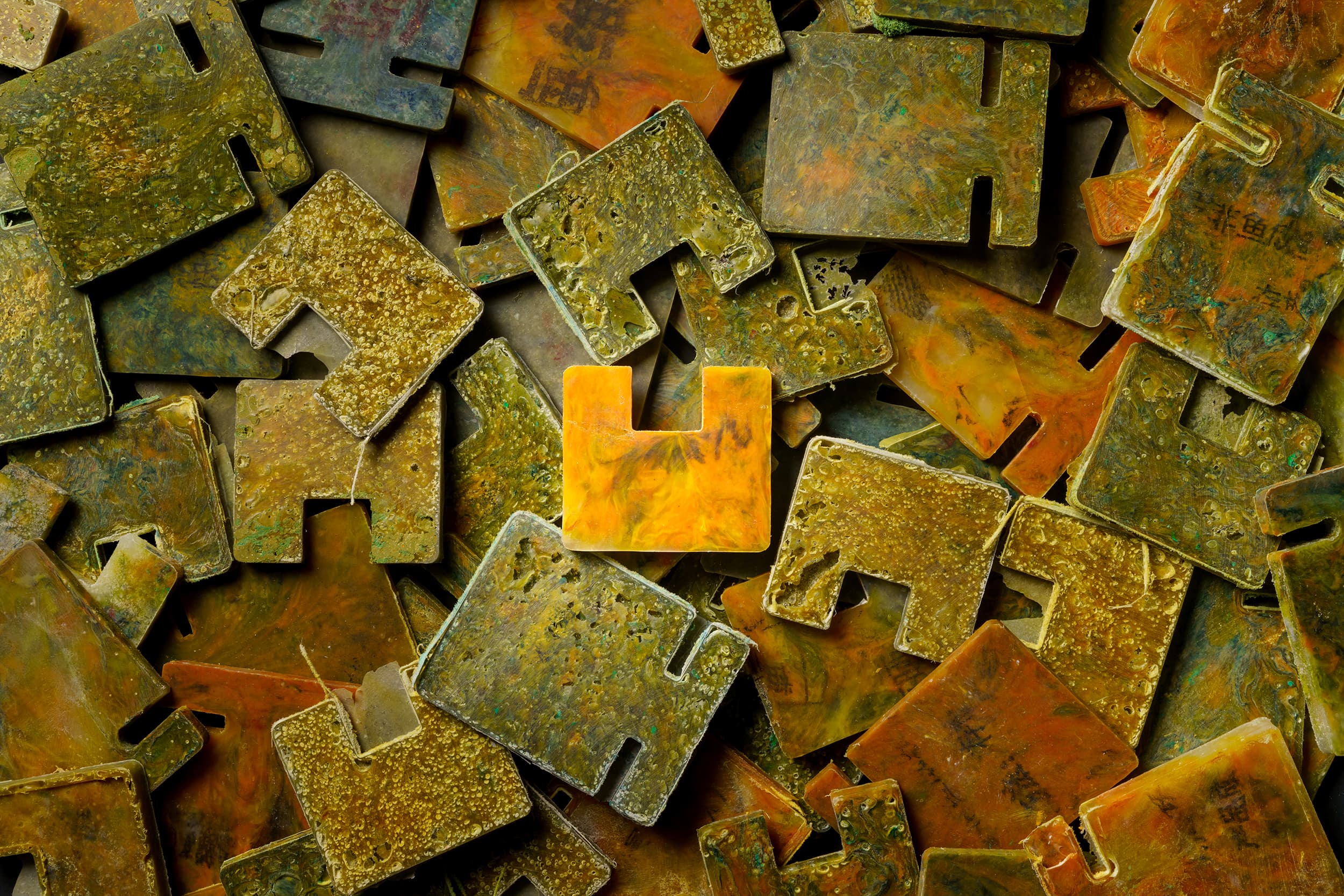
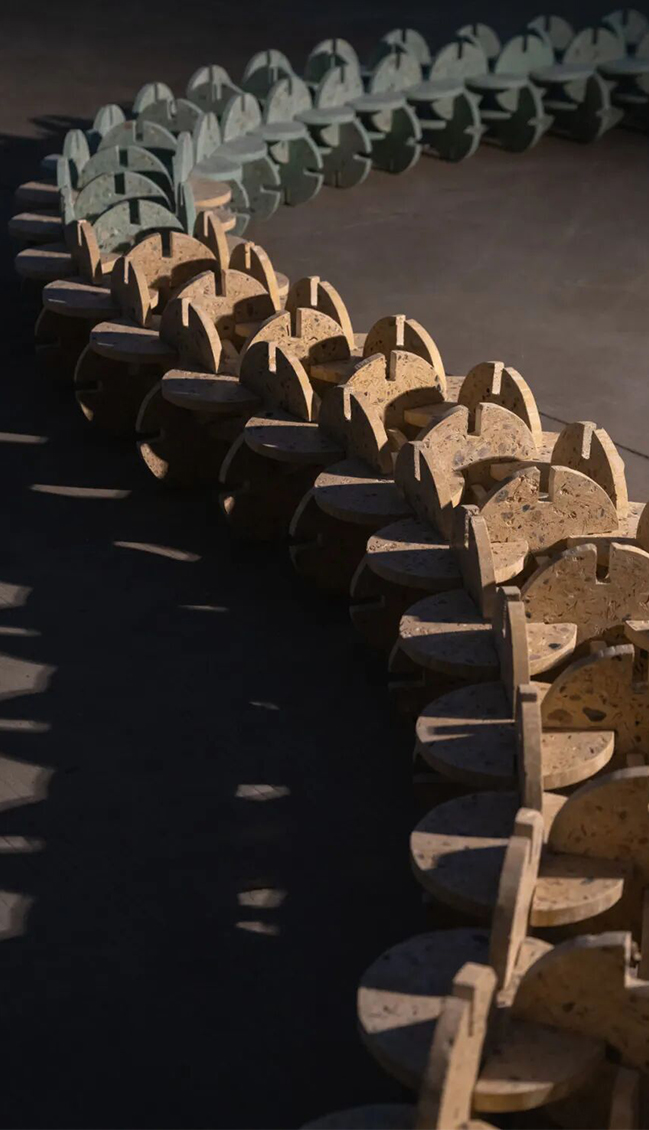
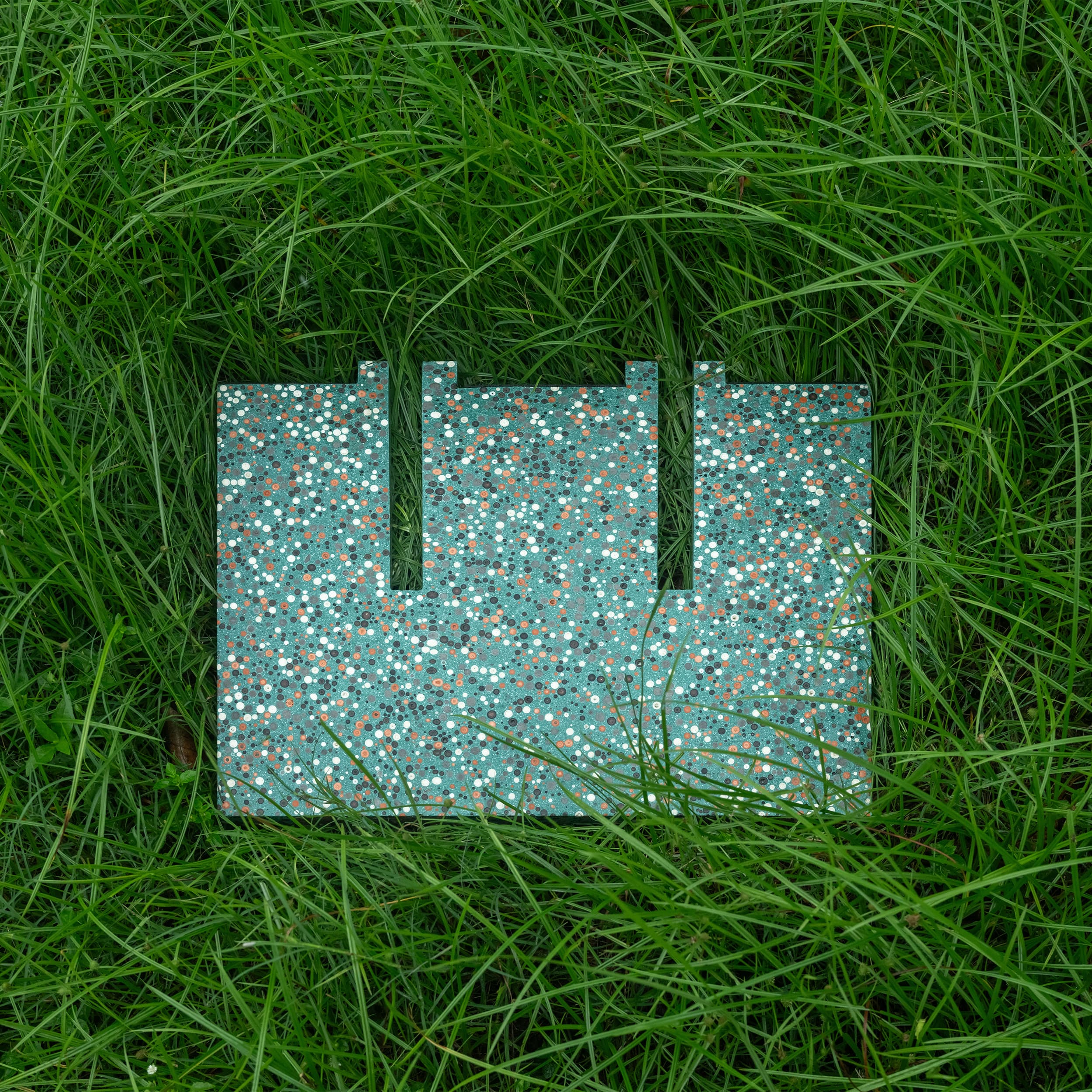
We collect discarded agricultural woven plastic sacks and remold them into daily goods via hot pressing. The core of this craft lies in leveraging the inherent properties of the plastic itself. The woven bags require no complex chemical decomposition, nor extra resin or adhesive. They only rely on the plastic’s natural melting point — polypropylene softens at roughly 160°C — to fuse and take new shapes under heat and pressure. The process involves no material downgrading: no intentional bleaching, no uniform colouring, no filling-in of woven textures. The original warp and weft threads, printed graphics and wear marks of the woven bags are fully preserved during hot pressing, solidified onto new surfaces in a brand-new form.
The design philosophy behind this craft is clear: let waste materials tell their own stories. The physical traits of the raw materials — uneven woven textures, blocks of printing ink, wear and fading accumulated over long-term use — form a unique visual language for each finished product. No artificial decorative elements need to be added, for the materials already carry an abundance of embedded information.
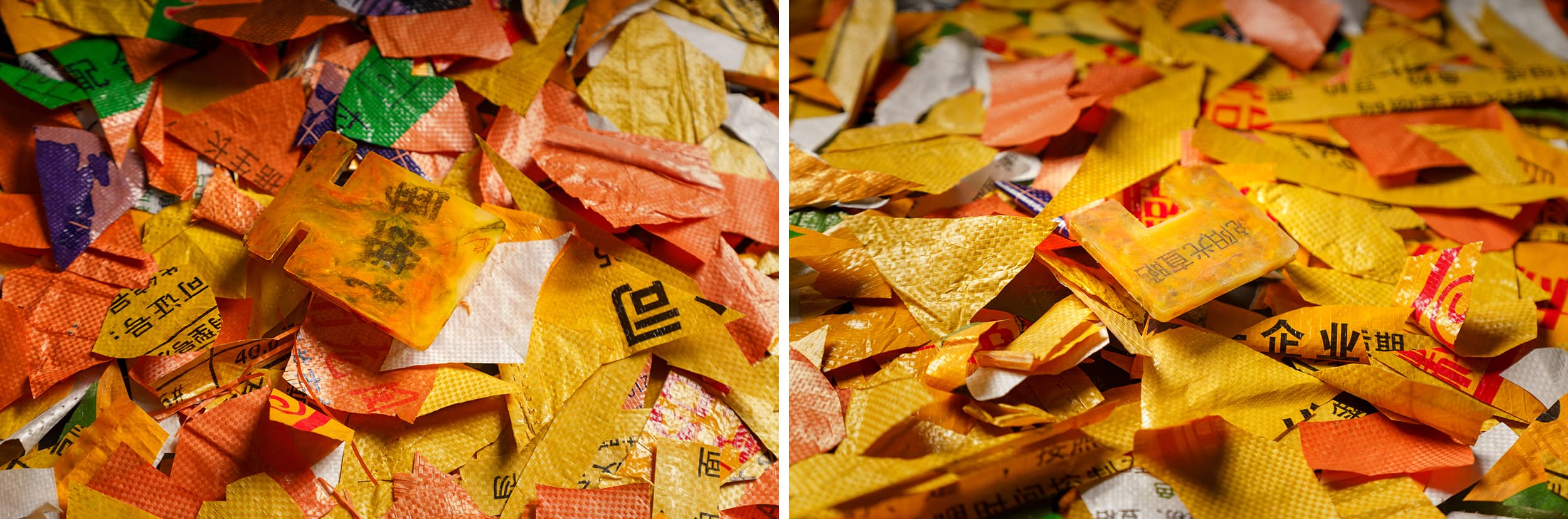
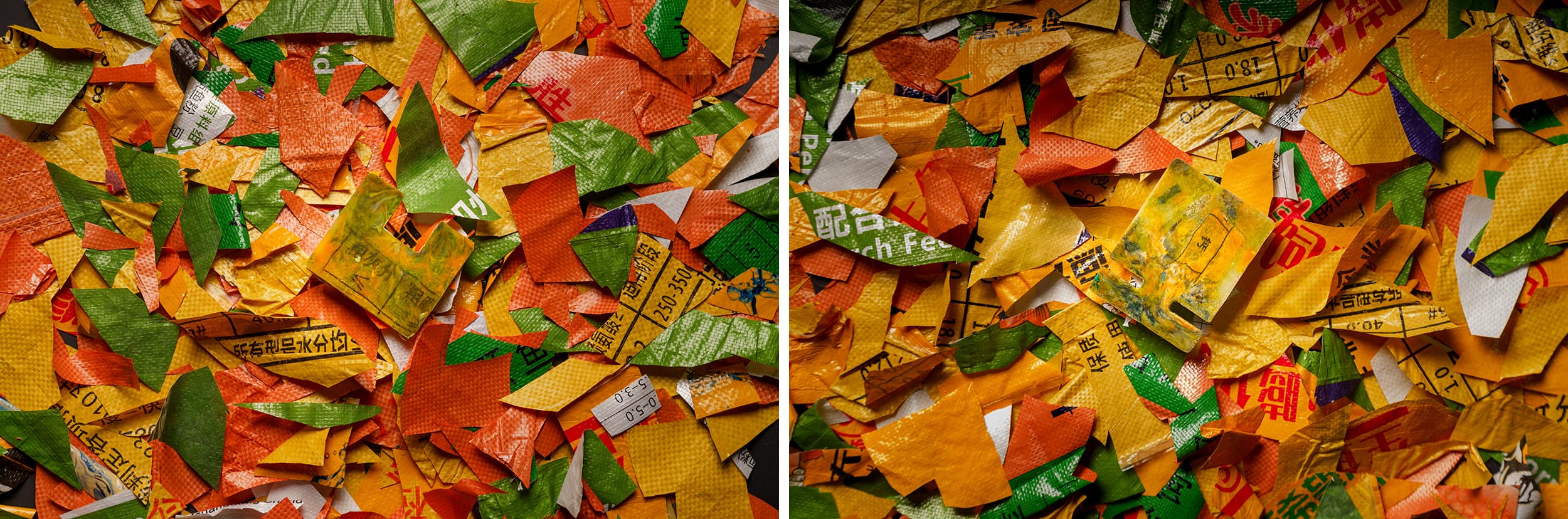
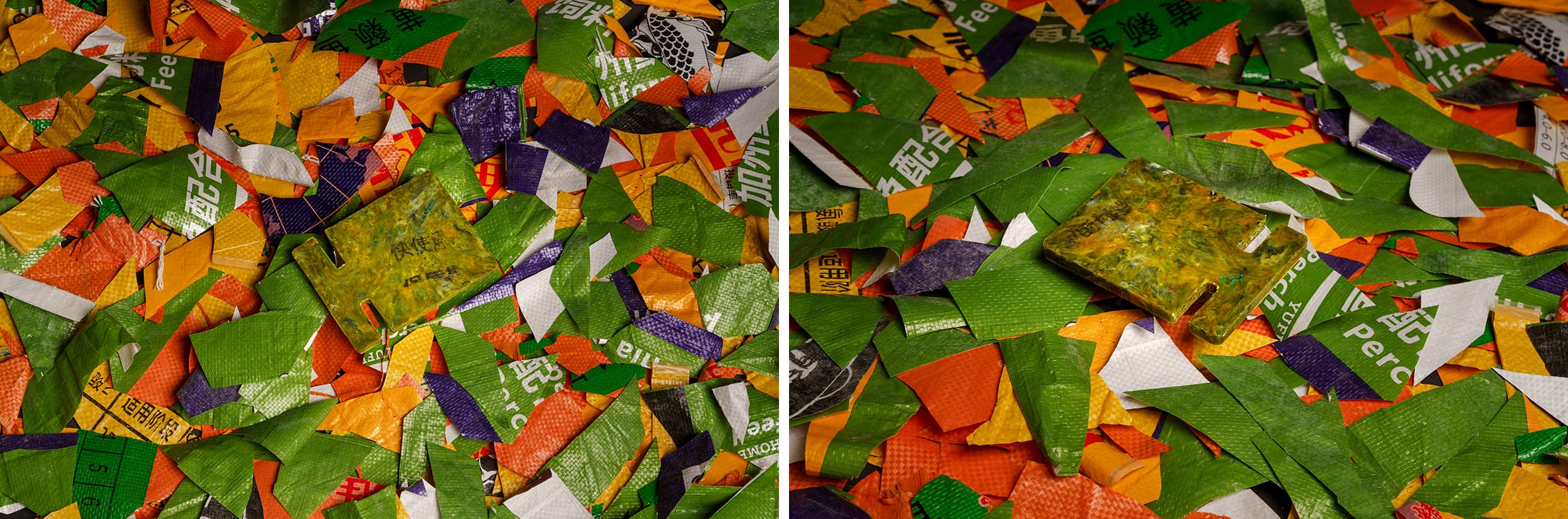
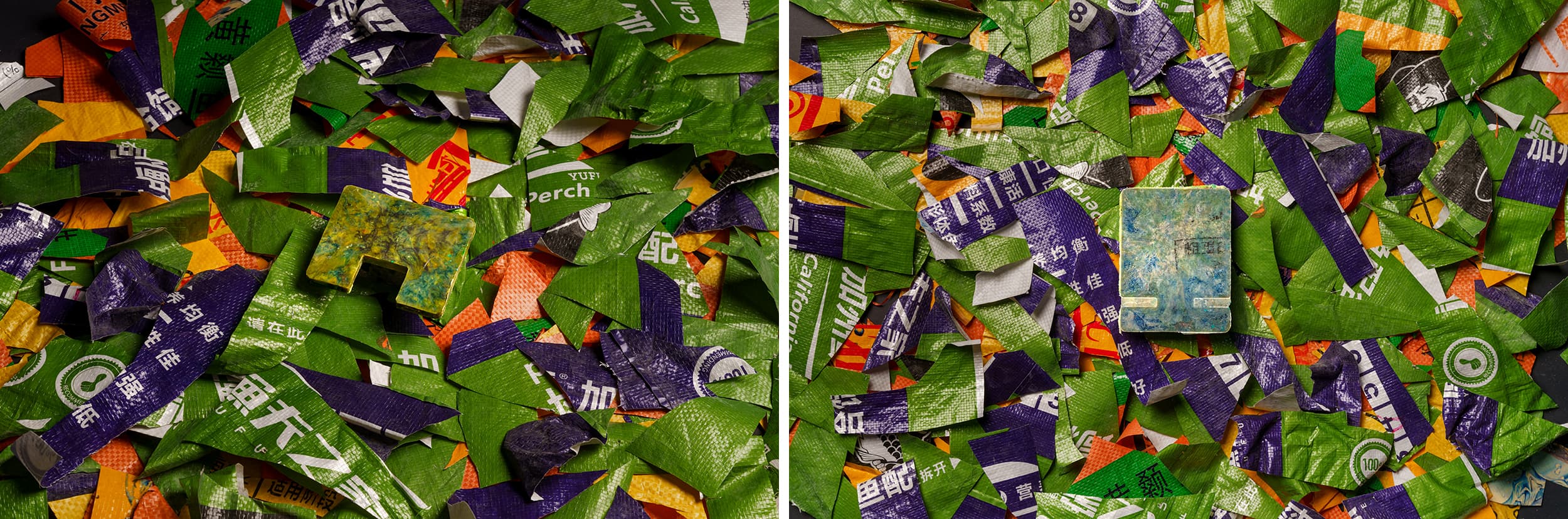
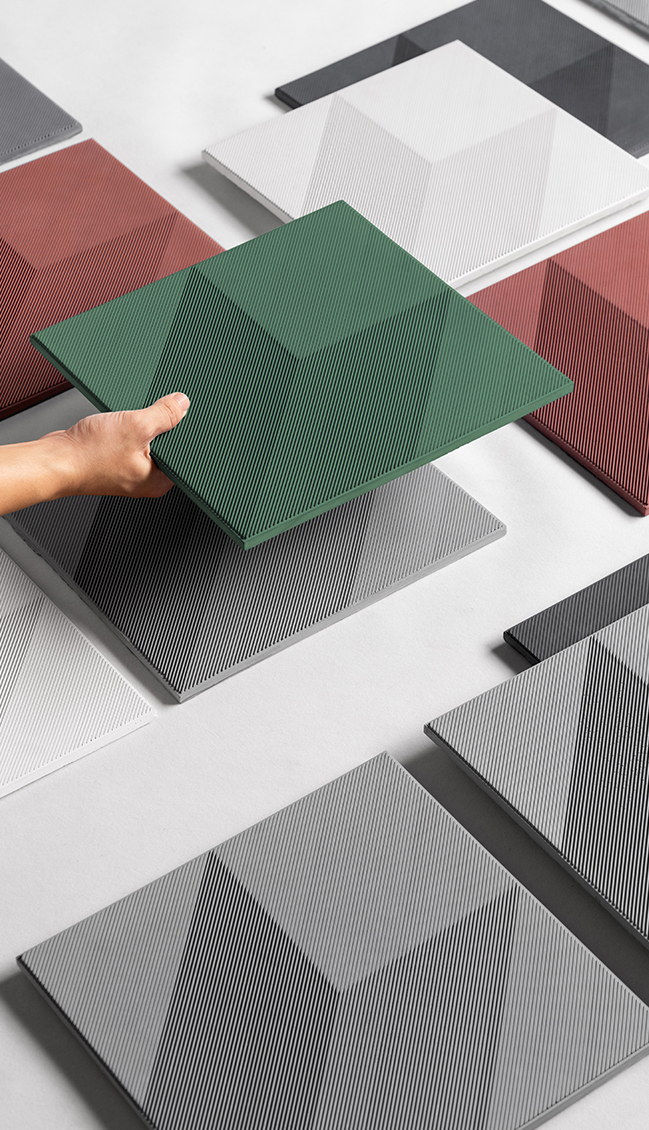
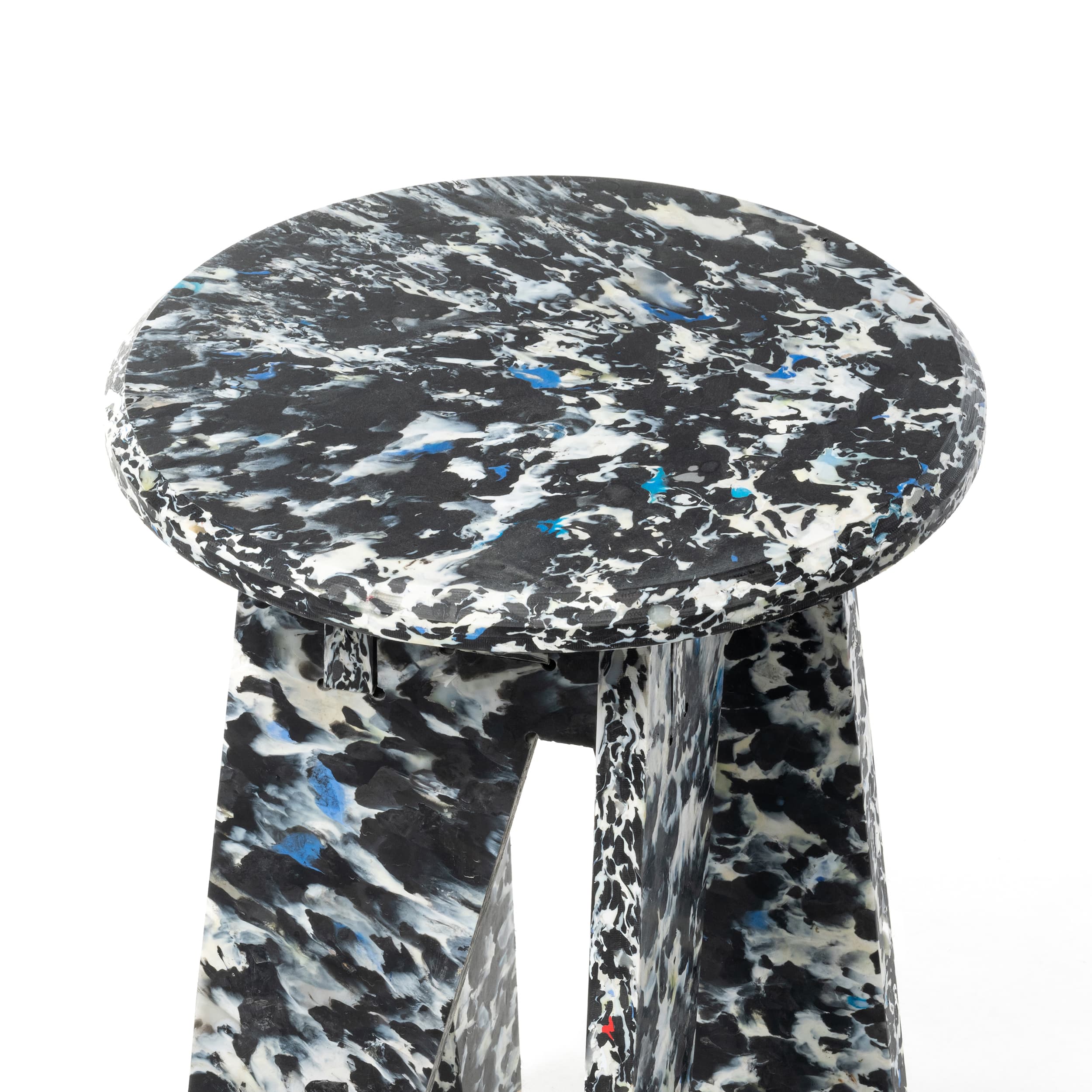
Untreated agricultural woven bags develop one-of-a-kind surface textures after hot pressing. Woven sacks of varying colours, printed patterns and origins are randomly stacked; once fused under heat and pressure, their hues flow naturally. The white of fertilizer sacks overlaps the yellow of feed sacks, while the green of seed sacks clashes with the red of transport sacks. Brand names, product descriptions and warning labels printed on the woven bags get cut off, overlapped and distorted during hot pressing, transforming legible text into fragmented symbolic visuals.
The random distribution of these fragments lends every sheet a visual quality reminiscent of abstract paintings. Colours drift naturally with an oil painting-like subtlety, while patterned symbols emerge and recede, stirring a strange sense of familiarity. This aesthetic is not artificially engineered; it is a natural visual order generated by the inherent information of waste materials under hot pressing conditions. Every finished piece is one of a kind. Even with identical raw material batches, moulds and technical parameters, two fully identical sheets can never be produced.
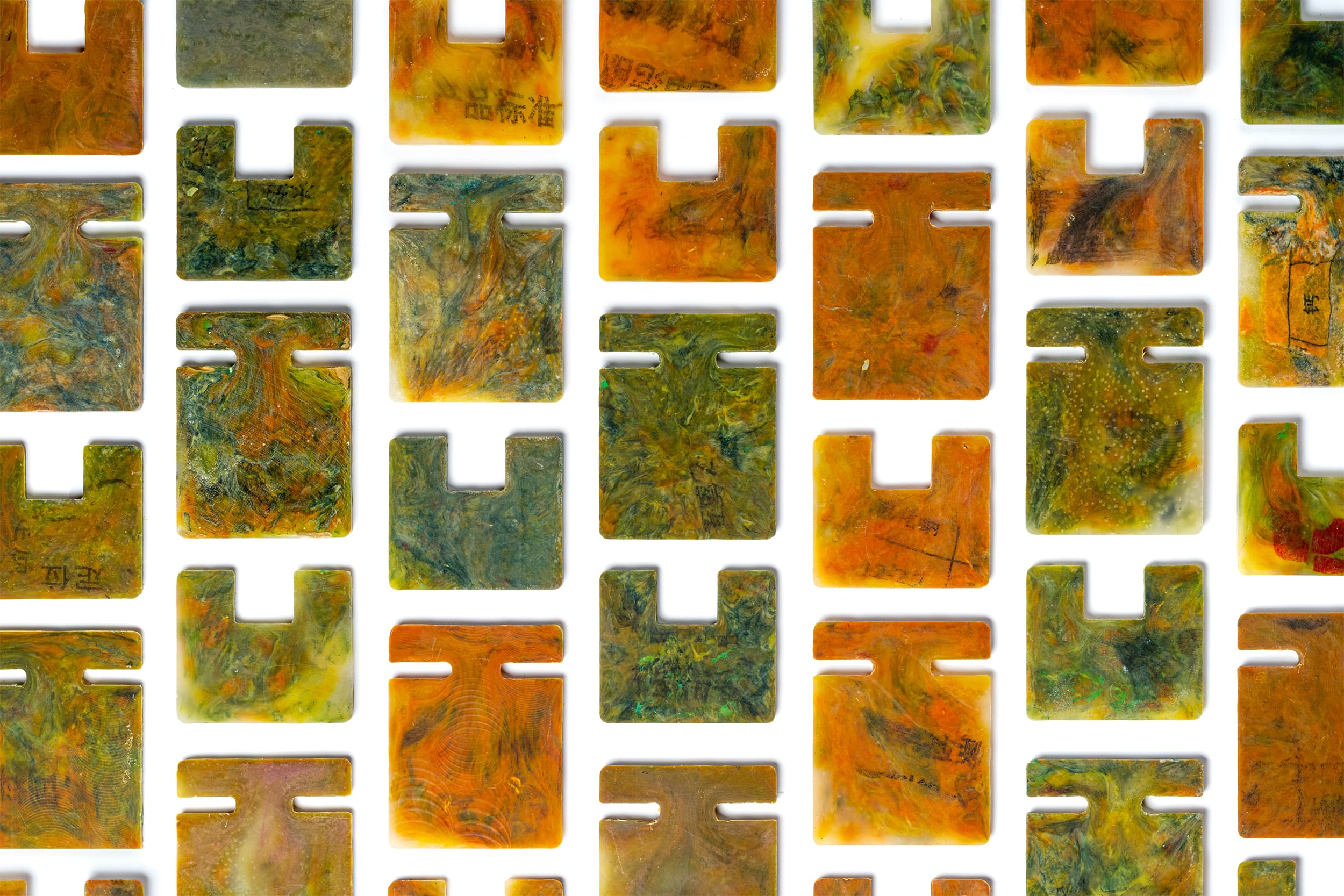
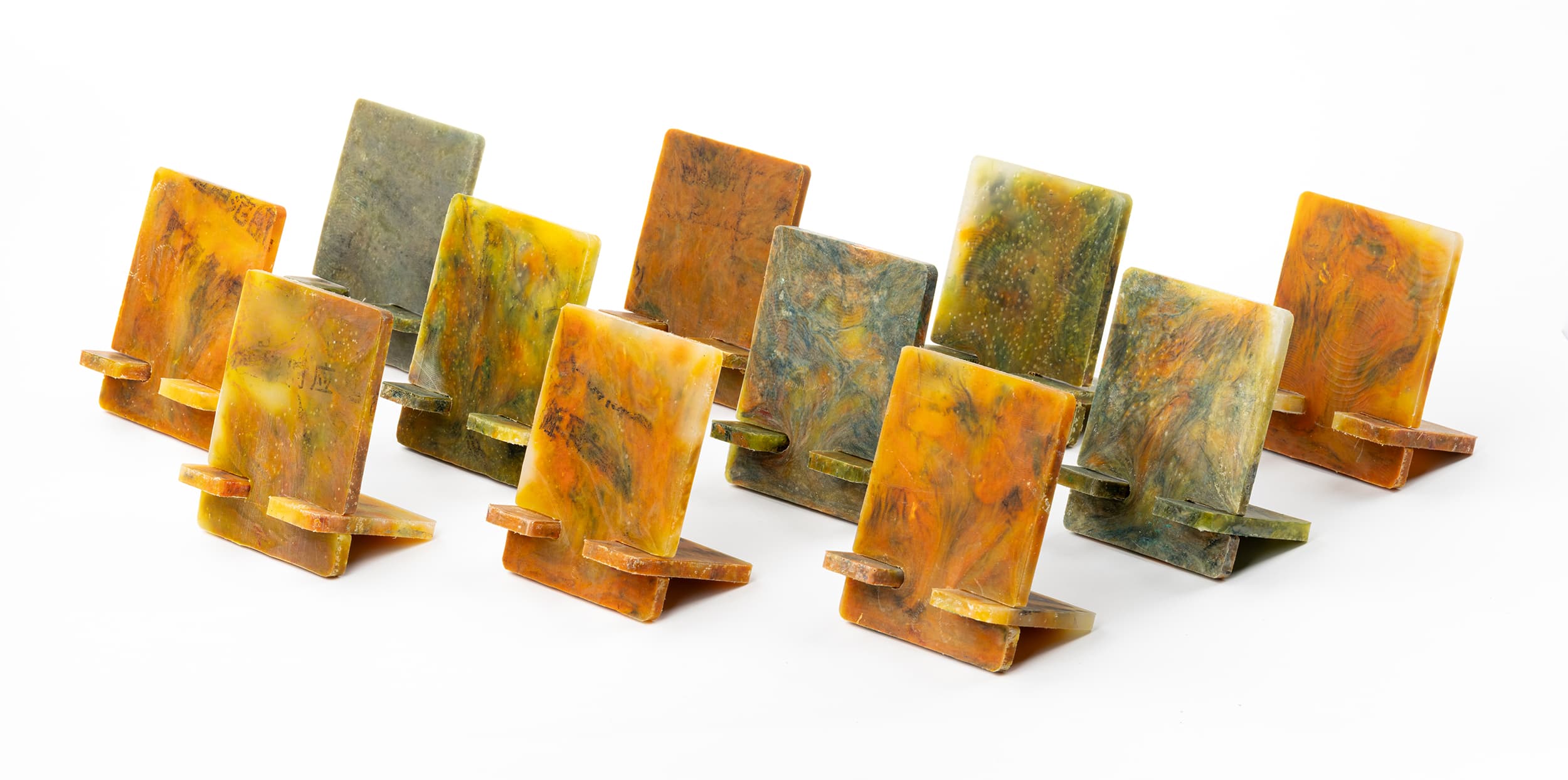
This randomness constitutes the core aesthetic value of the products. It is not artificially manufactured limited-edition scarcity, but the authentic retention and presentation of the diversity inherent to the raw waste materials. The surface texture of the stand resting in a user’s hands is entirely unique, as it records a specific batch of woven bags, a specific moment of hot pressing, and an unrepeatable fusion of substances.
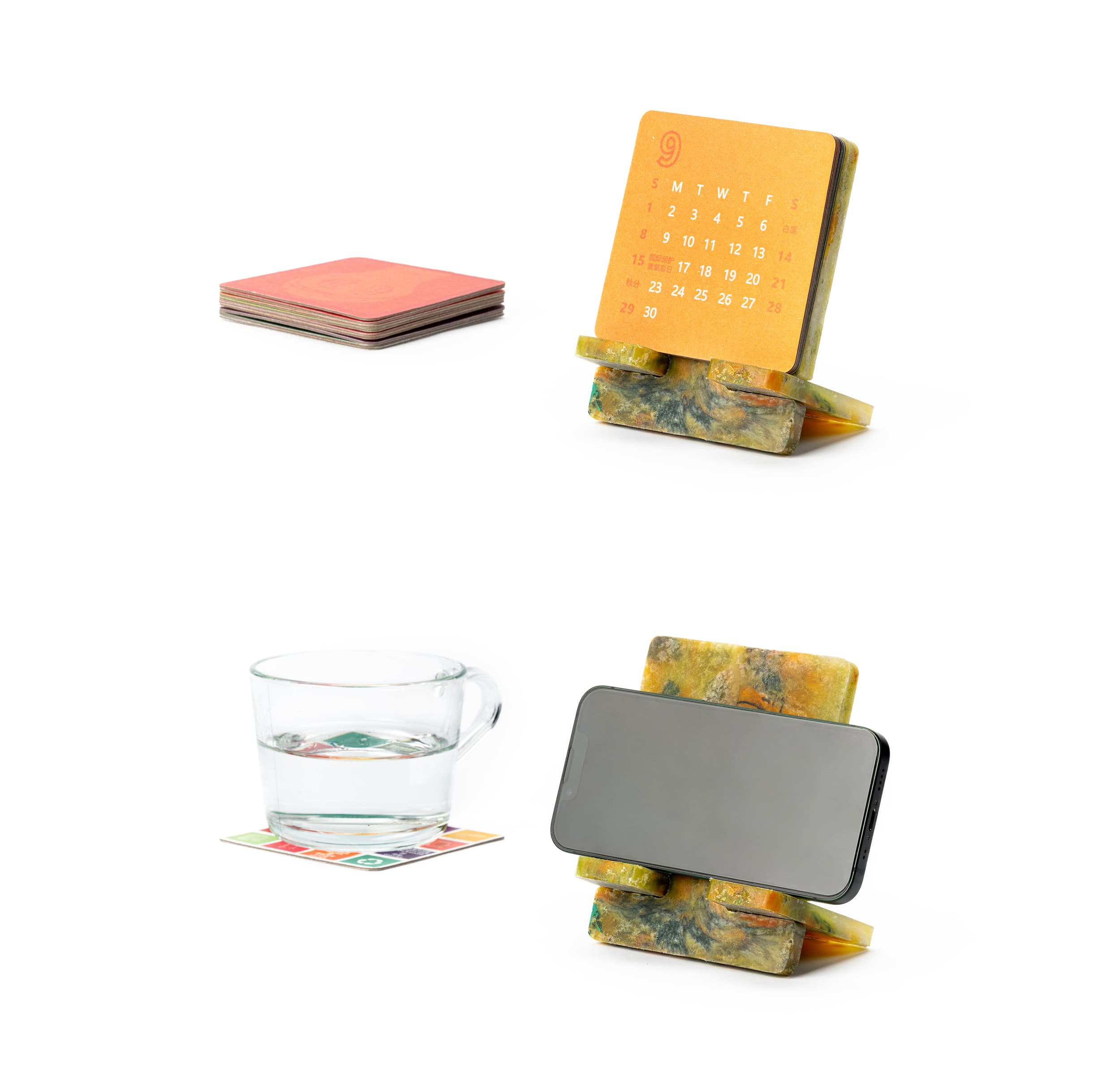
Once the calendar pages expire, the stand can be repurposed as a mobile phone holder. This seemingly simple design choice embodies thorough consideration of the product lifecycle.
Calendars are time-sensitive goods; their core calendar function becomes obsolete after one year. If the stand existed merely as an accessory for the calendar, its lifecycle would terminate alongside the calendar, turning it into fresh waste. By engineering the base to double as a phone stand, the design embeds a secondary function and a second life for the product from the outset. This is not a secondary upcycling idea left to consumers, but a circular strategy built into the product at the design stage.
This design logic shifts the burden of "service life extension" from consumers to designers. Instead of appealing to users not to throw the product away, we craft the product to hold inherent value that discourages disposal. Though its function transitions from calendar stand to phone holder, the physical form of the material remains unchanged. The woven textures and colours from repurposed agricultural sacks accompany users through daily use for years on end.

Placed on office or study desks, each calendar stand is seen and touched every single day. Its very presence acts as a subtle, constant environmental reminder.
Users may not know that the panel is crafted from agricultural woven sacks, yet fragmented words peeking through the surface — “Fertilizer”, “Seeds”, “Feed” — occasionally catch the eye during daily use. These fragments serve as physical evidence of material circulation within consumer society: a woven sack filled with fertilizer travels from factory to farmland, the fertilizer is spread over soil, the sack is discarded, collected and hot-pressed, and finally re-enters daily life as a stand. The product itself functions as a condensed narrative carrier, conveying the chaos of waste pollution and quiet warnings about nature to every user in tangible, physical form.
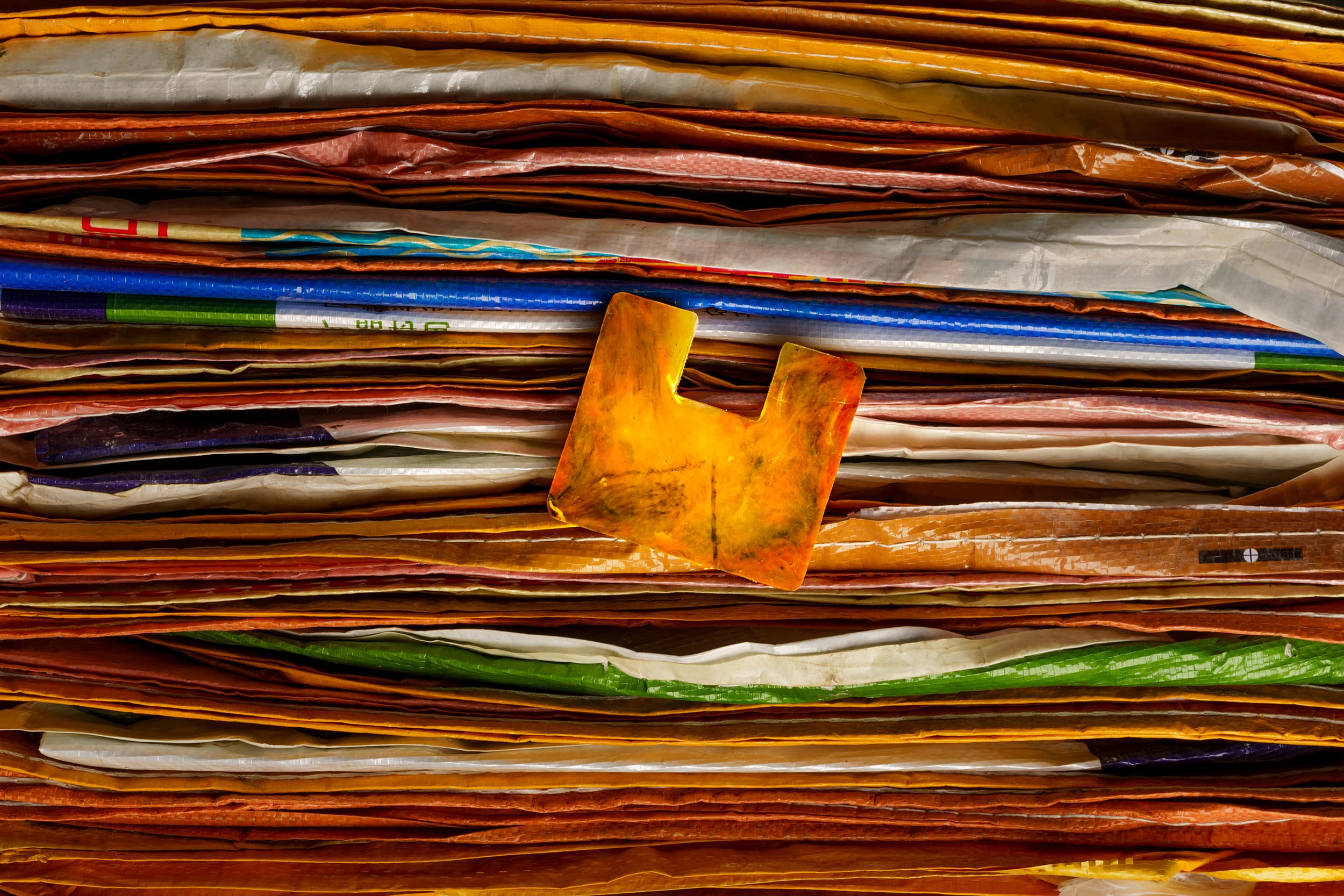
This aligns with BENTU’s consistent practice logic: let waste materials carry narratives, and let materials speak for themselves. The agricultural woven sack stand is not a preaching tool for environmentalism, but an everyday household object. Its beauty stems from the traces preserved within the raw materials, its value from the design’s reverence for the lifespan of matter, and its significance from the new perspective every user gains on the relationship between human beings and waste through daily use.
Design Director: Xu Gang
This original article belongs to BENTU’s Material Regeneration Practice Series. Taking the hot-pressing regeneration project for discarded agricultural woven plastic sacks as a research sample, it explores the material narratives embodied by agricultural plastic waste.

- Contact
+8620 8977 0506
- Press
press@bentudesign.com
- Enquiry & Sales
info@bentudesign.com