How Can Industrial Solid Waste Be Transformed into Sustainable Design?
A Conversation with Xu Gang, Founder of BENTU
Source: IDEAT
Column: H3 Design Highland
Time: 2026
H3 Design Highland: A Lighthouse of Thought, Gathering China’s Leading Original Forces
Key Figure: Xu Gang | BENTU — “Transforming Industrial Solid Waste into Sustainable Design”
At a time when sustainable development has become a global priority, how can design genuinely engage with China’s vast reality of industrial solid waste? Recently, “H3 Design Highland” held an in-depth conversation with Xu Gang, Founder and Design Director of BENTU. In this interview, he sets aside the sentimental artistic lens often attached to sustainable design and, through an exceptionally rational “defect grading mechanism” and more than a decade of relentless industrial standardisation practice, deconstructs BENTU’s “material-first” creative logic. He also systematically presents a practical methodology that moves from material research to industrial application. The following is the transcript of the interview:
Q1: In terms of material selection and transformation, what is your creative logic? When facing solid waste with different characteristics, how do you balance the “inherent defects” of materials with design aesthetics? And how were these ideas presented to visitors in this exhibition?
Xu Gang: My creative logic is very simple: first see the waste itself, then design — rather than presupposing a form and forcing the material to fit it.
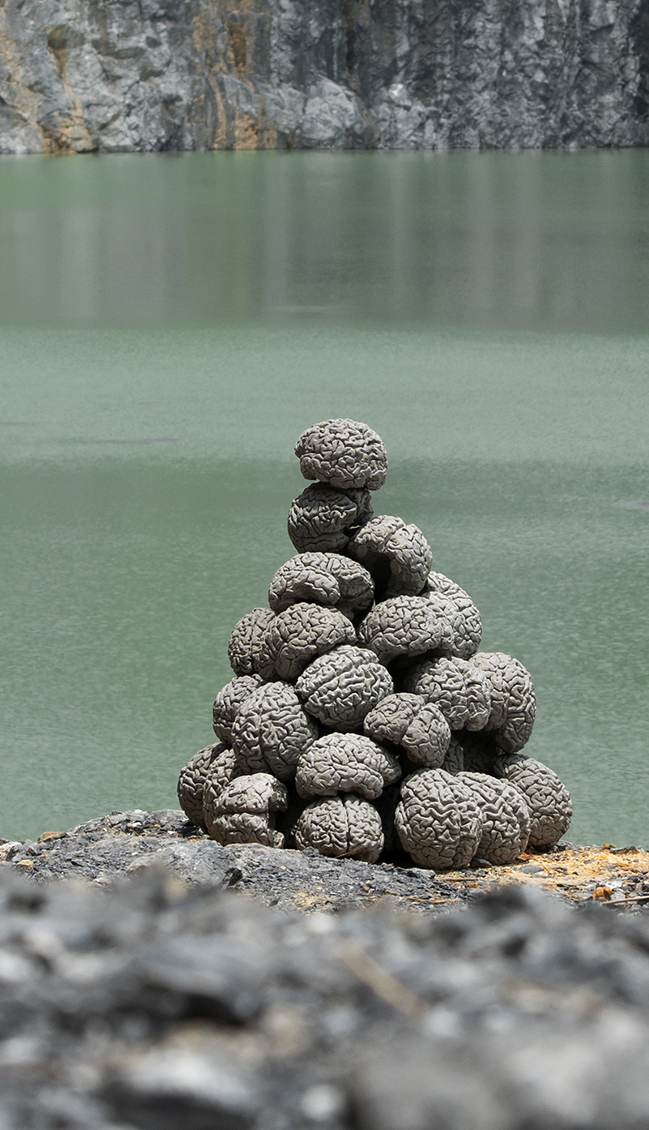
When BENTU selects industrial solid waste, we always follow two core dimensions. The first is the local nature of the industrial source. Whether it is waste porcelain from Chaozhou, mining tailings from Jiangxi, fly ash, or electronic chip waste, each type of material corresponds to a real Chinese industrial supply chain. These are genuine by-products of the local economy. The second dimension is the physical properties of the material itself, which we use to evaluate the mechanical basis for its reorganisation and regeneration. Here, design comes later. The inherent genes of the material determine our process path; we do not forcibly modify the material to conform to a preset aesthetic.
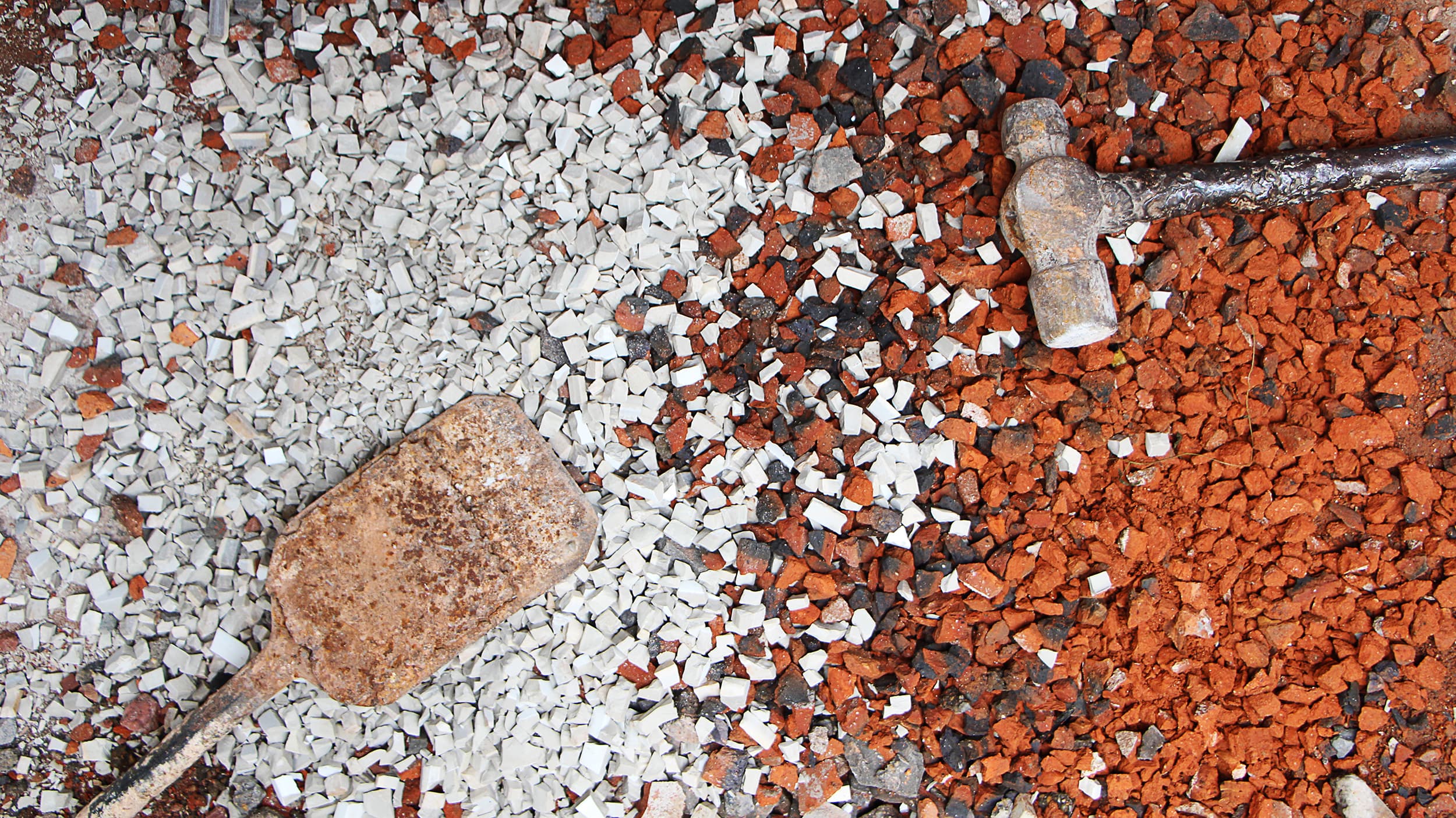
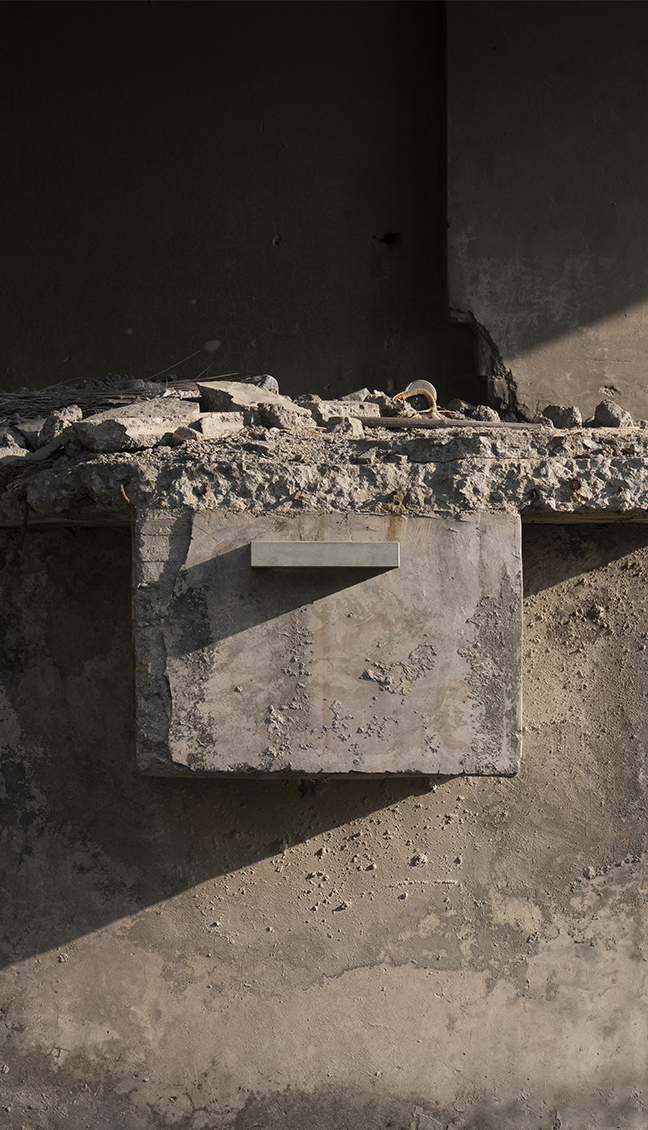
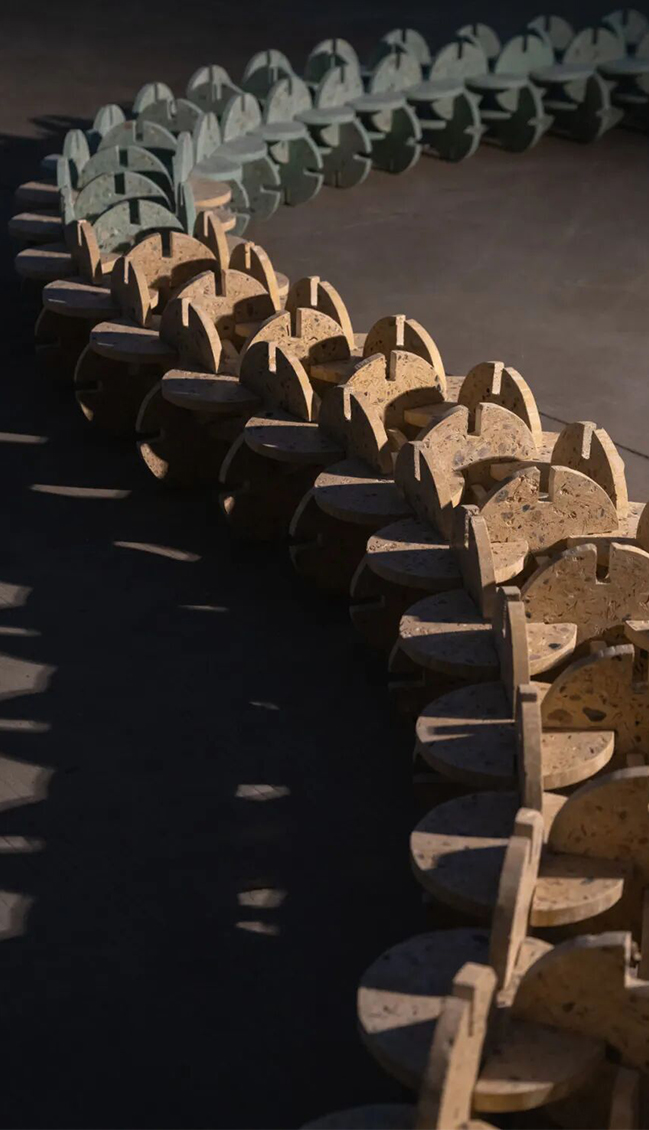
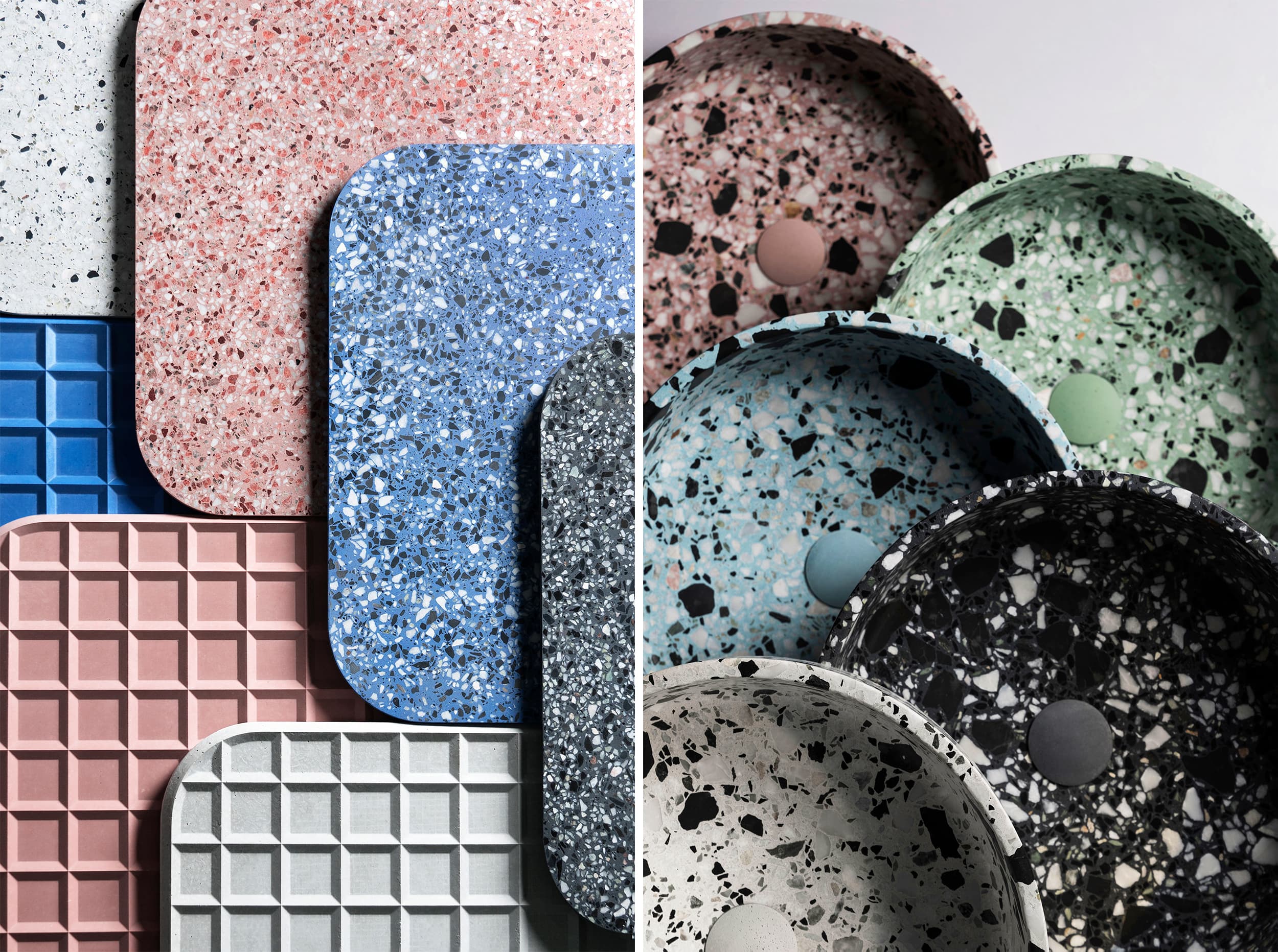
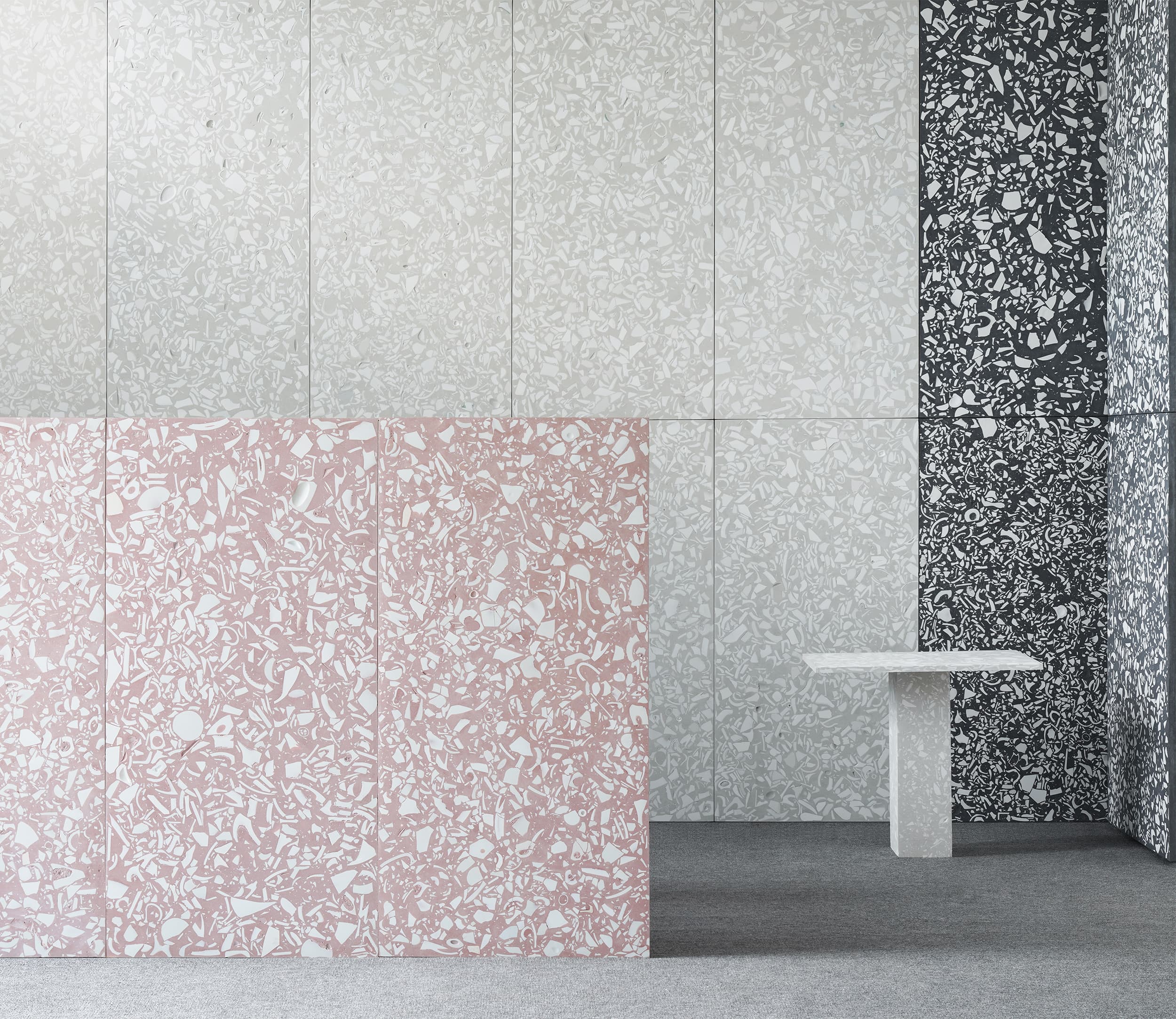
Faced with the “inherent defects” of solid waste — colour variation, uneven particles, unstable shrinkage, impurity spots, and so on — we refuse to blindly eliminate or smooth them away. Instead, we apply a “defect grading and transformation mechanism.” For defects that affect structural strength and safety performance, we adopt a rigorous, rational approach and carry out scientific correction through industrial means such as formula improvement and pressing processes, ensuring that the materials meet commercial-grade building-material specifications. For traces that carry material memory — such as natural granular textures and subtle colour variations — we choose to preserve them completely. Recycled materials should not replicate the monotonous, dull “perfection” of virgin materials. These so-called defects and traces are precisely the unique aesthetic attributes of a material that carries the legacy of a previous industrial chapter, as well as the dignity of land and labour.
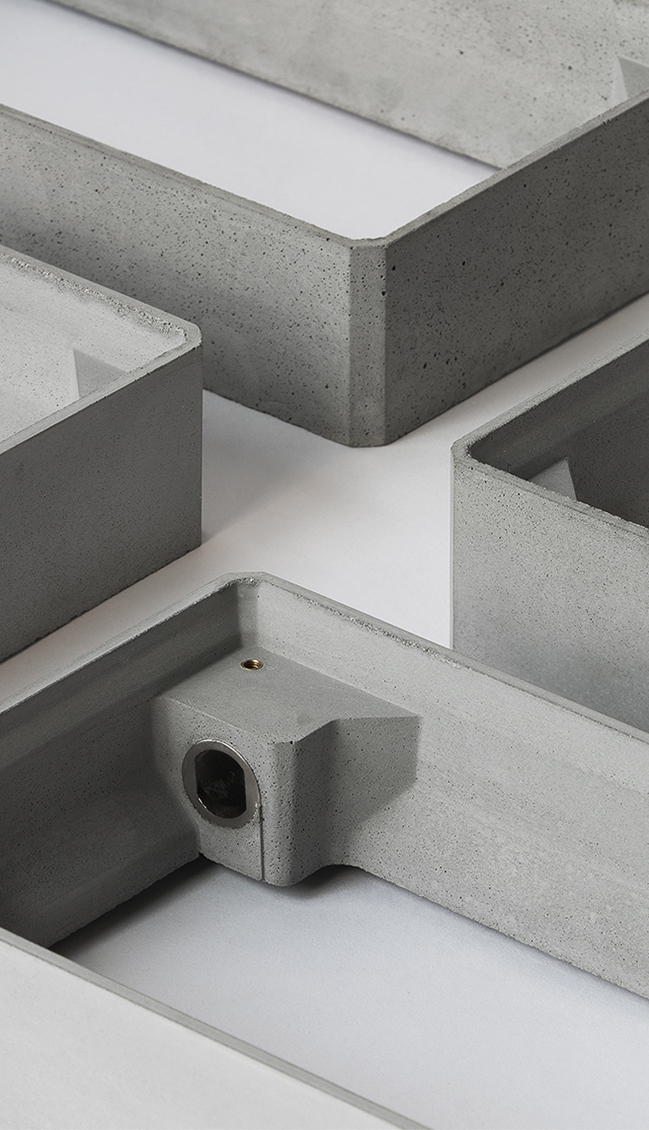
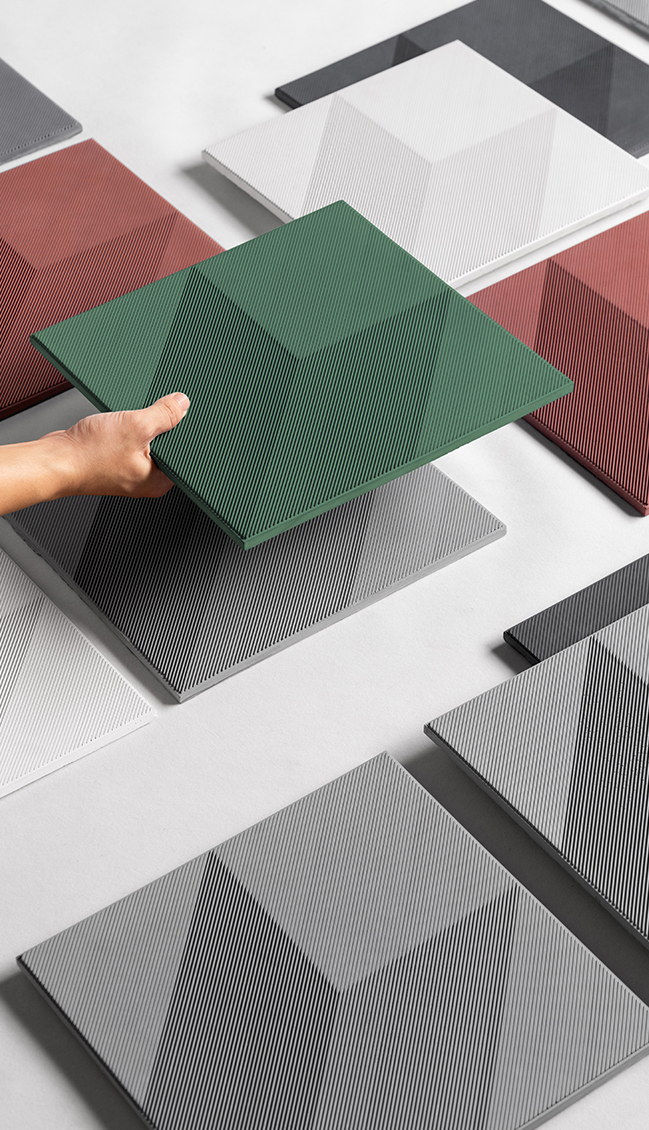
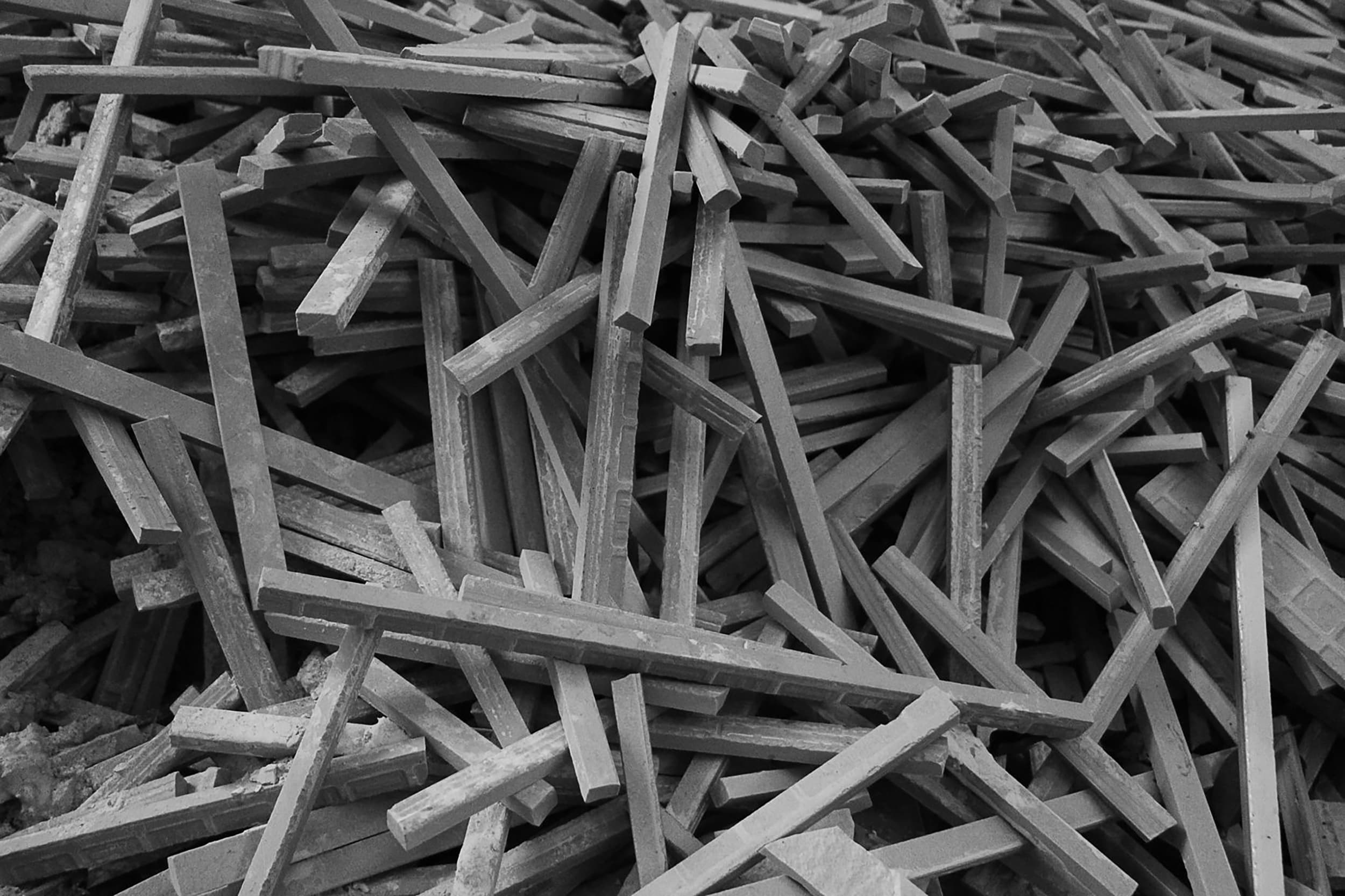
This exhibition, Sustainable China, is a complete presentation of this logic. Visitors not only see the final products on site; we also display raw material samples, intermediate test pieces, and final exhibits side by side. The full life cycle of material evolution and circulation is clearly visible: from a pile of overlooked industrial waste, through modification and forming, to panels and objects that can enter contemporary space. Through this curation, we hope to prove to the industry that BENTU is not staging a sentimental art show about “beautifying waste.” We are rationally transforming the material legacy left by Chinese industry into a contemporary design language.
Q2: Sustainable design is often criticised as “more concept than delivery.” In your team’s more than ten years of practice, moving from laboratory research to industrial production, what has been the biggest technical or commercial challenge? And how did you break through it?
Xu Gang: The reason sustainable design has long been criticised as “more concept than delivery” is that the vast majority of ideas ultimately stop at the exhibition hall. That cannot respond to the reality of the massive amount of solid waste generated in China every year.
At BENTU, we have persisted for more than a decade, and the greatest challenges come from two areas: technical standardisation and commercial perception.
On the technical side, solid waste is never a standardised raw material. Even tailings or waste porcelain from the same origin will fluctuate in composition from batch to batch. Laboratory “small-scale trials” can easily produce an occasional impressive sample, but when scaled up to factory-level mass production, batch instability can cause the yield rate to collapse. A laboratory can accept occasional results; large-scale industry must pursue stability and controllability.
Our solution is to invest enormous time and work long-term with upstream supply-chain sources, co-developing formula systems with factories, establishing raw-material sorting and grading mechanisms, and dynamically adjusting ratios for different batches of waste. In this process, we are even willing to sacrifice part of the visual effect in exchange for mass-production stability, thereby translating experimental results into repeatable, factory-ready production standards.
On the commercial side, the challenge comes from both ends of the value chain. Upstream waste generators tend to treat waste as an environmental burden and lack awareness of collaborative R&D. The downstream market holds deep-rooted prejudice, assuming that recycled materials should be cheap, inferior substitutes, and is unwilling to pay for the high upfront costs of R&D, sorting, and modification.
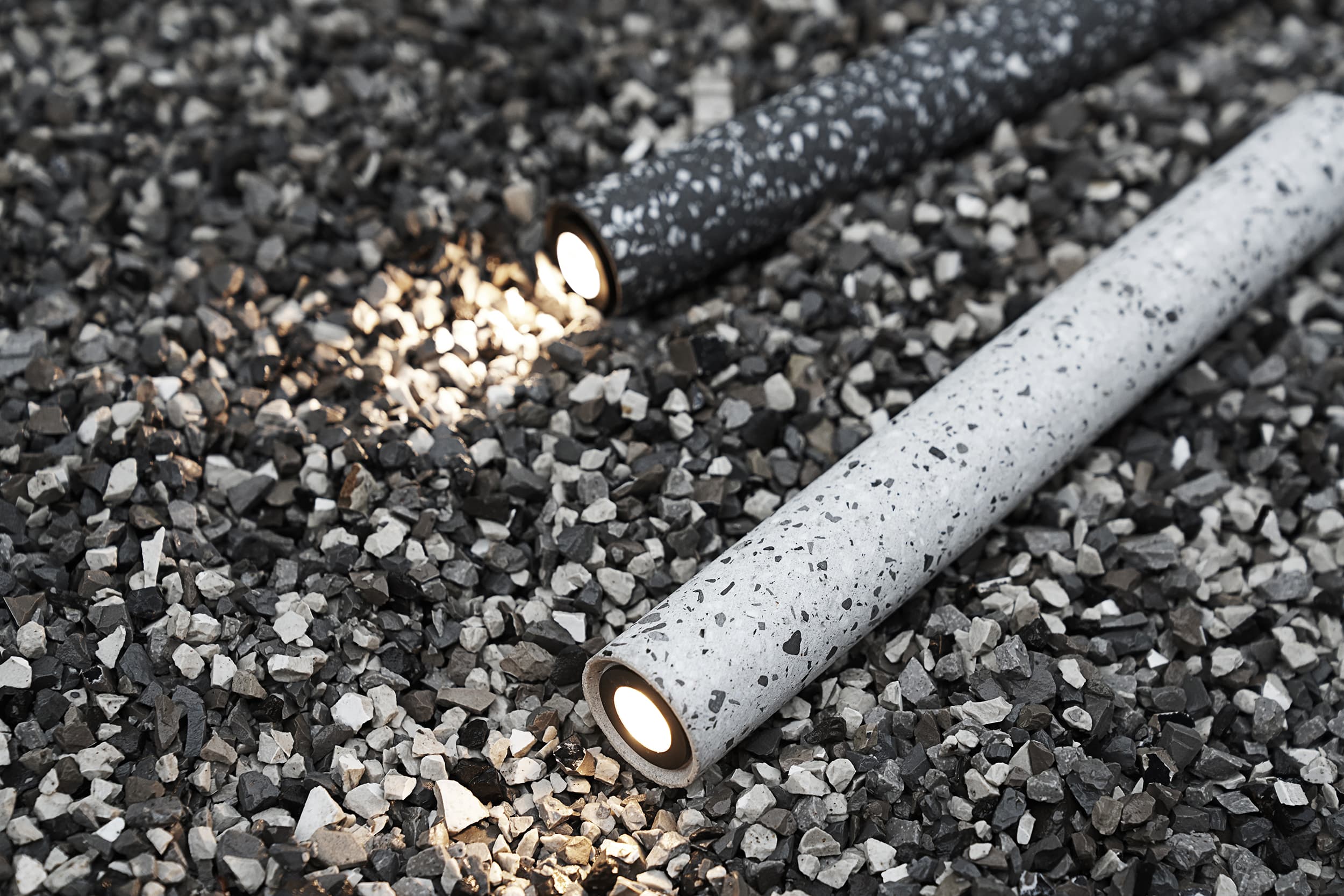
The only way to break through this barrier of perception is to implement solutions in real scenarios and validate them through actual projects. We continue to promote the application of materials in real residential and public architectural spaces, while working with partner manufacturers to establish supply-chain collaboration and secure stable waste-supply channels. When designers and clients see in real commercial spaces that recycled materials can match or even outperform traditional building materials in both performance and quality, prejudice will naturally give way. Solid-waste regeneration is not confined to niche, self-referencing projects; it should become a market-validated, practical, and resource-efficient commercial-grade material solution.
Q3: From a designer’s perspective, what role do you think the design industry should play in promoting solid-waste resource utilisation and the green transition? What methodologies from BENTU’s practice can the industry learn from?
Xu Gang: In the traditional context of consumerism, designers often play the role of downstream decorators, adding styling and surface treatment after the material system has already been finalised. But today, in promoting solid-waste resource utilisation and the green transition, designers must step forward and become an ecological hub connecting waste sources, material R&D, industrial manufacturing, and market application.
Solid-waste resource utilisation is not solely the responsibility of enterprises or research institutions. Factories have waste but often lack productisation thinking; research institutes have technology but frequently remain at the paper level. The entire value chain needs an “intermediate converter” that translates real industrial problems into design propositions with broader market potential. Designers are precisely the indispensable cross-domain translators of this era.
Based on BENTU’s more than ten years of practice, we have distilled three methodologies for the design industry to promote the green transition:
First, trace locally and transform locally. True sustainability must respect the local ecology, avoid the cumulative energy consumption and carbon-footprint impact of long-distance cross-regional transportation, and seek solutions rooted in China’s actual local industrial supply chains.
Second, material first, and industry before works. We should abandon symbolic waste experiments that exist only for exhibition or self-expression. Before starting design, we must first consider whether the material can be compatible with existing industrial production systems. Only by resolving industrial feasibility first can subjective design expression acquire genuine social significance.
Third, reject symbolic sustainable narratives. We must be vigilant against reducing sustainability to a cheap marketing gimmick or green label. Designers must confront the unvarnished realities of cost and performance variation, accept the inherent characteristics of recycled materials, and let real projects that enter everyday spaces speak for themselves.
The ultimate contribution of the design industry to the green transition is not to produce more fleeting exhibition works. It is to provide society with a set of material application pathways that are replicable across the industry and compatible with industrial production lines, enabling more manufacturers and designers to participate in this systematic reconstruction of relationships.

- Contact
+8620 8977 0506
- Press
press@bentudesign.com
- Enquiry & Sales
info@bentudesign.com